Astronomy · Space Missions
Mars Science Laboratory
The mission that landed the Curiosity rover on Mars.
- Agency
- NASA
- Rover
- Curiosity
- Landed
- 2012, in Gale Crater
- Goal
- Assess past habitability of Mars
NASA/JPL-Caltech · NASA media (public domain)
Gallery
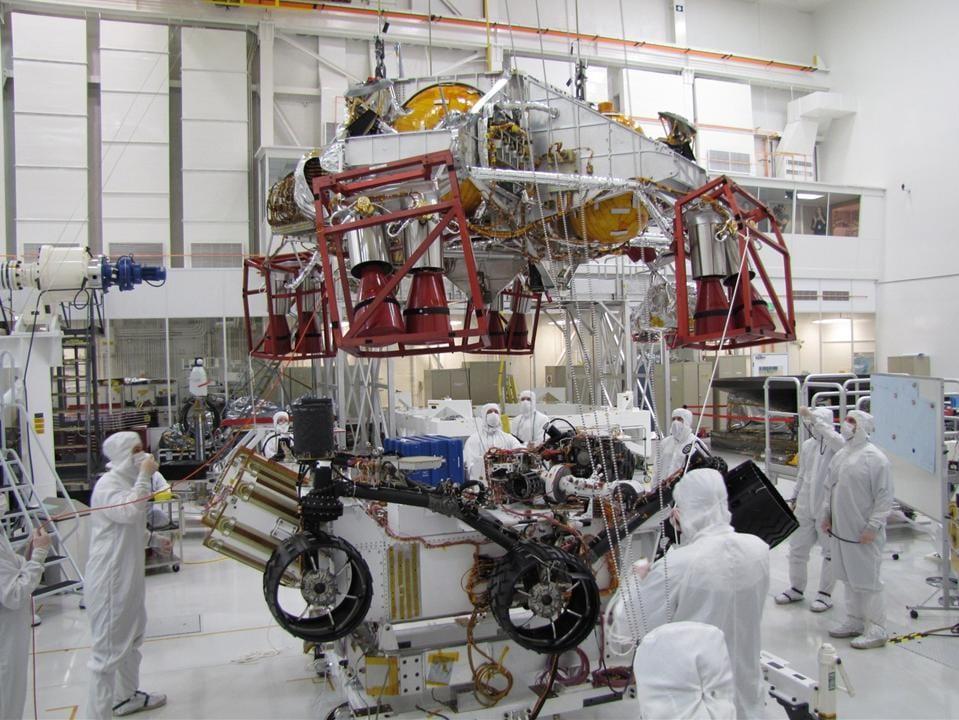
Mars Science Laboratory Descent Stage
This portion of NASA Mars Science Laboratory, called the descent stage, does its main work during the final few minutes before touchdown on Mars.
2008
NASA/JPL-Caltech · NASA media (public domain)
Landing Curiosity
Mars Science Laboratory is the NASA mission that carried the Curiosity rover to Mars, landing in 2012 using a novel sky-crane system to lower the rover gently to the surface of Gale Crater.
A mobile laboratory
Curiosity is essentially a roving science laboratory, equipped to analyze rocks and soil. It was sent to determine whether its landing site ever had environmental conditions capable of supporting microbial life.
Key findings
The mission found evidence that Gale Crater once held a lake and the chemical ingredients associated with habitable environments, strengthening the case that ancient Mars was more hospitable than it is today.
Knowledge connections
How this connects across Asteria Star — scientific, cultural, and astrological links are kept separate.
Scientific connections
- Associated withGale Crater
- Associated withCuriosity Lands on Mars
Observational connections
- CapturedCuriosity on Mars — Gale Crater
Mission connections
- Operated byNASA
- Mission targetMars
- Operated byNASA Jet Propulsion Laboratory
- Mission includesCuriosity
- Part of programMars Exploration Program
- Launched byAtlas V
- Launched fromCape Canaveral Space Force Station