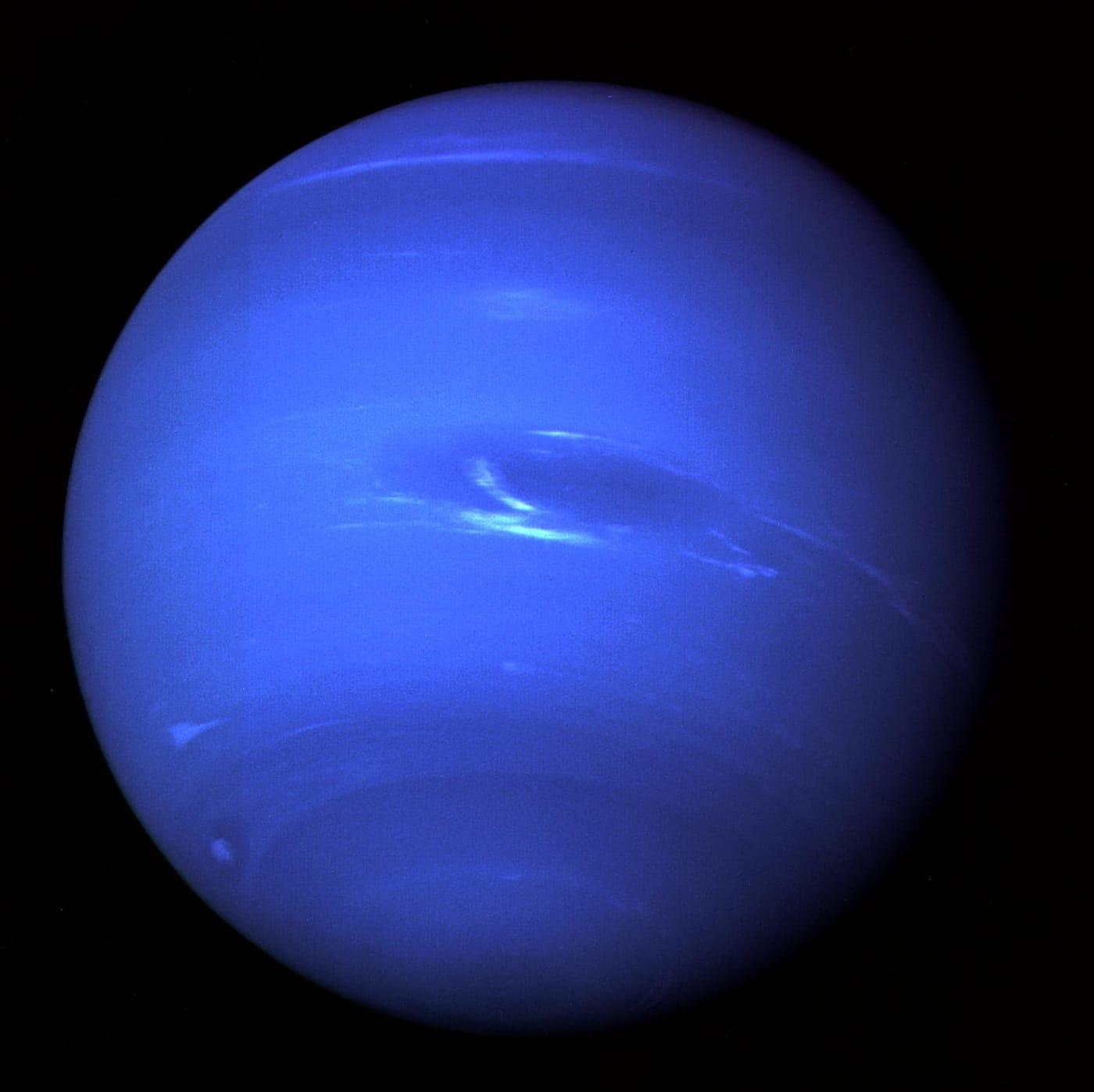
Astronomy · Space Missions
Voyager 2
The only probe to visit all four giant planets.
- Agency
- NASA
- Launched
- 1977
- Explored
- Jupiter, Saturn, Uranus, and Neptune
- Distinction
- Only spacecraft to visit Uranus and Neptune
NASA/JPL · NASA media (public domain)
Gallery
Voyager 2 Image of Saturn
1999
NASA/JPL · NASA media (public domain)
A unique itinerary
Voyager 2 launched in 1977 and, taking advantage of a rare planetary alignment, became the only spacecraft to fly past all four giant planets: Jupiter, Saturn, Uranus, and Neptune.
Our only look at the ice giants
Its flybys of Uranus and Neptune remain the only close-up spacecraft visits to those worlds, and much of what we know about them in detail comes from Voyager 2.
Still exploring
Like its twin, Voyager 2 eventually crossed into interstellar space and continues to send back data about the environment beyond the planets.
Knowledge connections
How this connects across Asteria Star — scientific, cultural, and astrological links are kept separate.
Scientific connections
- Associated withHeliopause
- Associated withCantaloupe Terrain
- Associated withLaunch of the Voyagers
- Associated withVoyager 2 Flies Past Neptune
- Associated withLongest-Operating Interplanetary Spacecraft
- Associated withThe Termination Shock
- Associated withThe Heliosheath
Mission connections
- Operated byNASA
- Mission targetSaturn
- Mission targetUranus
- Mission targetNeptuneVoyager 2 is the only spacecraft to visit Uranus and Neptune.
- Part of programVoyager program
- Mission targetJupiter
- Tracked byDeep Space Network (DSN)
Related
- Carries instrumentVoyager Imaging Science Subsystem
- Carries instrumentVoyager Cosmic Ray Subsystem (CRS)