Astronomy · Planets
Neptune
The deep-blue, windy ice giant at the edge.
- Order from Sun
- Eighth planet
- Type
- Ice giant
- Color
- Deep blue
- Notable moon
- Triton, which orbits backward
NASA/JPL · NASA media (public domain)
Gallery
Neptune
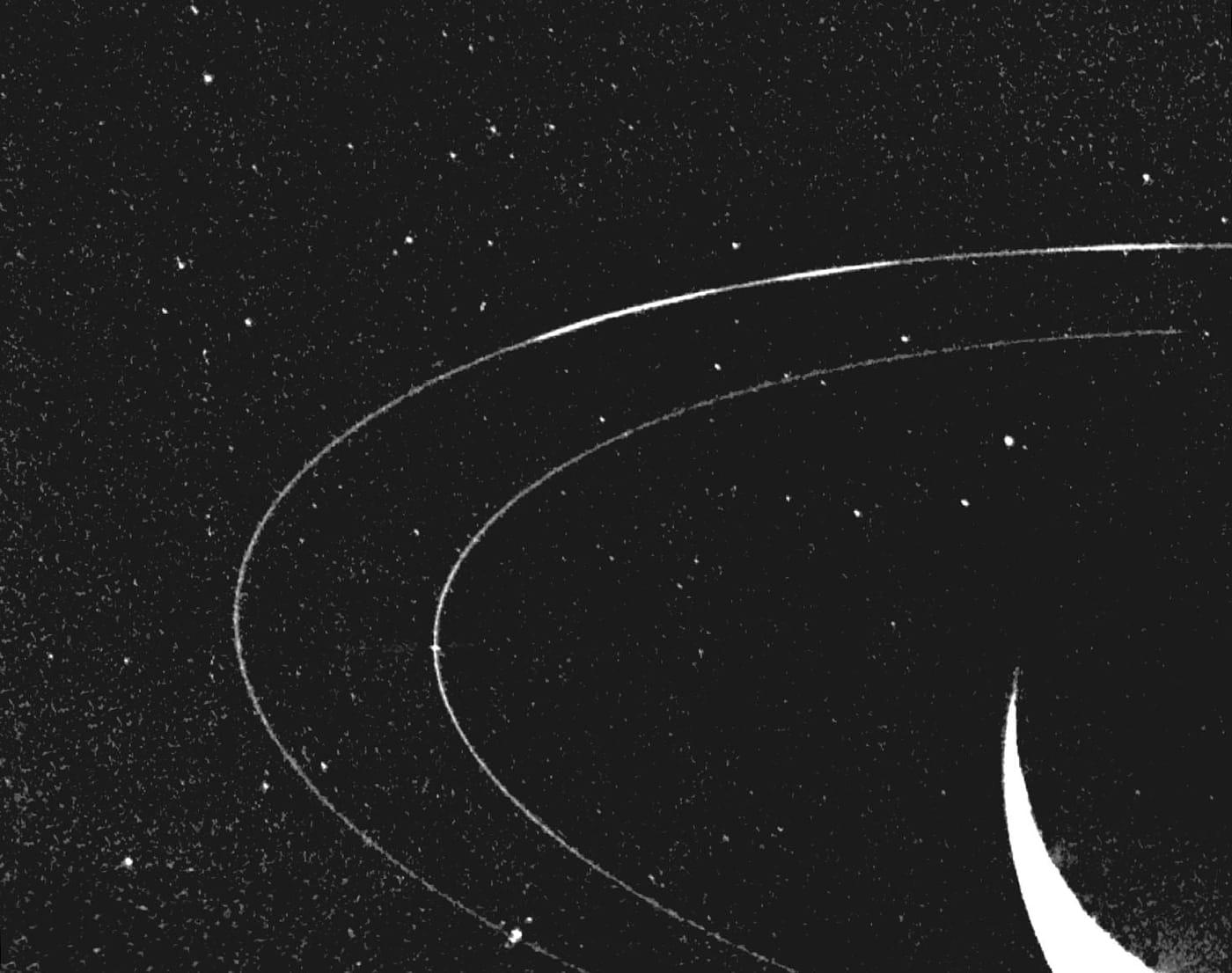
This contrast enhanced color picture of Neptune was acquired by NASA Voyager 2 on Aug.
1999
NASA/JPL · NASA media (public domain)
The outermost planet
Neptune is the eighth and farthest major planet from the Sun. A deep-blue ice giant, it is similar in size and makeup to Uranus and lies far out in the cold outer Solar System.
A stormy atmosphere
Despite its great distance from the Sun, Neptune has an active, dynamic atmosphere with some of the fastest winds measured on any planet, along with large dark storm systems.
Discovery and Triton
Neptune was the first planet found through mathematical prediction rather than chance observation. Its largest moon, Triton, orbits in the opposite direction to Neptune's rotation, a strong hint that it was captured from elsewhere.
Knowledge connections
How this connects across Asteria Star — scientific, cultural, and astrological links are kept separate.
Scientific connections
- Part ofSolar System
- Parent ofTriton
- Parent ofNereid
- Parent ofProteus
- Associated with2:3 resonance with Neptune
- Associated with1:1 resonance with Neptune
- Associated withVoyager 2 Flies Past Neptune
- Associated withThe Solar System in 3D
Observational connections
- Observed byJohann Galle
Mission connections
- Target ofVoyager 2Voyager 2 is the only spacecraft to visit Uranus and Neptune.
Related
- Related toThe Prediction and Discovery of Neptune