Astronomy · Planets
Venus
Earth's size, but a scorching greenhouse world.
- Order from Sun
- Second planet
- Type
- Terrestrial (rocky) planet
- Atmosphere
- Thick carbon dioxide with sulfuric-acid clouds
- Note
- Hottest planetary surface in the Solar System
NASA/JPL-Caltech/ESA · NASA media (public domain)
Gallery
Venus - Aphrodite Terra
Landslides on Venus! The image on the left was taken in late November of 1990 during Magellan first trip around Venus.
1996
NASA/JPL · NASA media (public domain)
Earth's hot twin
Venus is the second planet from the Sun and close to Earth in size and composition. There the similarity ends: a dense atmosphere of carbon dioxide traps heat through a runaway greenhouse effect, giving Venus the hottest surface of any planet.
A shrouded surface
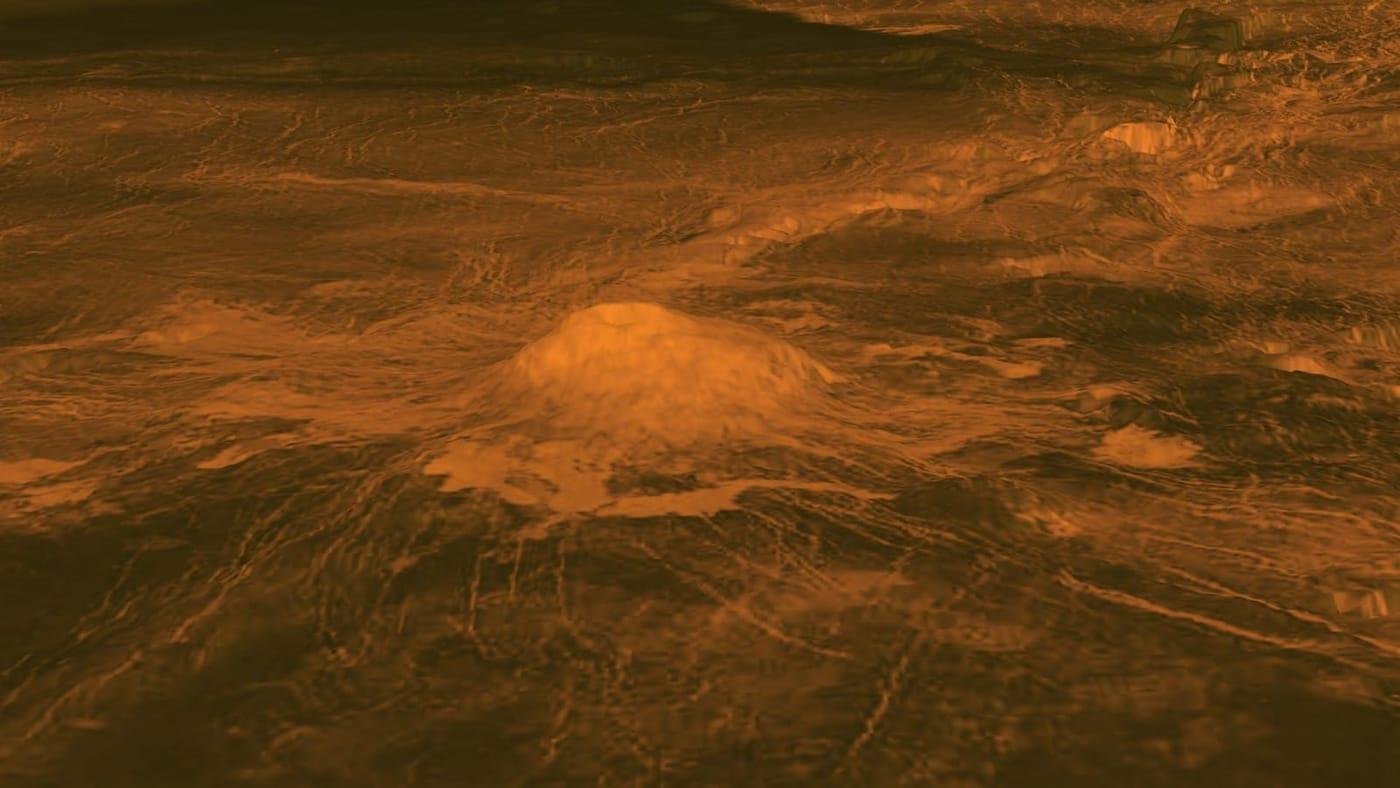
Thick clouds of sulfuric acid hide the surface from view in visible light. Radar mapping from spacecraft revealed a landscape of volcanic plains and highlands beneath the clouds.
The 'morning' and 'evening star'
Venus is frequently the brightest planet in our sky and is often called the morning or evening star, appearing brilliant near the horizon around sunrise or sunset.
Knowledge connections
How this connects across Asteria Star — scientific, cultural, and astrological links are kept separate.
Scientific connections
- Part ofSolar System
- Associated withVenera 7 Lands on Venus
- Associated withFirst Landing on Another Planet
- Associated withDAVINCI
- Associated withVERITAS
- Associated withEnVision
- Associated withBiosignature False Positive
- Associated withAtmospheric Escape
- Associated withClimate Evolution
- Associated withThe Greenhouse Effect
- Associated withAtmospheric Circulation
- Associated withConcept Comparison
Observational connections
- Observed byGalileo Galilei
Mission connections
- TargetsMagellan
- TargetsMariner 10
- Target ofVenera 7
- Target ofMariner 10
- Target ofMagellan
- Target ofVenus Express
Related
- Related toThe Phases of Venus
- Has featureMaxwell Montes
- Has featureAphrodite Terra
- Has featureArtemis Corona
- Has featureAlpha Regio
Related entries
Related missions
Space mission
Magellan
Venus orbiter · NASA · launched 1989.
Space mission
Mariner 10
Venus & Mercury flyby · NASA · launched 1973.
Space mission
Venera 7
Venera 7 made the first soft landing on another planet and the first transmission from the surface of Venus.
Space mission
Venus Express
Venus Express was ESA's first mission to Venus, studying its dense atmosphere from orbit.