Loading…
Loading contentLoading…
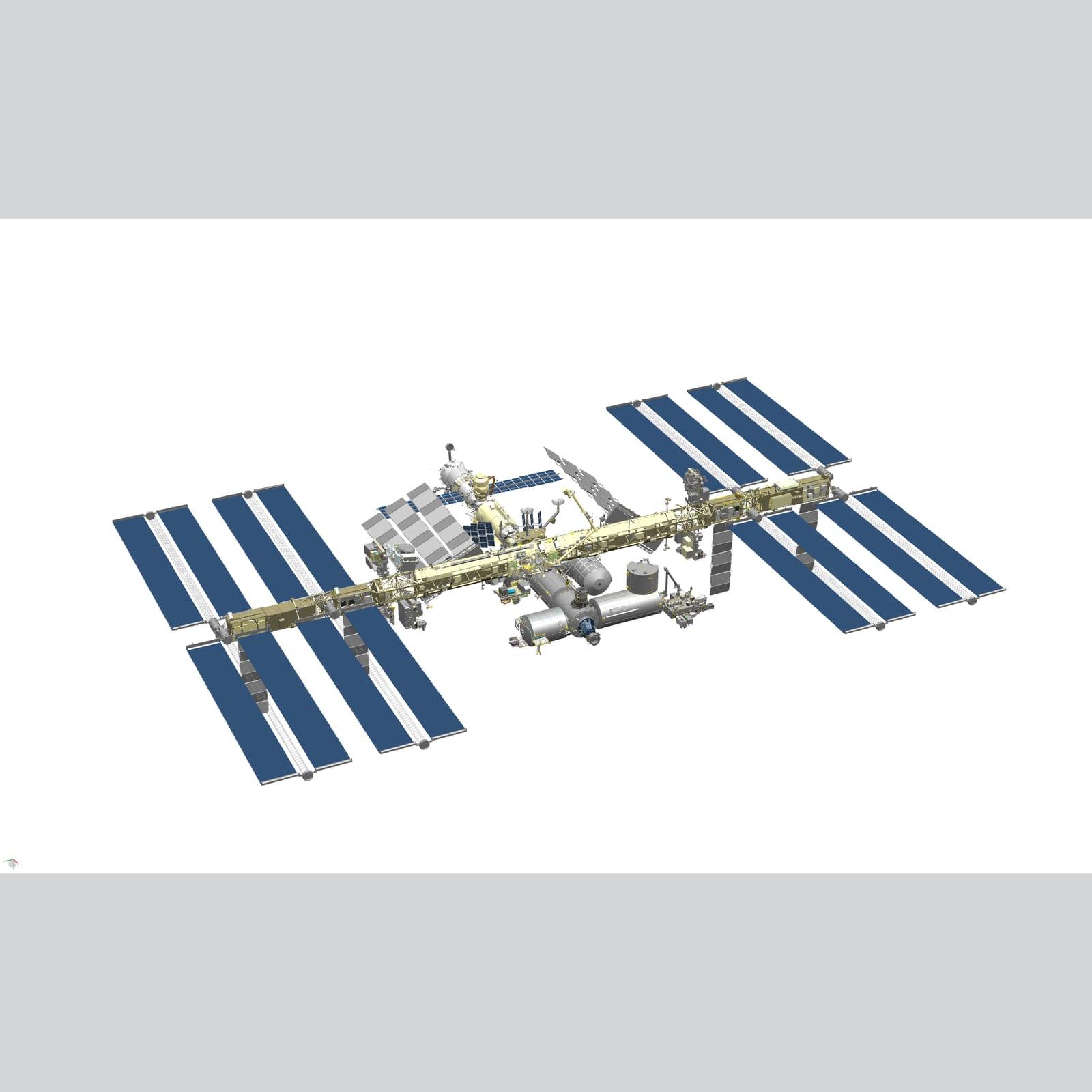
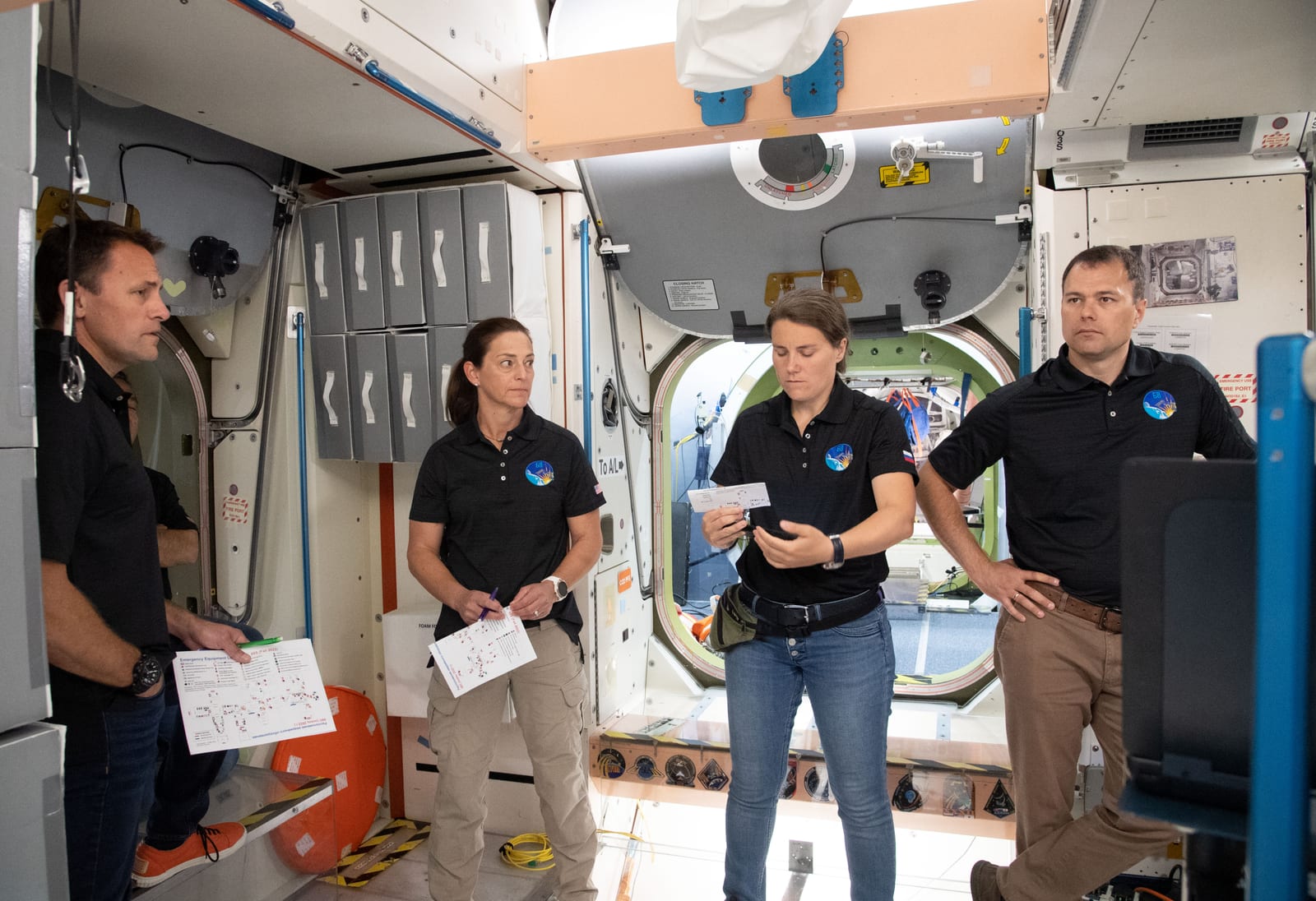
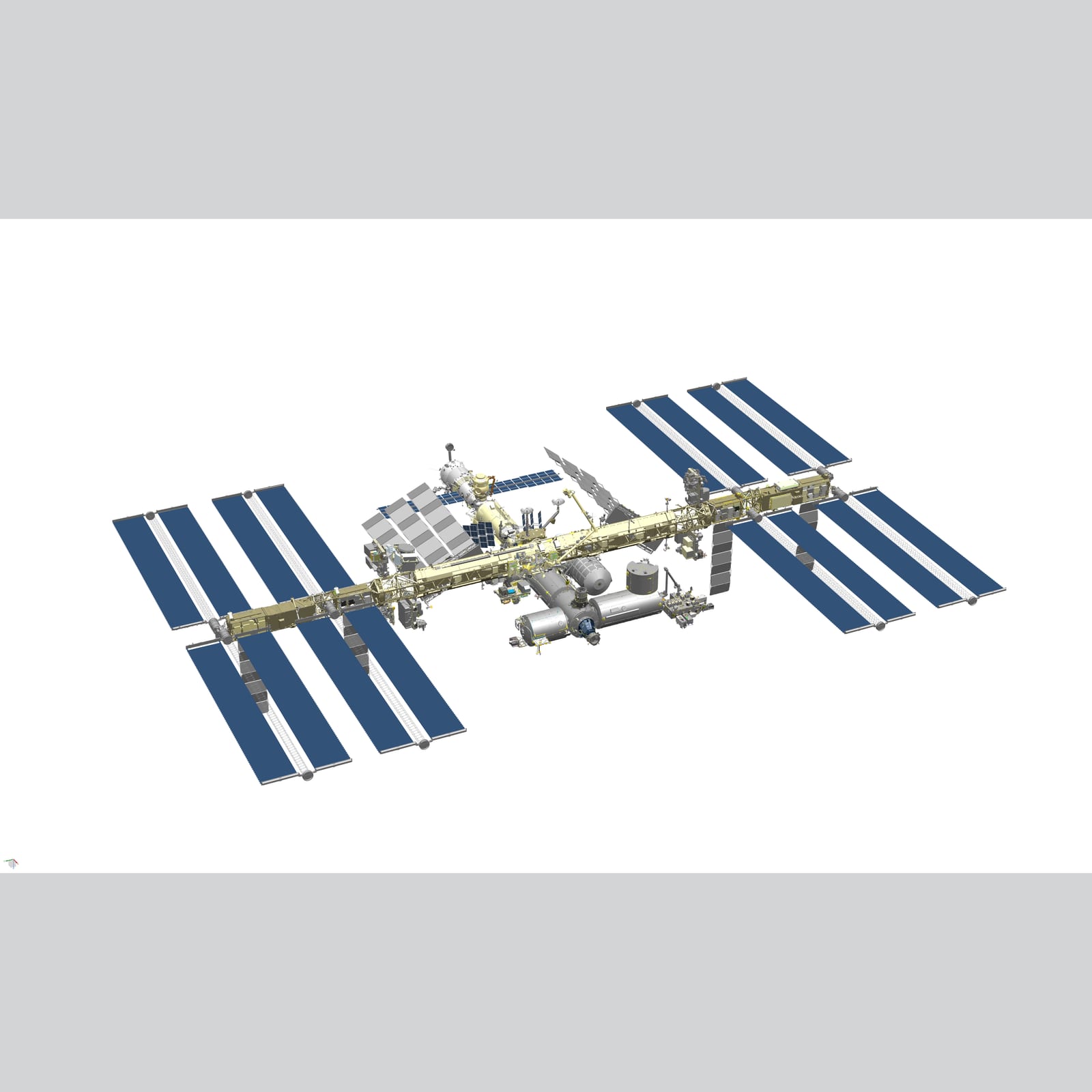
Loading contentThe International Space Station is a crewed modular space station in low Earth orbit, operated as a partnership among NASA, Roscosmos, ESA, JAXA, and the CSA.
satellite:international-space-stationDataset membership
Open data
In the graph export: graph.json · graph.jsonld
Planned API: GET /api/v0/entities/satellite:international-space-station
Scientific entity. See the evidence framework and authority dashboard.
How International Space Station connects across Asteria Star — scientific, cultural, and astrological links are kept separate.
+9 more
+25 more
Roscosmos is the state corporation responsible for the space program of the Russian Federation.
JAXA is Japan's national space agency, responsible for the country's aerospace research, satellite operations, and human spaceflight contributions including the Kibo module on the International Space Station.
The ISS program is the international partnership that builds and operates the continuously crewed International Space Station.
Axiom Station is a planned commercial space station; its first modules are intended to attach to the ISS before later flying free. It is not yet operational.
Zarya, the Functional Cargo Block, was the first module of the International Space Station, providing early power and propulsion. It was built in Russia but funded by and belongs to the United States.
Unity (Node 1) was the first US-built ISS module, a connecting node linking the Russian and US segments of the station.
Zvezda, the Service Module, provided the early ISS with life support, crew quarters, and propulsion, and was the structural heart of the Russian segment.
Destiny is the primary research laboratory of the US segment of the ISS, used for microgravity science across many disciplines.
Quest is the ISS joint airlock, from which US spacewalks (EVAs) are staged.
Pirs was a Russian docking compartment and airlock; it was undocked and deorbited in 2021 to make room for the Nauka module.
Harmony (Node 2) is a connecting module that provides docking ports for visiting crewed spacecraft and links the US, European, and Japanese laboratories.
Columbus is ESA's research laboratory on the ISS, hosting European and international microgravity experiments.
Kibo, meaning 'hope', is JAXA's laboratory complex on the ISS — the station's largest module, with an external platform for experiments exposed to space.
Tranquility (Node 3) houses much of the ISS life-support equipment and exercise machines, and connects to the Cupola.
The Cupola is a seven-windowed observation module built by ESA, used for Earth observation and to control the station's robotic arm.
Rassvet is a small Russian module providing docking and storage on the ISS.
Leonardo, originally a reusable cargo carrier built by the Italian Space Agency, was permanently attached to the ISS as a storage module.
Poisk is a Russian module providing a docking port and an airlock for Russian-segment spacewalks.
BEAM is an expandable (inflatable) module attached to the ISS to demonstrate expandable habitat technology in orbit, building on Bigelow's Genesis demonstrators.
Nauka is a Russian multipurpose laboratory module that replaced the Pirs compartment, adding research space, crew quarters, and an airlock.
Prichal is a spherical Russian nodal module with multiple docking ports, attached to Nauka.
The Soyuz spacecraft has carried crews to orbit for over five decades and remains a primary means of reaching the ISS.
The Space Shuttle Orbiter was a reusable crewed spaceplane that flew 135 missions, deploying satellites and assembling much of the ISS.
Crew Dragon is SpaceX's crewed spacecraft, which returned human launch capability to the United States in 2020 under NASA's Commercial Crew Program.
Boeing's Starliner is a crewed capsule developed under NASA's Commercial Crew Program; it flew its Crew Flight Test to the ISS in 2024.
Dream Chaser is a reusable lifting-body spaceplane by Sierra Space; first designed for crew under the Commercial Crew competition, its initial Tenacity vehicle is configured to deliver cargo to the ISS.
Cargo Dragon is the uncrewed resupply variant of SpaceX's Dragon, delivering cargo to the ISS and returning experiments to Earth.
Progress is the long-serving Russian uncrewed cargo spacecraft, derived from Soyuz, that resupplies space stations and reboosts their orbits.
Cygnus is an uncrewed cargo spacecraft by Northrop Grumman that delivers supplies to the ISS under NASA's commercial resupply contracts.
The H-II Transfer Vehicle (Kounotori) was JAXA's uncrewed cargo craft that resupplied the ISS from 2009 to 2020.
ESA's Automated Transfer Vehicle was a large uncrewed cargo craft that resupplied and reboosted the ISS from 2008 to 2014.
ISS Expedition 1 was the first resident crew of the International Space Station, beginning continuous human presence in orbit. The crew was William Shepherd, Yuri Gidzenko, and Sergei Krikalev.
ISS Expedition 2 was the second resident crew, comprising Yury Usachev, Susan Helms, and James Voss.
ISS Expedition 3 was crewed by Frank Culbertson, Vladimir Dezhurov, and Mikhail Tyurin.
ISS Expedition 4 was crewed by Yury Onufrienko, Carl Walz, and Daniel Bursch.
ISS Expedition 5 was crewed by Valery Korzun, Peggy Whitson, and Sergei Treschev.
ISS Expedition 6 was crewed by Kenneth Bowersox, Nikolai Budarin, and Donald Pettit; the crew returned aboard a Soyuz after the Columbia accident grounded the Shuttle.
ISS Expedition 7, a two-person caretaker crew of Yuri Malenchenko and Edward Lu, kept the station operating after the Columbia accident.
ISS Expedition 8 was a two-person crew of Michael Foale and Alexander Kaleri.
ISS Expedition 9 was crewed by Gennady Padalka and Michael Fincke.
ISS Expedition 10 was a two-person crew of Leroy Chiao and Salizhan Sharipov.
The first spacewalks to assemble the International Space Station were carried out during the STS-88 mission, connecting the Unity and Zarya modules.
On 18 October 2019, Christina Koch and Jessica Meir conducted the first spacewalk performed entirely by women, outside the International Space Station.
The probe-and-drogue docking system is the long-serving Russian mechanism used by Soyuz and Progress to dock with space stations, including the ISS Russian segment.
The Androgynous Peripheral Attach System is a docking mechanism developed for the Apollo–Soyuz Test Project and later used by the Space Shuttle to dock with Mir and the ISS.
The International Docking System Standard, implemented on the ISS as the International Docking Adapters, allows Crew Dragon and Starliner to dock autonomously.
The Environmental Control and Life Support System keeps a station's crew alive by recycling air and water, controlling temperature and pressure, and removing carbon dioxide.
The NASA Twins Study compared astronaut Scott Kelly during a year aboard the ISS with his identical twin on Earth, advancing understanding of how spaceflight affects the human body.
In microgravity the human body loses bone mass, a key concern for long-duration spaceflight that is studied and countered aboard the ISS.
Without gravity to work against, muscles weaken in space; resistance exercise aboard stations helps crews maintain strength.
Beyond Earth's protective atmosphere and much of its magnetic field, astronauts face increased radiation, a central challenge for long missions.
In weightlessness, body fluids shift toward the head, contributing to the vision changes studied as Spaceflight-Associated Neuro-ocular Syndrome (SANS).
The International Space Station in orbit, photographed by a departing crew spacecraft.
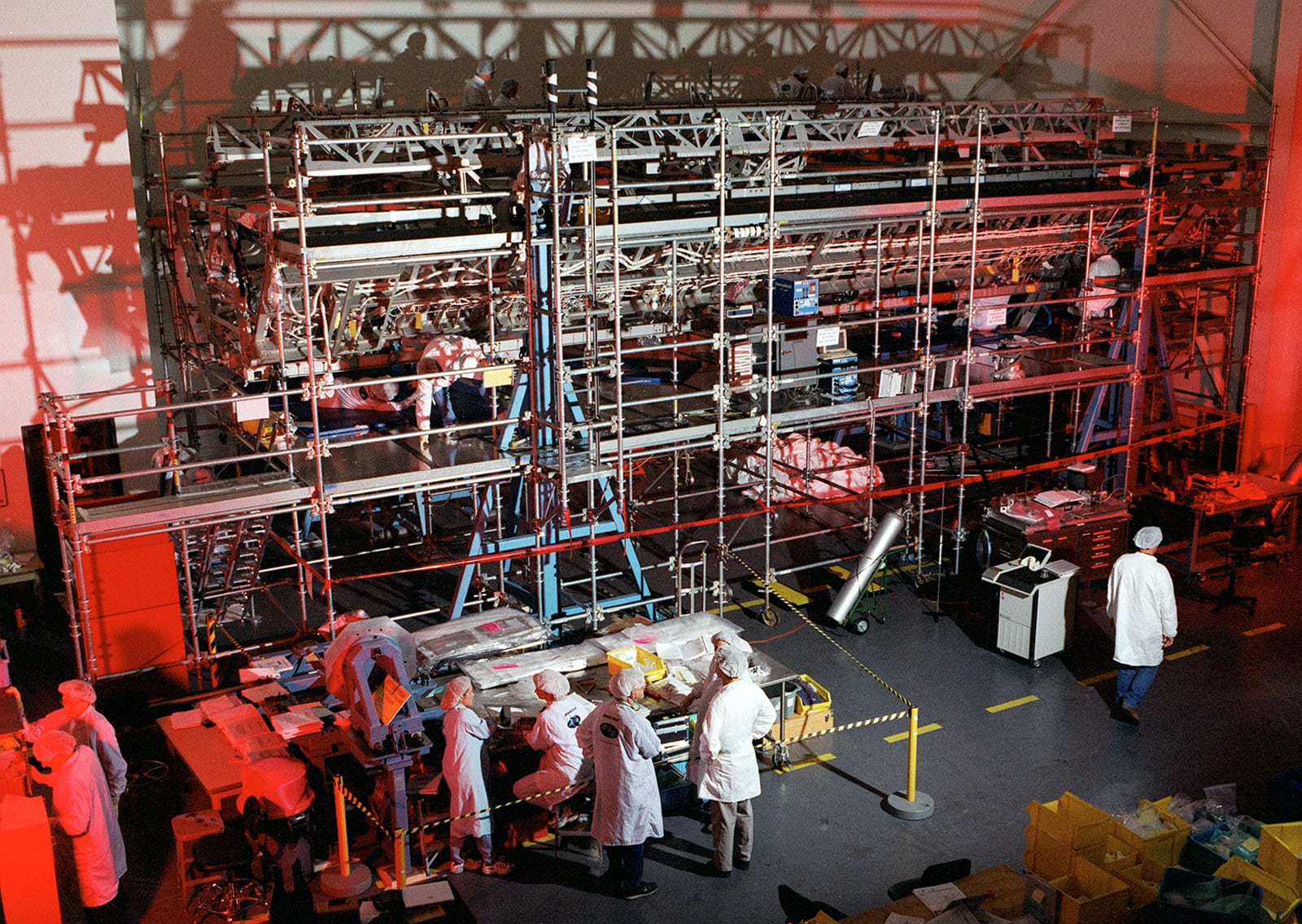
The Zarya module launches, the first piece of the International Space Station — the largest structure ever assembled in space, built by fifteen nations.
SpaceX's Crew Dragon Demo-2 carries astronauts to the ISS, the first crewed orbital flight launched by a private company and the return of crewed launch to American soil.
SpaceX's Crew Dragon Demo-2 was the first crewed orbital spaceflight launched by a private company.
The International Space Station has been continuously inhabited since November 2000, the longest unbroken human presence in space.
The heart and blood vessels adapt to weightlessness, and the heart can weaken without the constant work of pumping against gravity. Crews often experience orthostatic intolerance — dizziness on standing — when they return to gravity.
Spaceflight alters the immune system — some functions are dampened while latent viruses can reactivate — a concern for crew health on long missions far from medical care.
On the ISS the crew sees sixteen sunrises a day, and mission schedules can shift sleep times; the resulting disruption of the body clock degrades sleep, alertness, and performance.
Systems that produce breathable oxygen in a closed cabin, typically by splitting recovered water into oxygen and hydrogen through electrolysis, so a crew is not wholly dependent on tanks brought from Earth.
The carbon dioxide a crew exhales must be continuously removed from the cabin air. Systems use regenerable sorbents or amine beds to scrub it out, and increasingly to recover its oxygen rather than venting it overboard.
On the ISS, most of the crew's water is recycled — reclaimed from humidity, hygiene water, and urine and purified back to drinking quality. Closing the water loop is essential to missions too far to resupply.
Systems for collecting and processing human waste and trash in weightlessness — from the spacecraft toilet to the handling of solid waste — protecting crew health and, increasingly, recovering water and resources.
Life support must hold the cabin at a comfortable, safe temperature and humidity, removing the heat and moisture that crew and equipment add and preventing condensation that could damage systems or grow microbes.
Sensors continuously track the cabin's oxygen, carbon dioxide, pressure, and trace contaminants, so that the life-support system can respond and the crew is warned of any hazardous change in their air.
The engineered system that feeds a crew — shelf-stable, nutritious food packaged for weightlessness, planned to sustain health and morale over long missions where resupply is limited or impossible.
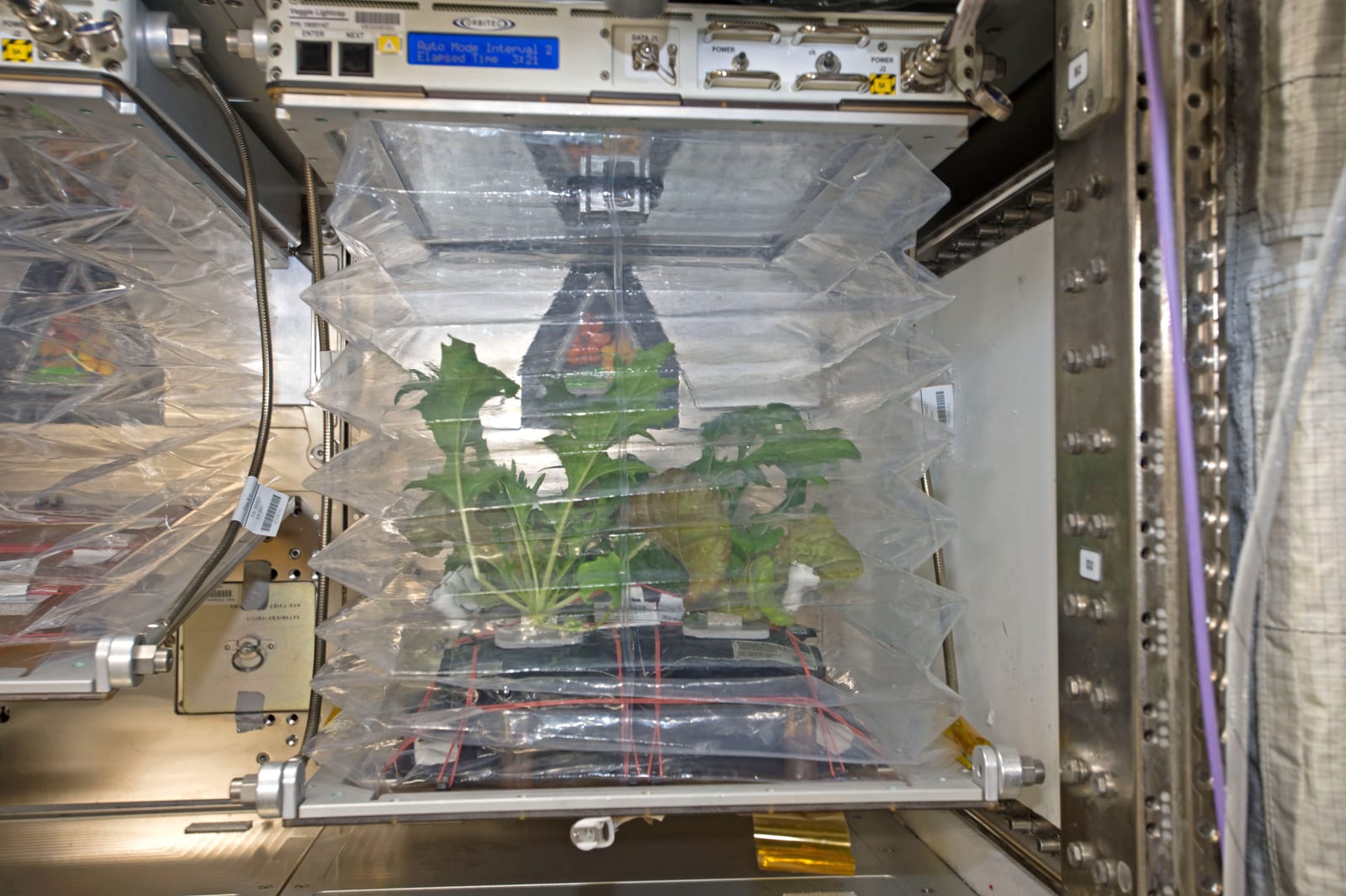
Growing plants in space — for fresh food, for recycling air and water, and for crew morale. Experiments aboard the ISS have grown and eaten space-grown crops, a step toward the farms that Moon and Mars crews will need.
The goal of a fully regenerative life-support system, in which plants and microbes recycle essentially all of the air, water, and waste — the closed ecosystem that a self-sufficient Mars base would require. Ground experiments such as BIOS-3 and MELiSSA have pursued it.
Weightlifting in orbit. Devices such as the ISS's Advanced Resistive Exercise Device let crews load their bones and muscles against a resistance in place of gravity — the single most important countermeasure against bone and muscle loss.
Crews run on a harness-tethered treadmill and pedal a cycle ergometer for hours each week to keep the heart and muscles conditioned against the deconditioning of weightlessness.
Carefully planned diet and supplementation — adequate energy, protein, vitamin D, and controlled sodium — works together with exercise to protect bone and muscle and to support overall crew health.
Medications used to protect crew health — bone-preserving drugs studied against spaceflight osteopenia, and medicines that manage space motion sickness, sleep, and other conditions in flight.
A device that applies suction to the lower body, pulling fluids back toward the legs as gravity would. It is studied as a countermeasure to the headward fluid shift and the eye changes of SANS.
Tunable LED lighting that shifts colour and intensity through the day to reinforce the body clock, helping crews sleep and stay alert despite sixteen orbital sunrises a day.
The measures that sustain crew mental health — private family conferences, care packages, meaningful scheduling and rest, and ground-based behavioural health teams — increasingly important the farther a crew travels from Earth.
The biomedical sensors, health checks, and ground-linked telemedicine that watch over crew health in flight. On missions to Mars, where help is minutes-to-hours away by radio, crews will need to be far more medically autonomous.
3D-printing parts and tools in orbit, layer by layer. A 3D printer has operated aboard the ISS since 2014, printing tools and spares on demand and pointing toward a future where spacecraft parts are made in space rather than launched.
Building large structures in space from parts, rather than folding a finished structure into a rocket fairing. In-space assembly would allow telescopes, antennas, and stations far larger than any launch vehicle could carry whole.
Privately-built and operated space stations intended to succeed the ISS as destinations in low Earth orbit — for research, manufacturing, and tourism. Axiom Station is being assembled to begin attached to the ISS before flying free.
Habitats that launch compact and expand in space, giving far more volume per kilogram than rigid modules. The Genesis demonstrators and the BEAM module on the ISS have proven the concept in orbit.
Cargo spacecraft that resupply stations and return payloads, increasingly designed to be reused. Commercial cargo vehicles routinely deliver supplies to the ISS, and reusable capsules now return and fly again.
CelesTrak publishes two-line orbital elements for the ISS and thousands of satellites, from which passes over an observer can be computed by SGP4 propagation. The source and pipeline are modelled here as architecture-ready; neither the live feed nor the propagation is wired, and no pass time is fabricated.
NASA's Earth Observing System afternoon satellite, focused on the water cycle — precipitation, evaporation, clouds, and ocean properties.
A NASA–CNES mission using a space lidar to profile aerosols and thin clouds in Earth's atmosphere, flying in the A-Train formation.
A NASA mission carrying a cloud-profiling radar that measured the vertical structure of clouds to study their role in climate.
The first satellite launched by the United States, in 1958, whose radiation detector discovered the Van Allen radiation belts. Built by JPL and launched by the U.S. Army — NASA did not yet exist.
The first of NOAA's advanced GOES-R geostationary weather satellites, imaging the Western Hemisphere every few minutes for forecasting and storm tracking.
Japan's greenhouse-gases observing satellite — the first satellite dedicated to monitoring atmospheric carbon dioxide and methane from space — operated by JAXA with Japan's National Institute for Environmental Studies.
Facts on this topic will be cited from these primary and reference sources.
Mission data, planetary science, space telescopes, and public-domain imagery.
Most NASA-produced imagery is in the public domain; individual items are checked for usage terms before publication.
European missions, observatories, and space science imagery.