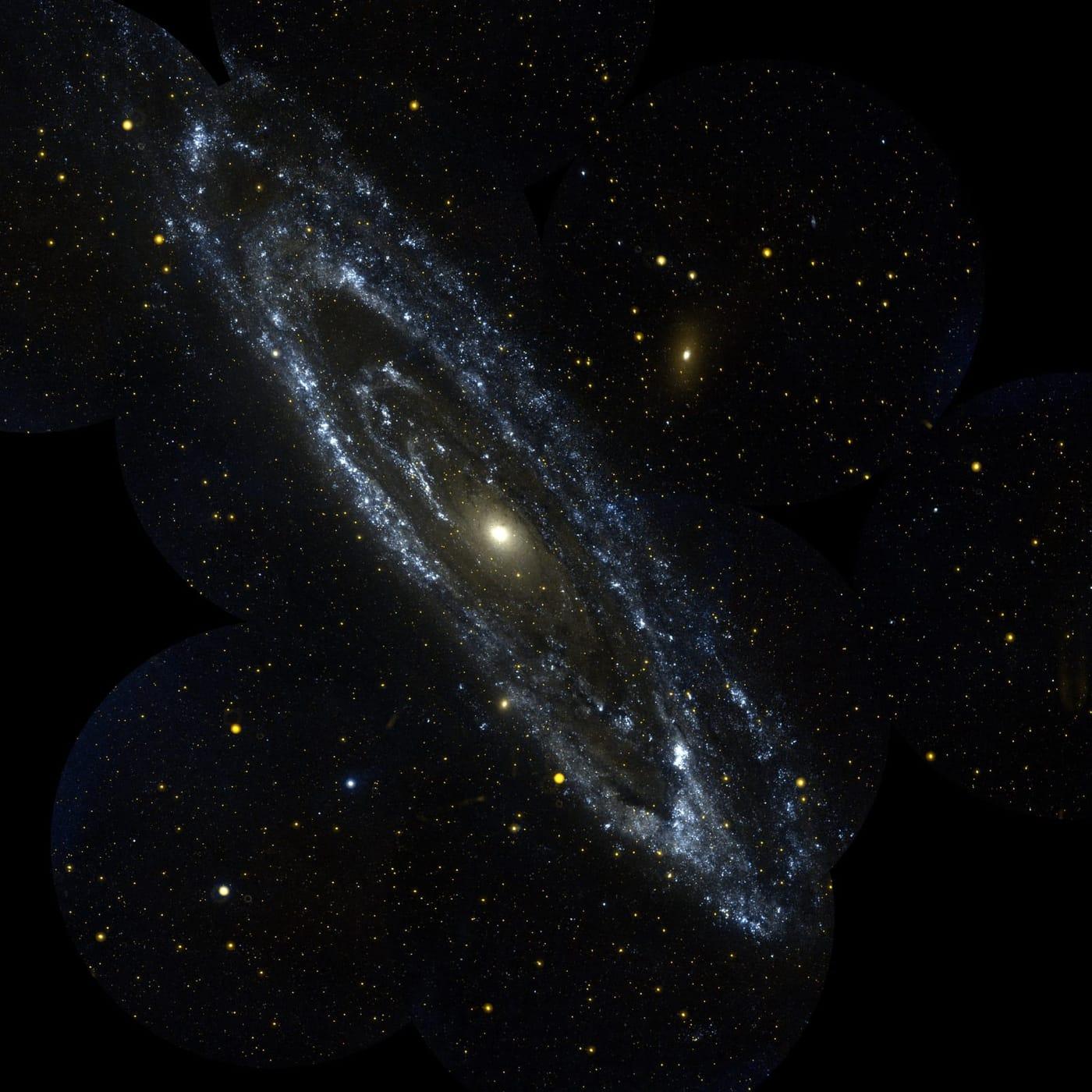
Galaxy
Andromeda Galaxy
The nearest large spiral galaxy to the Milky Way and the most distant object readily visible to the naked eye.
- Type
- Galaxy
- Domain
- Scientific connections
- Connections
- 18
NASA/JPL/California Institute of Technology · NASA media (public domain)
- Type: Galaxy
- Domain: Scientific connections
Experience system V6
Galaxy morphology profile
A deep-sky composition that treats the object as a physical structure, not a decorative background image.
- 01
Observe
NASA imagery anchors the visual reading with licensed source metadata.
- 02
Measure
Measurement panels use graph coverage, catalog identifiers, and source availability without inventing values.
- 03
Locate
Located in Andromeda (constellation).
- 04
Connect
18 graph relations shape the knowledge viewport.
- Object type
- Galaxy
- Graph relations
- 18
- Verified sources
- 3
- Image records
- 4
- Domain
- Scientific connections
- Status
- Graph entity
Scientific map
Atlas context
- Located in
Andromeda (constellation)
- Studied by
Gemini Observatory
- Studied by
Hubble Space Telescope
- Scientifically related to
The Milky Way
Original SVG diagram
Deep-sky morphology
- Object class
- Galaxy
- Catalog numbers
- Not recorded
- Image records
- 4
- Graph relations
- 18
Visual knowledge graph
Relationships, not isolated facts
This viewport is generated from the Asteria knowledge graph. Science, culture, and interpretive links remain separated by domain so visual context never changes the evidentiary meaning of a relation.
- Observed byAl-Sufi
- Located inAndromeda (constellation)
- Associated withDeep-Sky Atlas
- Associated withDistance & Scale Explorer
- Observed byEdwin Hubble
- Associated withGalaxy Atlas
- Studied byGemini Observatory
- Studied byHubble Space Telescope
Image provenance
Photography as evidence
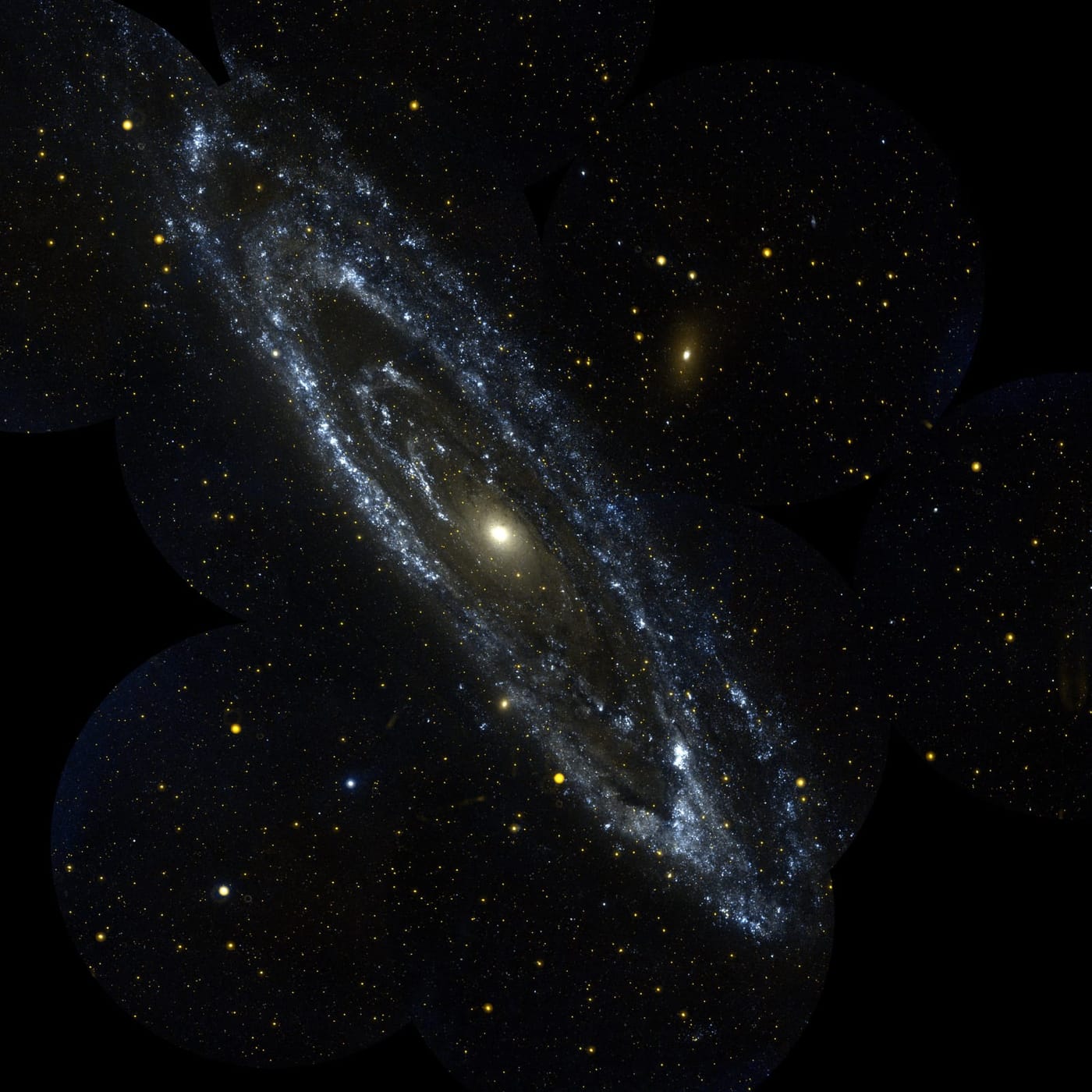
Andromeda Galaxy
NASA/JPL/California Institute of Technology · NASA media (public domain)
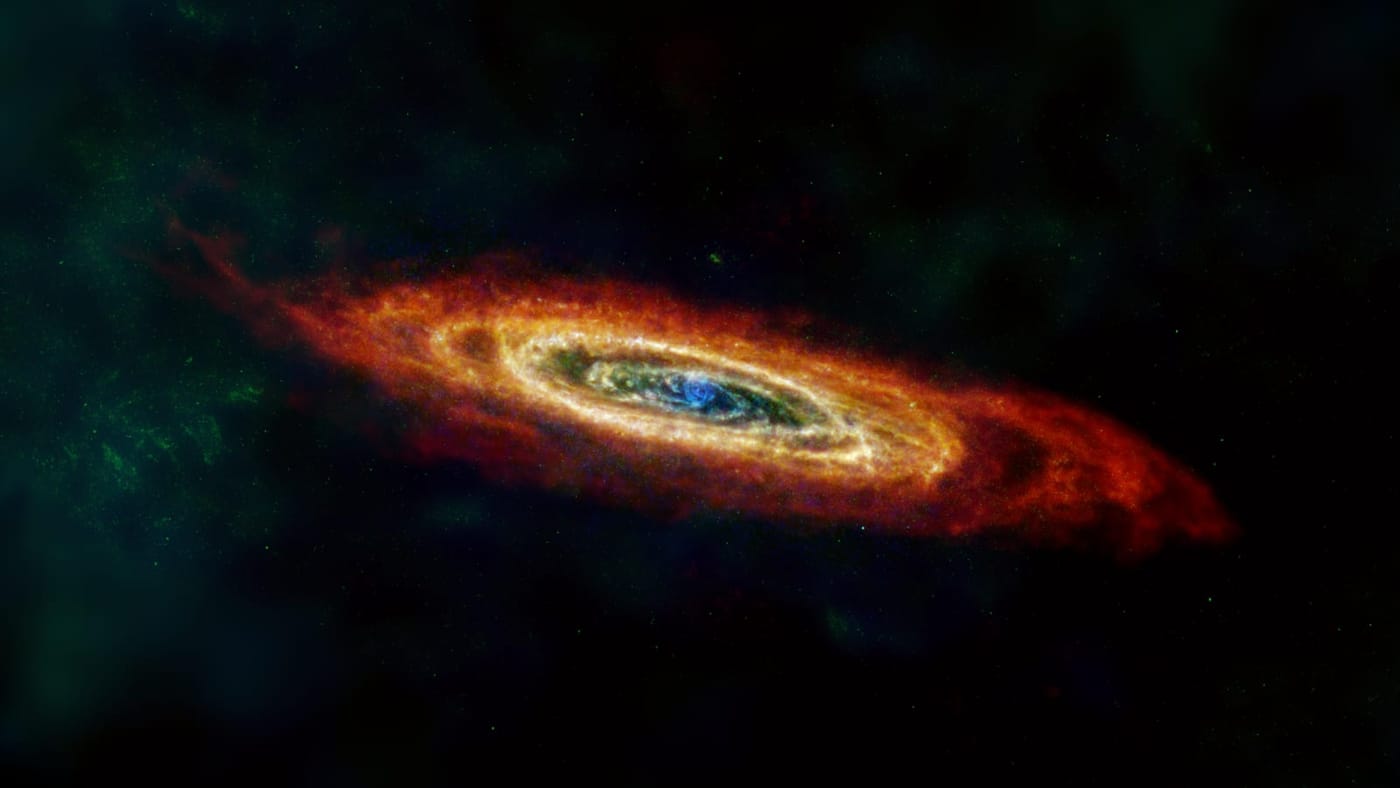
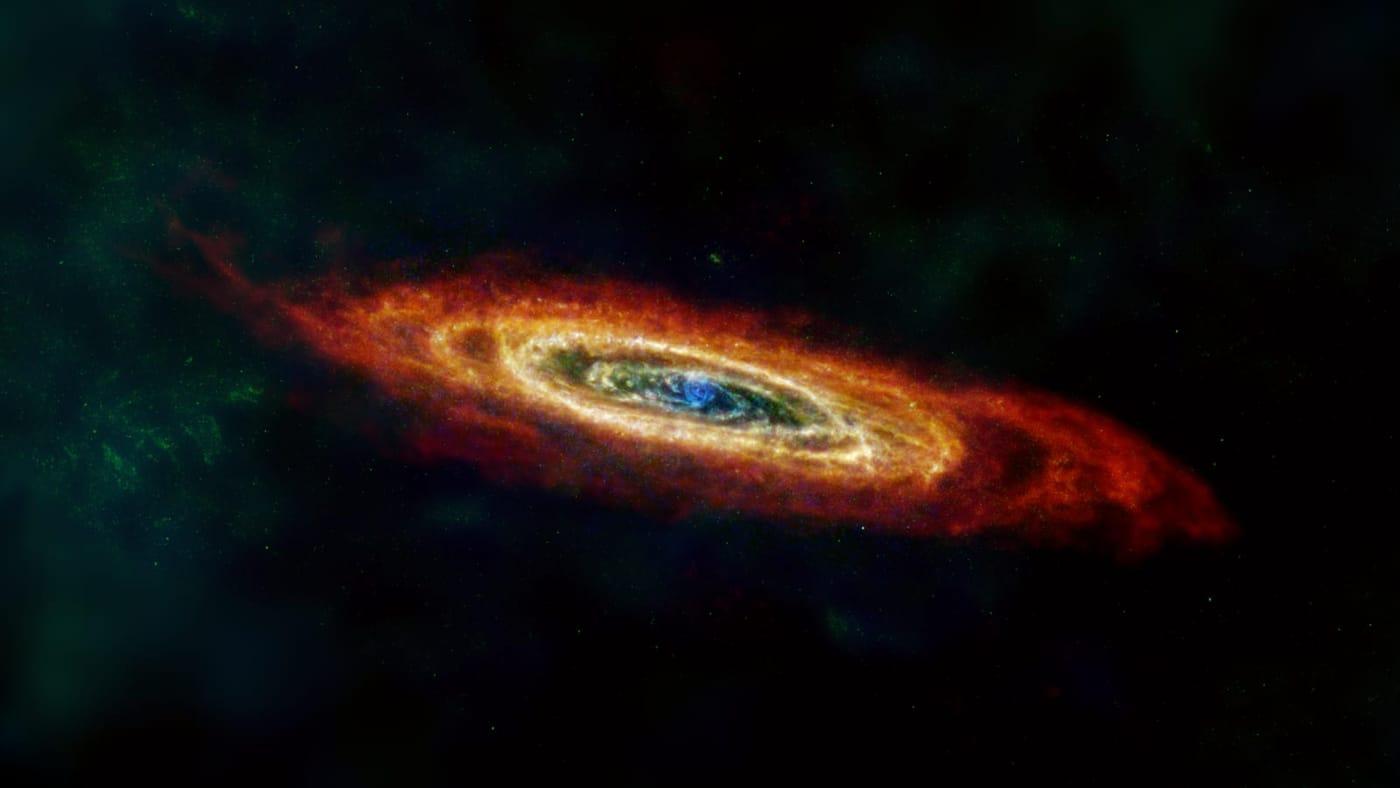
Andromeda Galaxy Imaged by Herschel, Planck, IRAS, COBE
ESA/NASA/JPL-Caltech/GBT/WSRT/IRAM/C. Clark (STScI) · NASA media (public domain)
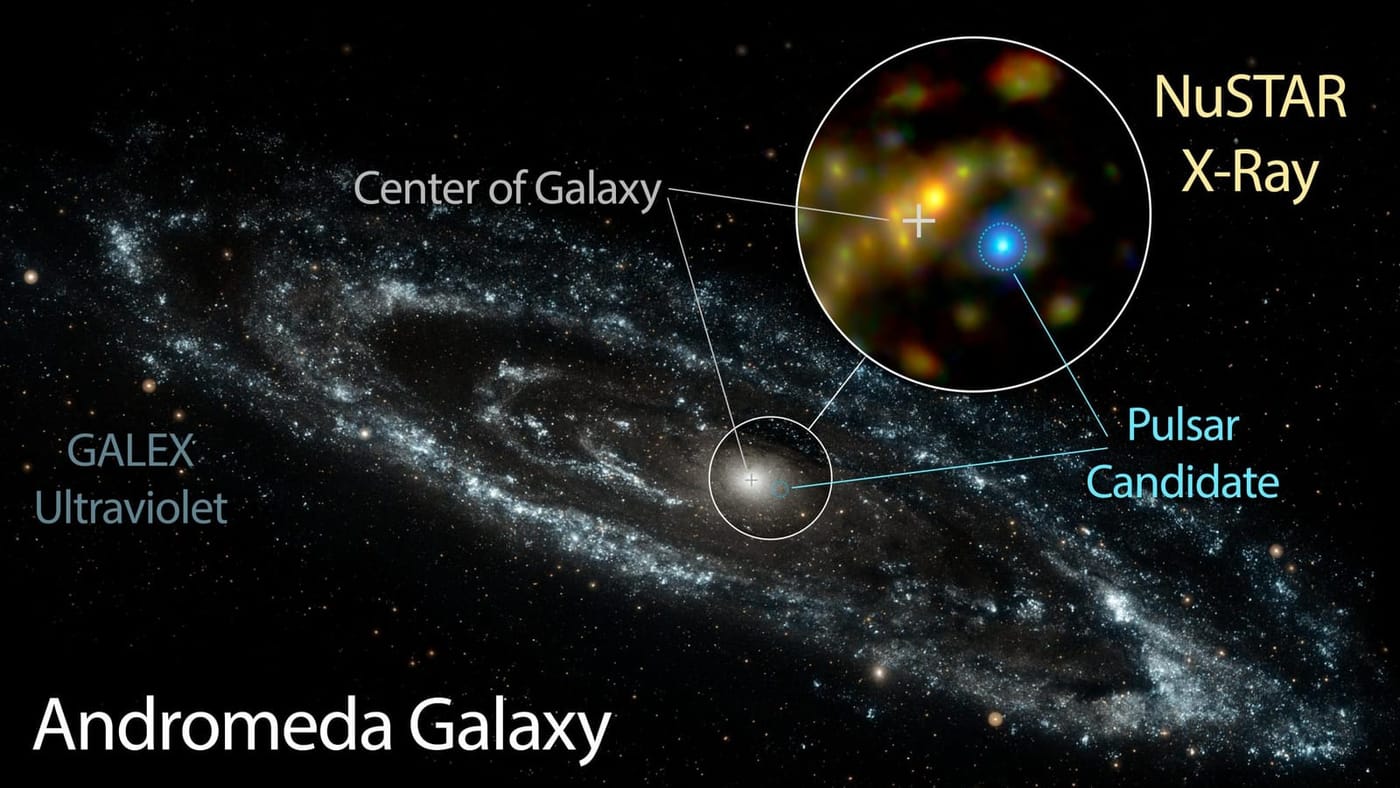
Pulsar Candidate in Andromeda
NASA/JPL-Caltech/GSFC/JHU · NASA media (public domain)
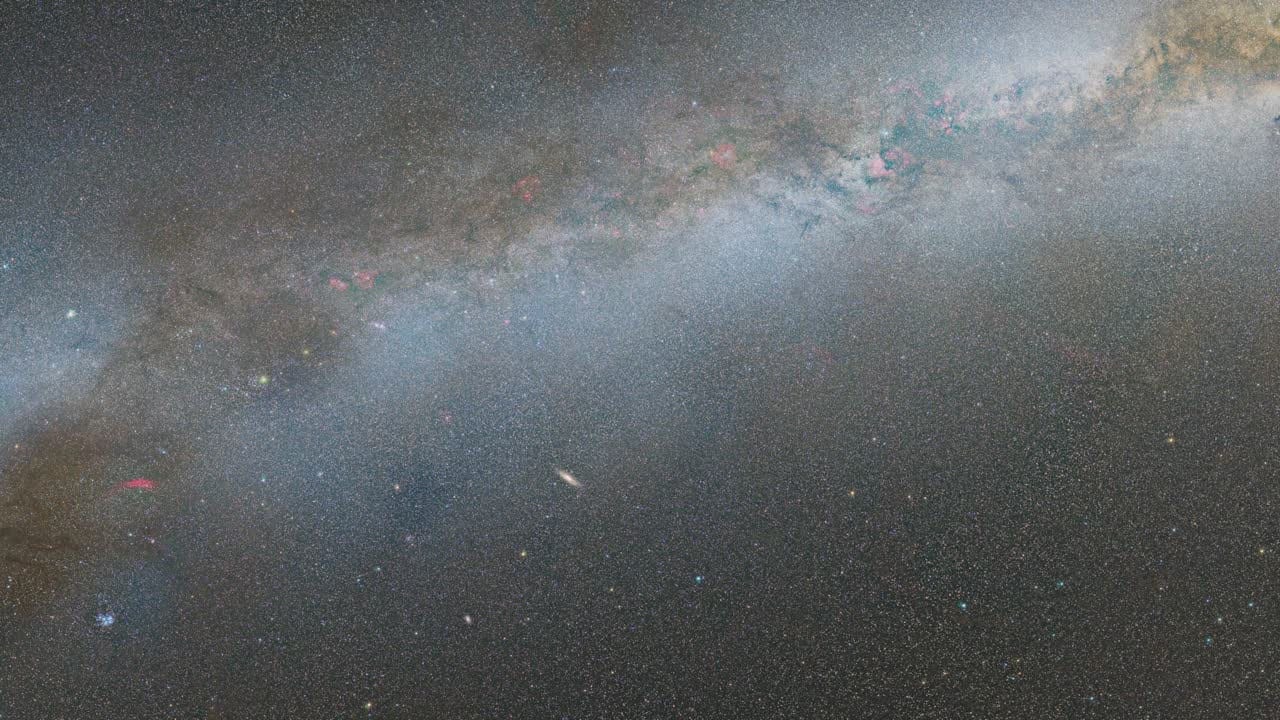
Hubble's High-Definition Panoramic View of the Andromeda Galaxy
NASA/Goddard Space Flight Center · NASA media (public domain)
Continue the atlas
Curated next objects
Andromeda (constellation)
observatoryGemini Observatory
A pair of 8.1-metre optical/infrared telescopes, one in Hawaii and one in Chile, giving coverage of both hemispheres.
space telescopeHubble Space Telescope
galaxyThe Milky Way
The barred spiral galaxy that contains the Solar System, the Sun, and all stars visible to the naked eye.
observatoryPalomar Observatory
Palomar Observatory is an astronomical observatory in California, home to the historic 200-inch Hale Telescope.
astronomerAl-Sufi
Abd al-Rahman al-Sufi, known in Latin as Azophi, revised Ptolemy's star catalogue against his own observations in his Book of Fixed Stars.
Observation
How this was captured
- Source
- NASA
- Observation date
- 2003-12-10
Gallery
Pulsar Candidate in Andromeda
NASA's Nuclear Spectroscope Telescope Array, or NuSTAR, has identified a candidate pulsar in Andromeda -- the nearest large galaxy to the Milky Way.
2017
NASA/JPL-Caltech/GSFC/JHU · NASA media (public domain)
Data
Scientific data & provenance
Data & provenance
- Stable ID
galaxy:andromeda-galaxy- Type
- Galaxy
- Domain
- Scientific connections
- Relationships
- 18
- Graph version
- 1.0.0
Dataset membership
Open data
In the graph export: graph.json · graph.jsonld
Planned API: GET /api/v0/entities/galaxy:andromeda-galaxy
Scientific quality
Complete6 of 6 applicable dimensions complete
- Description
- Complete
- Source coverage
- Complete
- Relationship coverage
- Complete
- Review coverage
- Complete
- Citation coverage
- Complete
- Image coverage
- Complete
- Timeline coverage
- Not applicable
Scientific entity. Dimensions that cannot apply to this object are excluded rather than counted as gaps. See the evidence framework and authority dashboard.
Provenance & sources
review 2026.1Asteria Scientific Review Process · verification: sourced · accurate
- High evidenceconfirmed
The Andromeda Galaxy (M31) is the nearest large spiral galaxy to the Milky Way, about 2.5 million light-years away, and is approaching the Milky Way for a future merger.
Source: NASA Science · Public domain (US Government work)
Reviewed by the internal Asteria Scientific Review Process — not an external institutional review. See the evidence framework and authority dashboard.
Scientific citations
2Real, source-backed references — primary papers first, then datasets and institutional sources. Formatted through the citation engine; nothing is fabricated.
Vera C. Rubin & W. Kent Ford Jr. · The Astrophysical Journal 159, 379 · 1970
The Astrophysical Journal · doi:10.1086/150317
Cite (APA / BibTeX)
Vera C. Rubin & W. Kent Ford Jr. (1970). Rotation of the Andromeda Nebula from a Spectroscopic Survey of Emission Regions. The Astrophysical Journal 159, 379. The Astrophysical Journal. https://doi.org/10.1086/150317 @misc{cite:rubin-ford-1970, title = {Rotation of the Andromeda Nebula from a Spectroscopic Survey of Emission Regions}, author = {Vera C. Rubin and W. Kent Ford Jr.}, organization = {The Astrophysical Journal}, howpublished = {The Astrophysical Journal 159, 379}, year = {1970}, doi = {10.1086/150317}, url = {https://doi.org/10.1086/150317}, note = {Andromeda rotation curve — evidence for dark matter.} }NASA/IPAC (Caltech)
Cite (APA / BibTeX)
NASA/IPAC (Caltech) (n.d.). Andromeda Galaxy (M31) — NASA/IPAC Extragalactic Database. NASA/IPAC (Caltech). https://ned.ipac.caltech.edu/

@misc{cite:ned-galaxy-andromeda-galaxy,
  title        = {Andromeda Galaxy (M31) — NASA/IPAC Extragalactic Database},
  organization = {NASA/IPAC (Caltech)},
  year         = {n.d.},
  url          = {https://ned.ipac.caltech.edu/},
  note         = {Positions, redshift, and cross-identifications for Andromeda Galaxy (M31).}
}
You might also explore
- GalaxyTriangulum GalaxyLinked through The Milky Way
- EraModern AstronomyLinked through Edwin Hubble
- Observing bandVisible lightLinked through Gemini Observatory
- GalaxyWhirlpool GalaxyLinked through Hubble Space Telescope
- Astrophysical objectDark Matter HaloLinked through Vera Rubin
- NebulaEagle NebulaLinked through Hubble Space Telescope
Sources & references
The primary and reference sources this topic draws on.
- NASANational Aeronautics and Space Administration
Mission data, planetary science, space telescopes, and public-domain imagery.
Most NASA-produced imagery is in the public domain; individual items are checked for usage terms before publication.
- ESAEuropean Space Agency
European missions, observatories, and space science imagery.
- IAUInternational Astronomical Union
Official naming, definitions, constellation boundaries, and astronomical nomenclature.