Space mission
ACE (Advanced Composition Explorer)
A NASA mission at the Sun–Earth L1 point that measures the solar wind and energetic particles upstream of Earth, giving roughly an hour of warning before disturbances reach the planet.
- Type
- Space mission
- Domain
- Scientific connections
- Connections
- 2
NASA/Johnson · NASA media (public domain)
- Type: Space mission
- Domain: Scientific connections
Experience system V6
Mission dossier
A mission-story layout that emphasizes target bodies, spacecraft, timeline, agency, and evidence-backed status.
- 01
Observe
NASA imagery anchors the visual reading with licensed source metadata.
- 02
Measure
Measurement panels use graph coverage, catalog identifiers, and source availability without inventing values.
- 03
Locate
Observes Solar Wind.
- 04
Connect
2 graph relations shape the knowledge viewport.
- Object type
- Space mission
- Graph relations
- 2
- Verified sources
- 1
- Image records
- 4
- Domain
- Scientific connections
- Status
- Graph entity
Scientific map
Mission context
- Observes
Solar Wind
- Observes
Solar Energetic Particles (SEP)
Original SVG diagram
Mission architecture
- Agency
- Not recorded
- Launch year
- Not recorded
- Mission type
- Not recorded
- Status
- Not recorded
Visual knowledge graph
Relationships, not isolated facts
This viewport is generated from the Asteria knowledge graph. Science, culture, and interpretive links remain separated by domain so visual context never changes the evidentiary meaning of a relation.
- ObservesSolar Energetic Particles (SEP)
- ObservesSolar Wind
Image provenance
Photography as evidence
Continue the atlas
Curated next objects
Solar Wind
The continuous stream of charged particles — mostly protons and electrons — that flows outward from the Sun's corona at hundreds of kilometres per second, filling the Solar System and shaping planetary magnetospheres.
radiation environmentSolar Energetic Particles (SEP)
Bursts of high-energy particles accelerated by solar flares and coronal mass ejections. Unlike the steady galactic cosmic rays, SEP events are sudden and can deliver a dangerous radiation dose to astronauts within hours.
planetEarth
Earth is the third planet from the Sun and the only world known to support life.
geomagnetic indexNOAA S-Scale (Solar Radiation Storms)
NOAA's five-level scale for solar radiation (energetic-particle) storms, from S1 to S5, describing the radiation hazard to astronauts, high-altitude flights, and spacecraft.
space missionDSCOVR (Deep Space Climate Observatory)
A NOAA/NASA mission at the Sun–Earth L1 point that provides real-time solar-wind measurements for operational space-weather forecasting, along with full-disc images of Earth.
space missionParker Solar Probe
Parker Solar Probe is a NASA spacecraft launched in 2018 to fly through the Sun's outer atmosphere, making the closest approaches to the Sun of any spacecraft.
Observation
How this was captured
- Source
- NASA
- Observation date
- 2025-03-06
Gallery
PRO Imagery Submittal - ACES
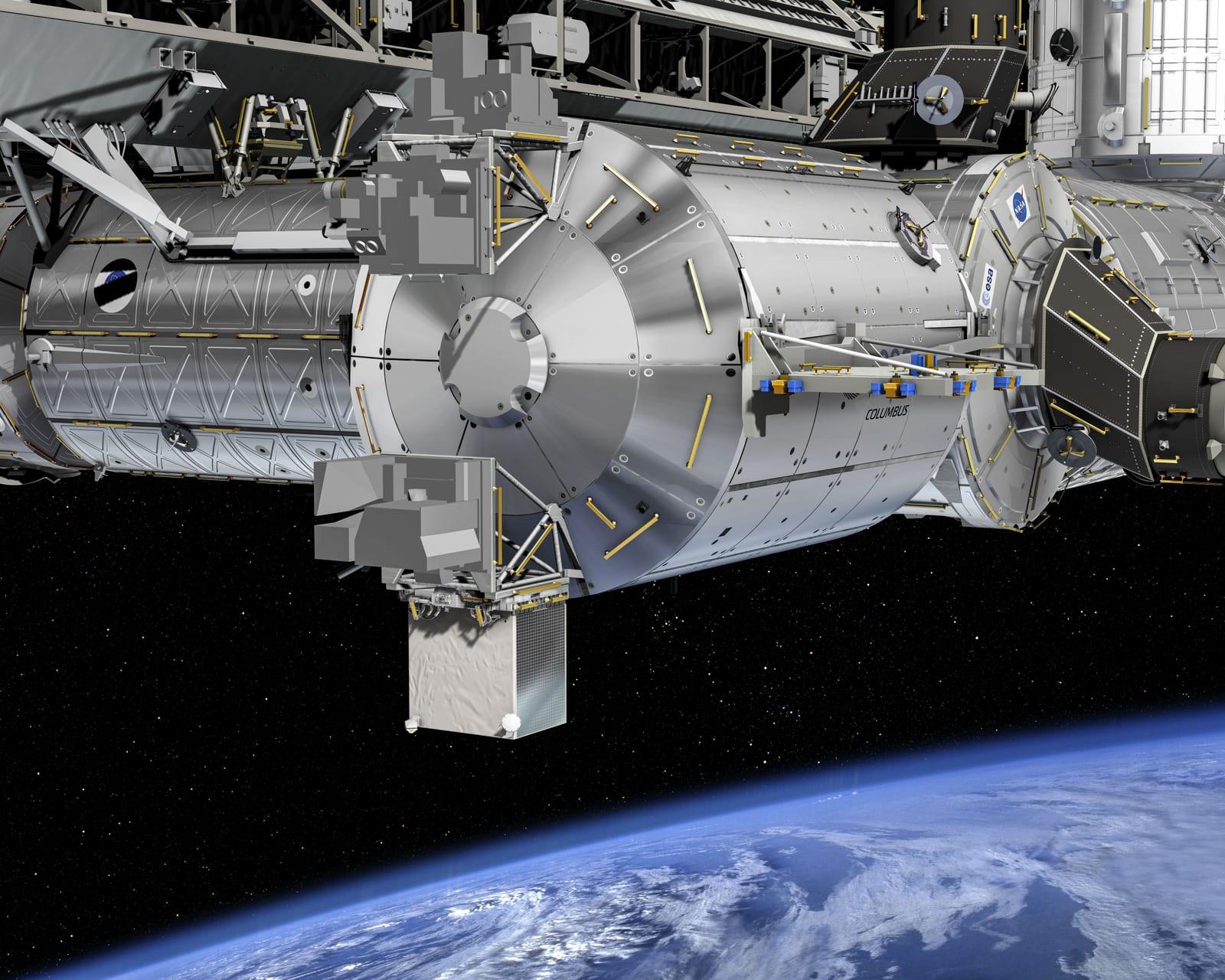
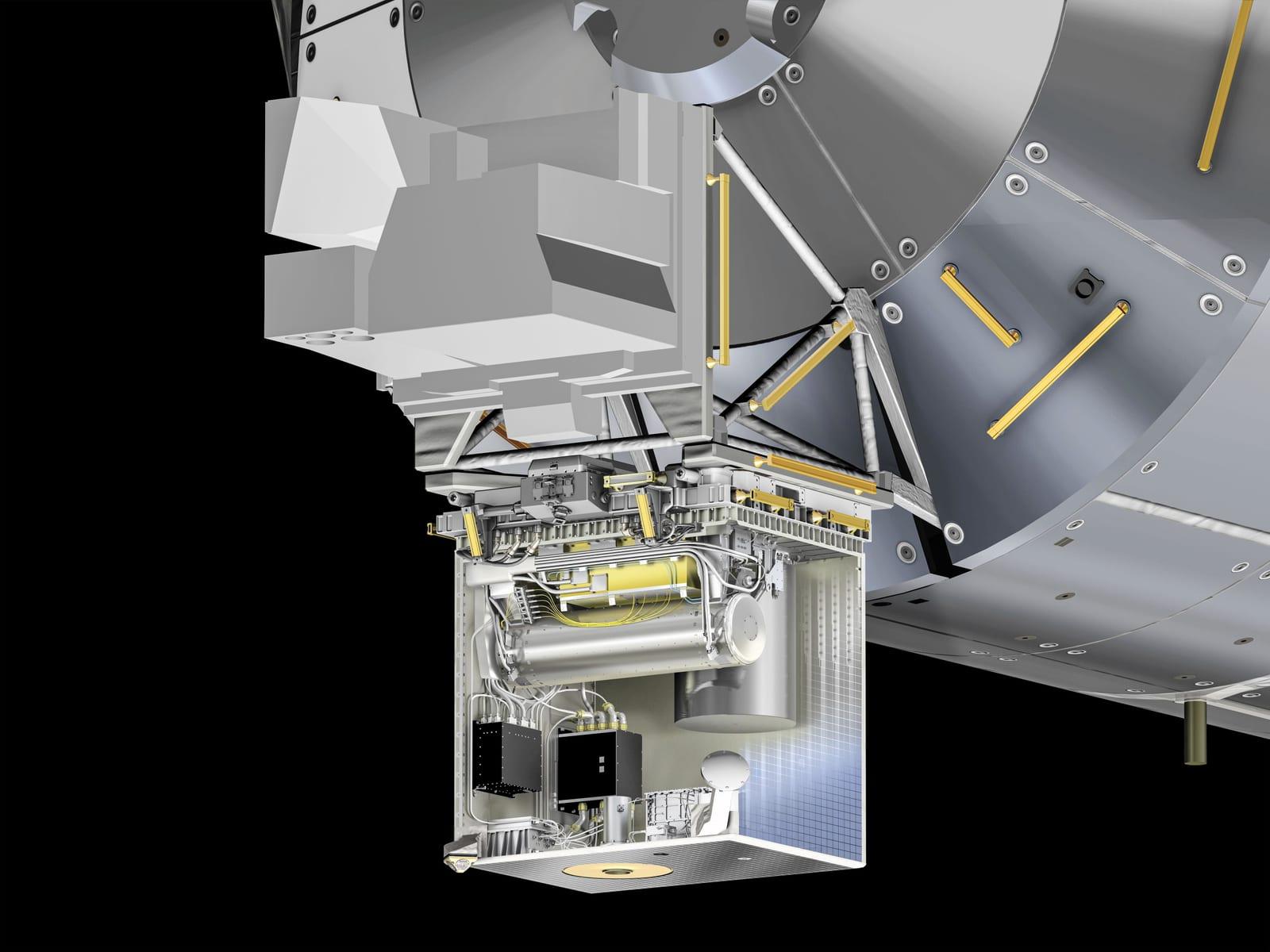
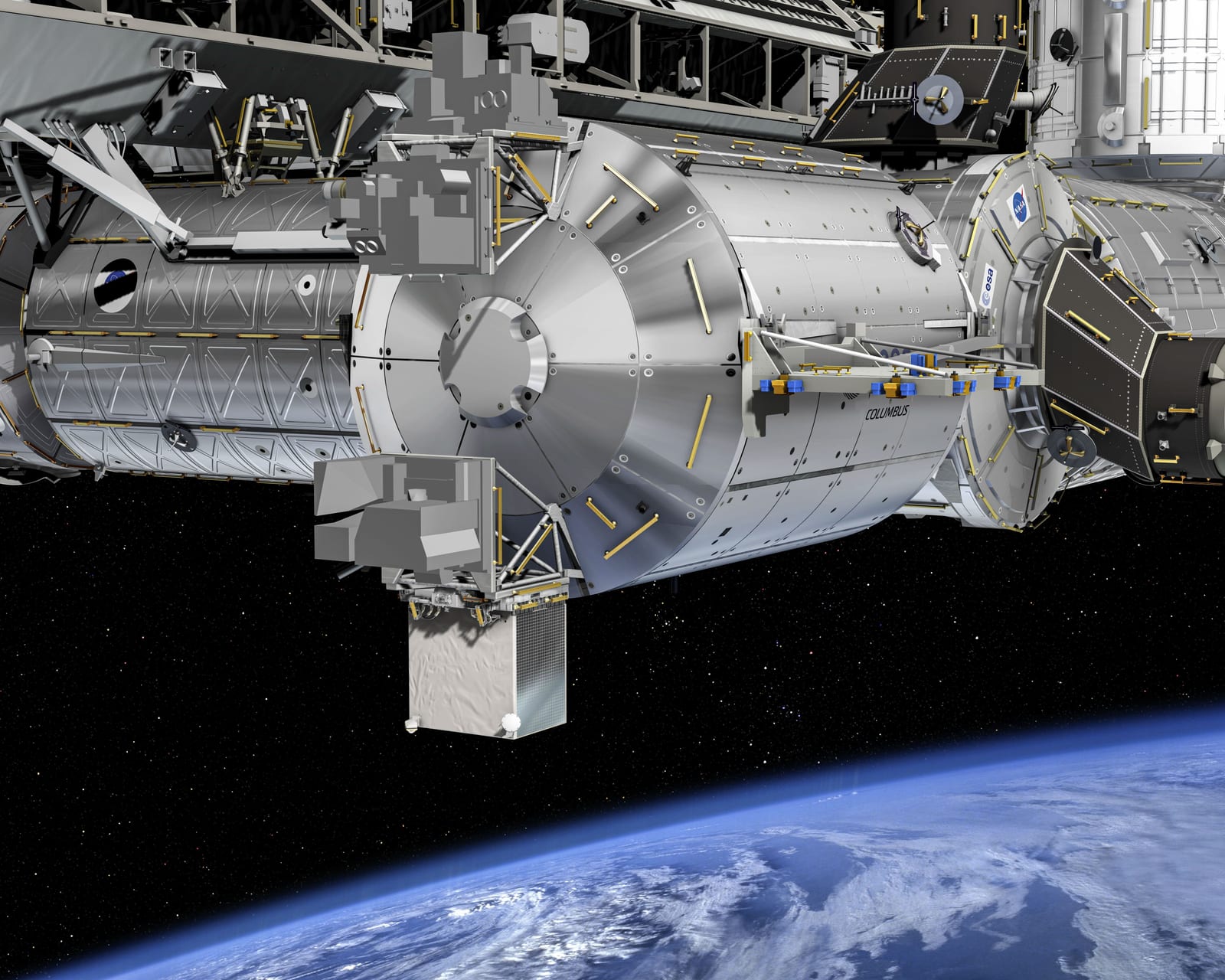
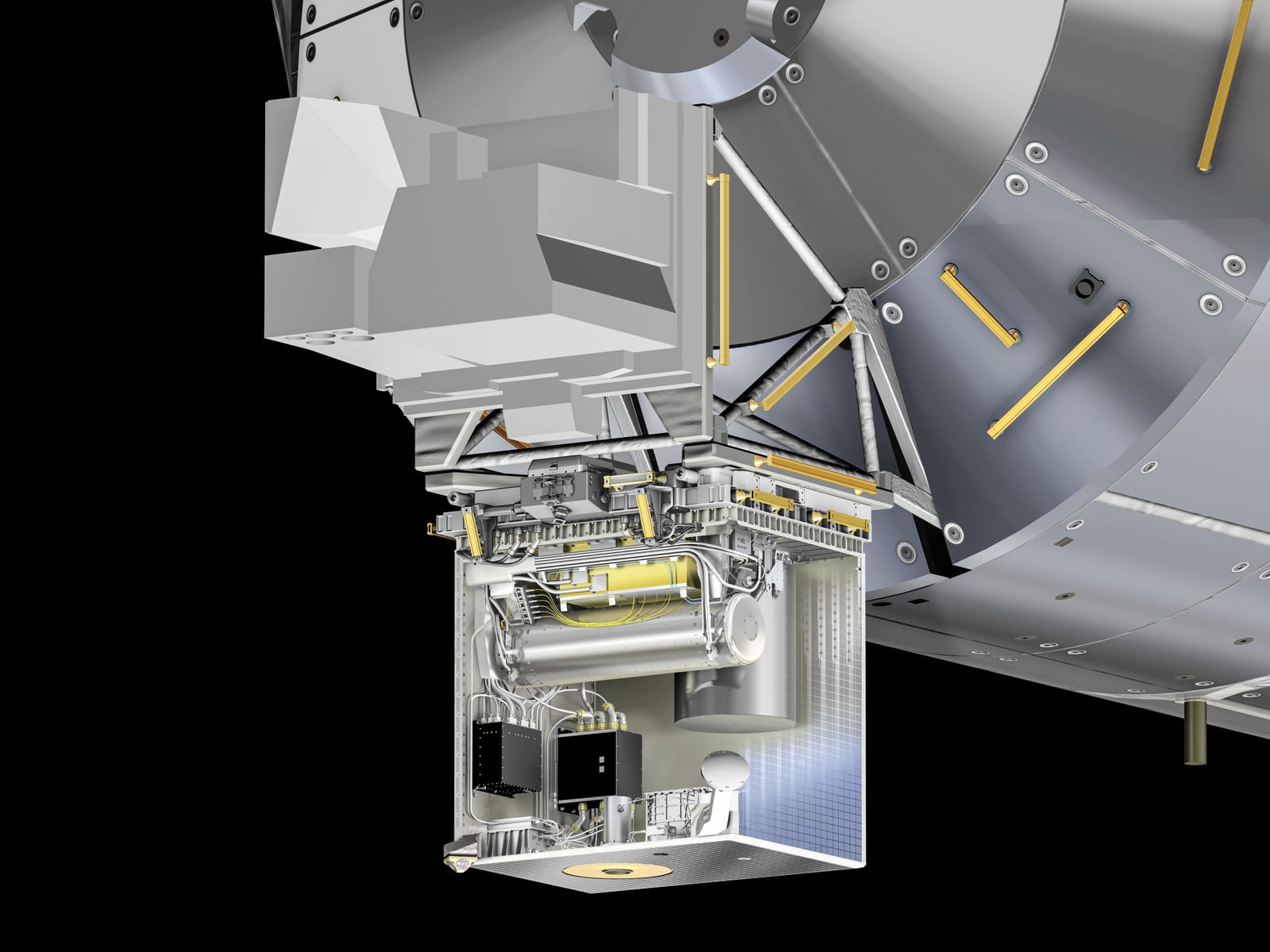
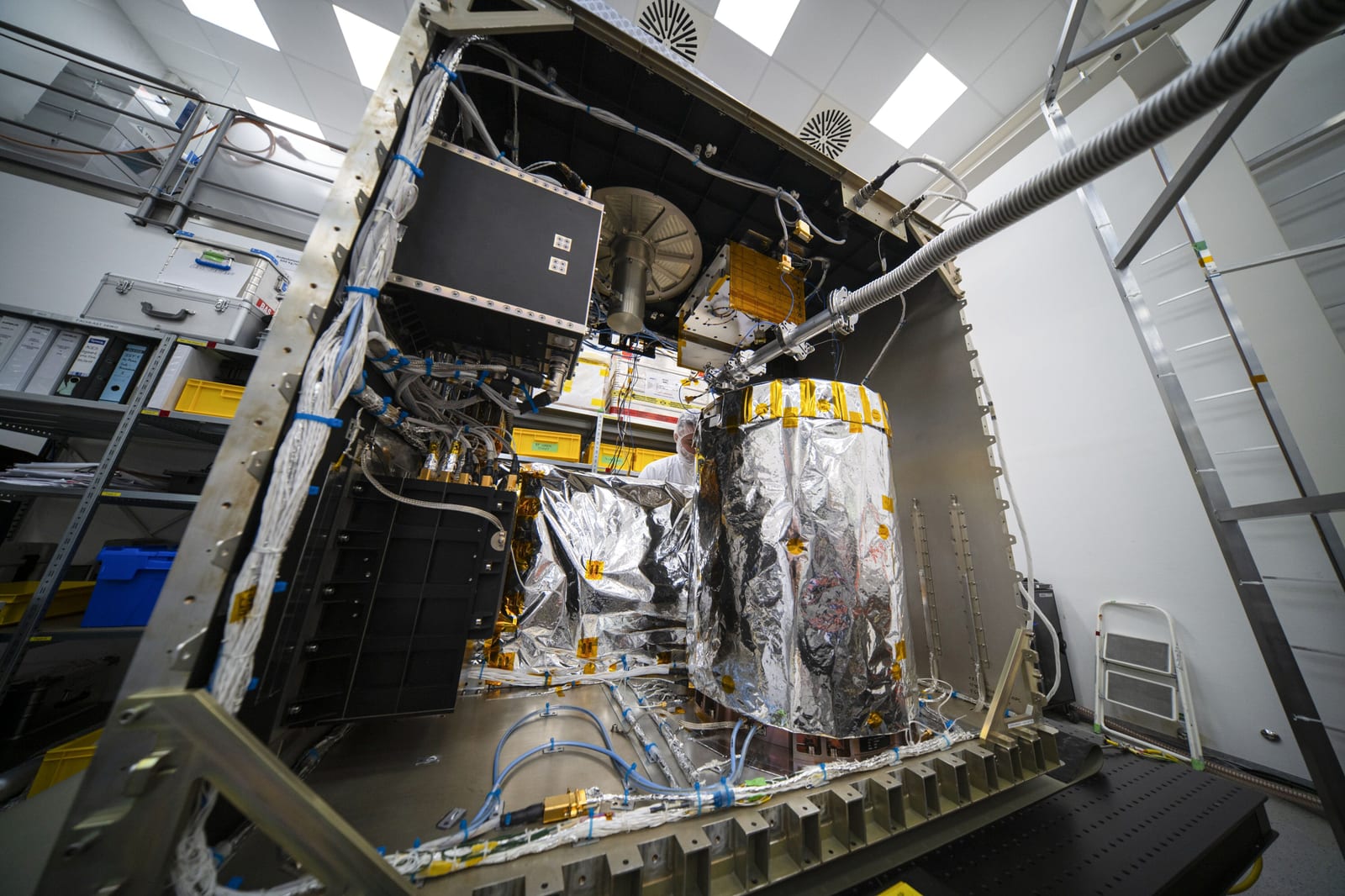
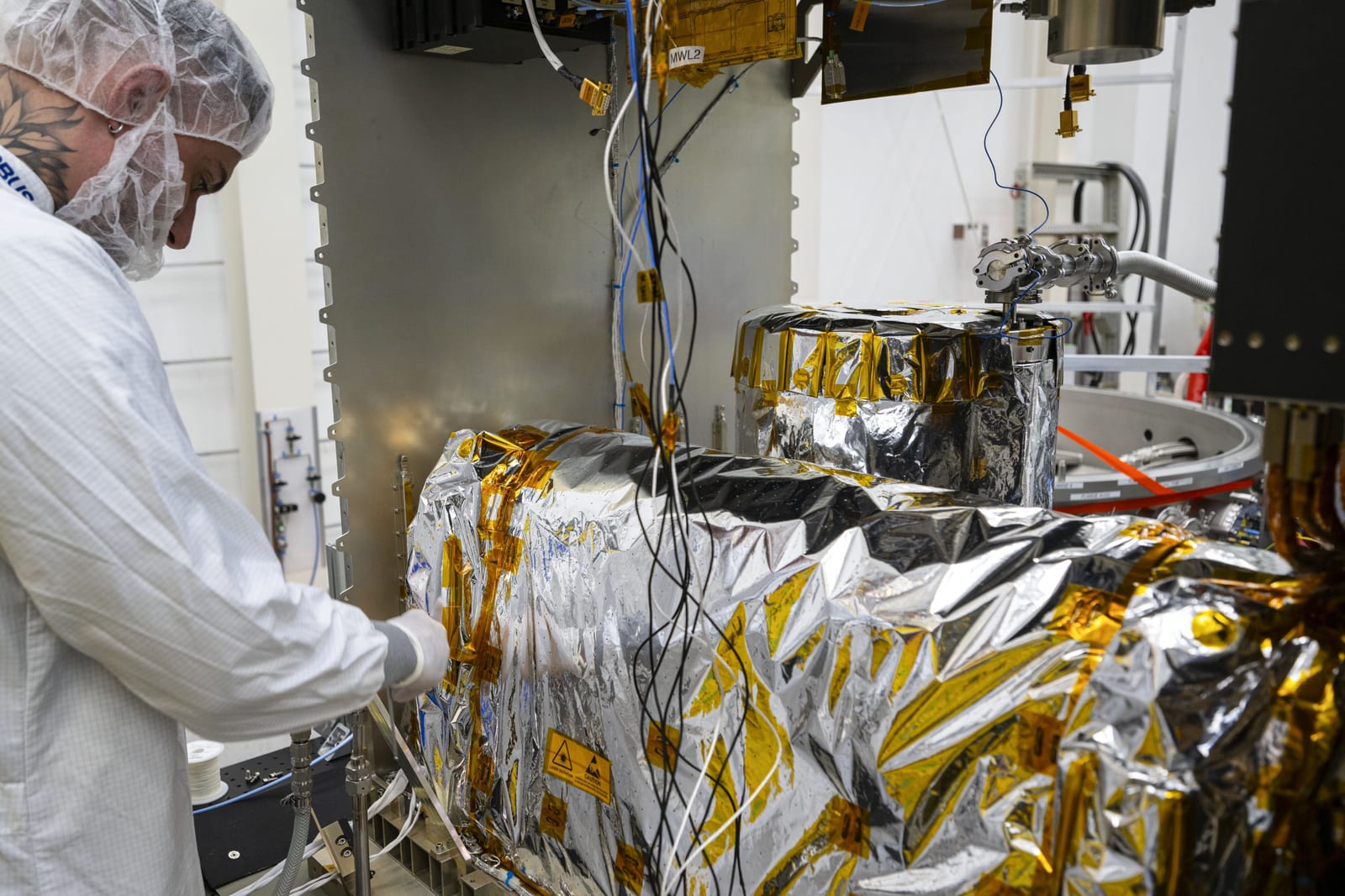
jsc2025e015680 (3/6/2025) --- The closure of the instrument panel of the Atomic Clock Ensemble in Space (ACES) has taken place at Airbus Friedrichshafen, Germany.
2025
NASA/Johnson · NASA media (public domain)
Data
Scientific data & provenance
Data & provenance
- Stable ID
space_mission:ace- Type
- Space mission
- Domain
- Scientific connections
- Relationships
- 2
- Graph version
- 1.0.0
Dataset membership
Open data
In the graph export: graph.json · graph.jsonld
Planned API: GET /api/v0/entities/space_mission:ace
Scientific quality
Partial2 of 7 applicable dimensions complete, 2 partial
- Description
- Complete
- Source coverage
- Partial
- Relationship coverage
- Partial
- Review coverage
- None
- Citation coverage
- None
- Image coverage
- Complete
- Timeline coverage
- None
Scientific entity. Dimensions that cannot apply to this object are excluded rather than counted as gaps. See the evidence framework and authority dashboard.
You might also explore
- PlanetEarthLinked through Solar Wind
- Geomagnetic indexNOAA S-Scale (Solar Radiation Storms)Linked through Solar Energetic Particles (SEP)
- Space missionDSCOVR (Deep Space Climate Observatory)Linked through Solar Wind
- Space missionParker Solar ProbeLinked through Solar Wind
- Space missionSolar OrbiterLinked through Solar Wind
- Space-weather impactAviationLinked through Solar Energetic Particles (SEP)
Sources & references
The primary and reference sources this topic draws on.
- NASANational Aeronautics and Space Administration
Mission data, planetary science, space telescopes, and public-domain imagery.
Most NASA-produced imagery is in the public domain; individual items are checked for usage terms before publication.