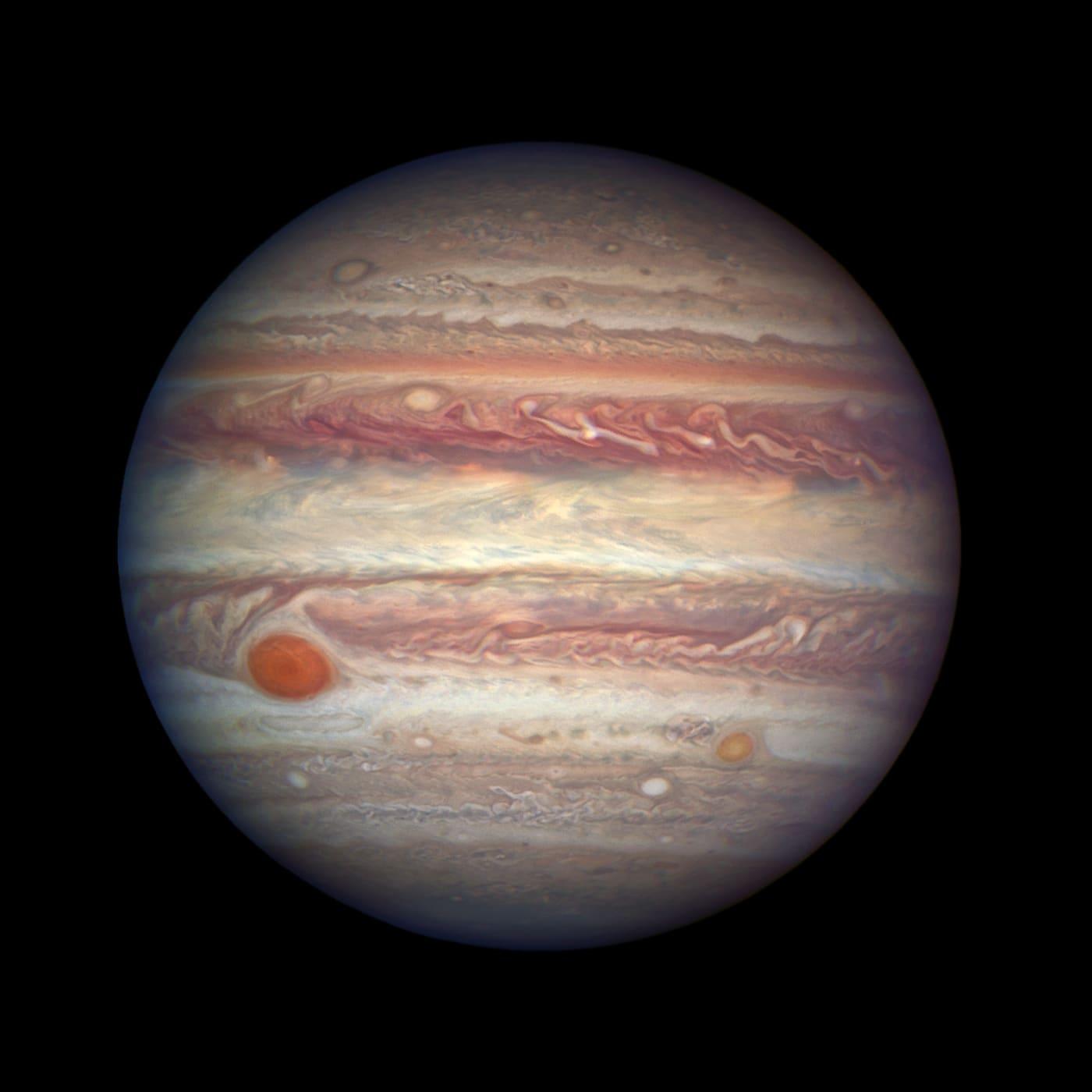
Planet · Gas giant
Jupiter
- Type
- Gas giant
- Diameter
- 142,984 km
- Distance from Sun
- 778.6 M km
- Surface gravity
- 23.1 m/s²
- Mean temp.
- -110 °C
- Moons
- 79
NASA Goddard · NASA media (public domain)
Overview
Scientific overview
Jupiter is a gas giant in orbit around The Sun, at a mean distance of 778.6 million km from the Sun.
Physical characteristics
- Mass
- 1,898 ×10²⁴ kg
- Diameter
- 142,984 km
- Radius
- 71,492 km
- Density
- 1.326 g/cm³
- Surface gravity
- 23.1 m/s²
- Escape velocity
- 59.5 km/s
- Rotation period
- 9.9 h
- Mean temperature
- -110 °C
Scale
Compared to Earth
Earth
Jupiter
Jupiter is 11× Earth
142,984 km across · Earth is 12,742 km
Orbit
- Distance from Sun
- 778.6 million km (5.205 AU)
- Orbital period
- 11.86 years
- Perihelion
- 740.5 million km
- Aphelion
- 816.6 million km
- Eccentricity
- 0.049
- Orbital inclination
- 1.3°
- Axial tilt
- 3.1°
- Orbital velocity
- 13.1 km/s
Gallery
Jupiter Plume
1999
NASA/JPL · NASA media (public domain)
Observation
How this was captured
- Observatory / instrument
- Hubble Space Telescope
- Mission
- Hubble Space Telescope
- Source
- HUBBLE
- Observation date
- 2017-04-06
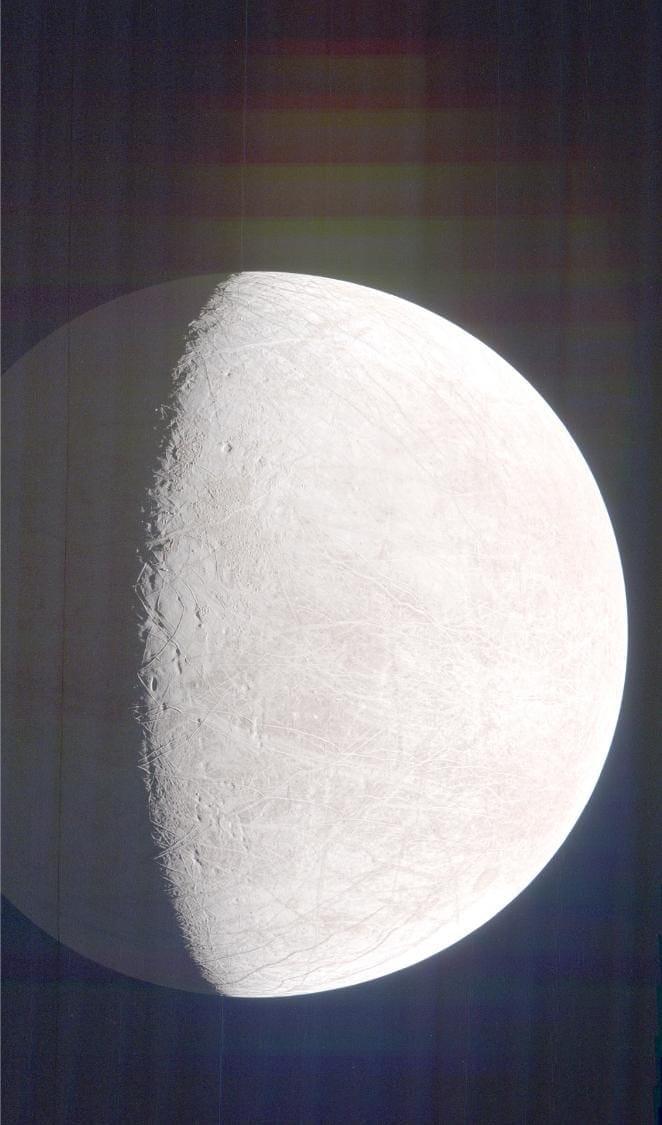
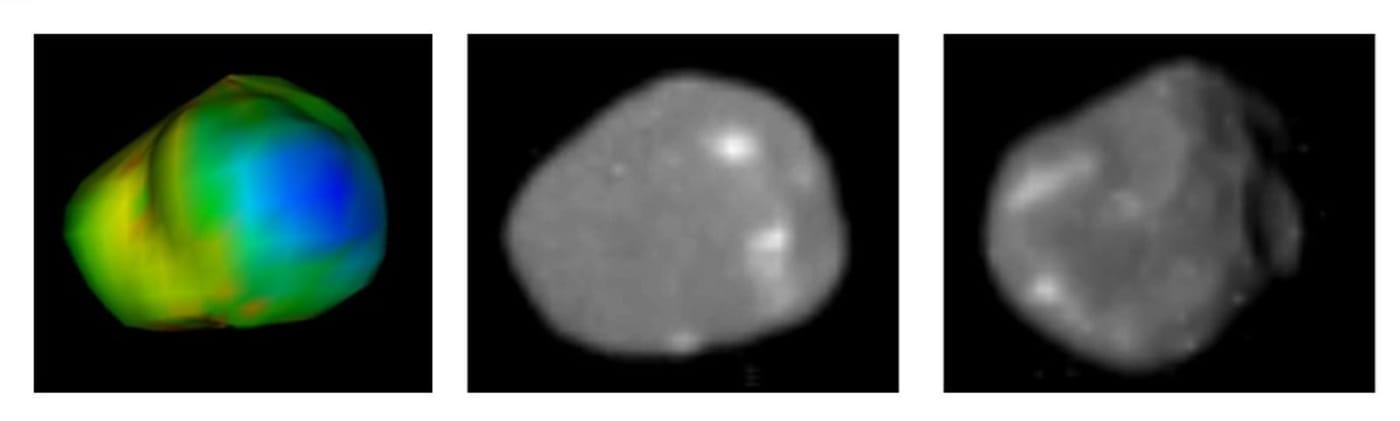
Moons (5)
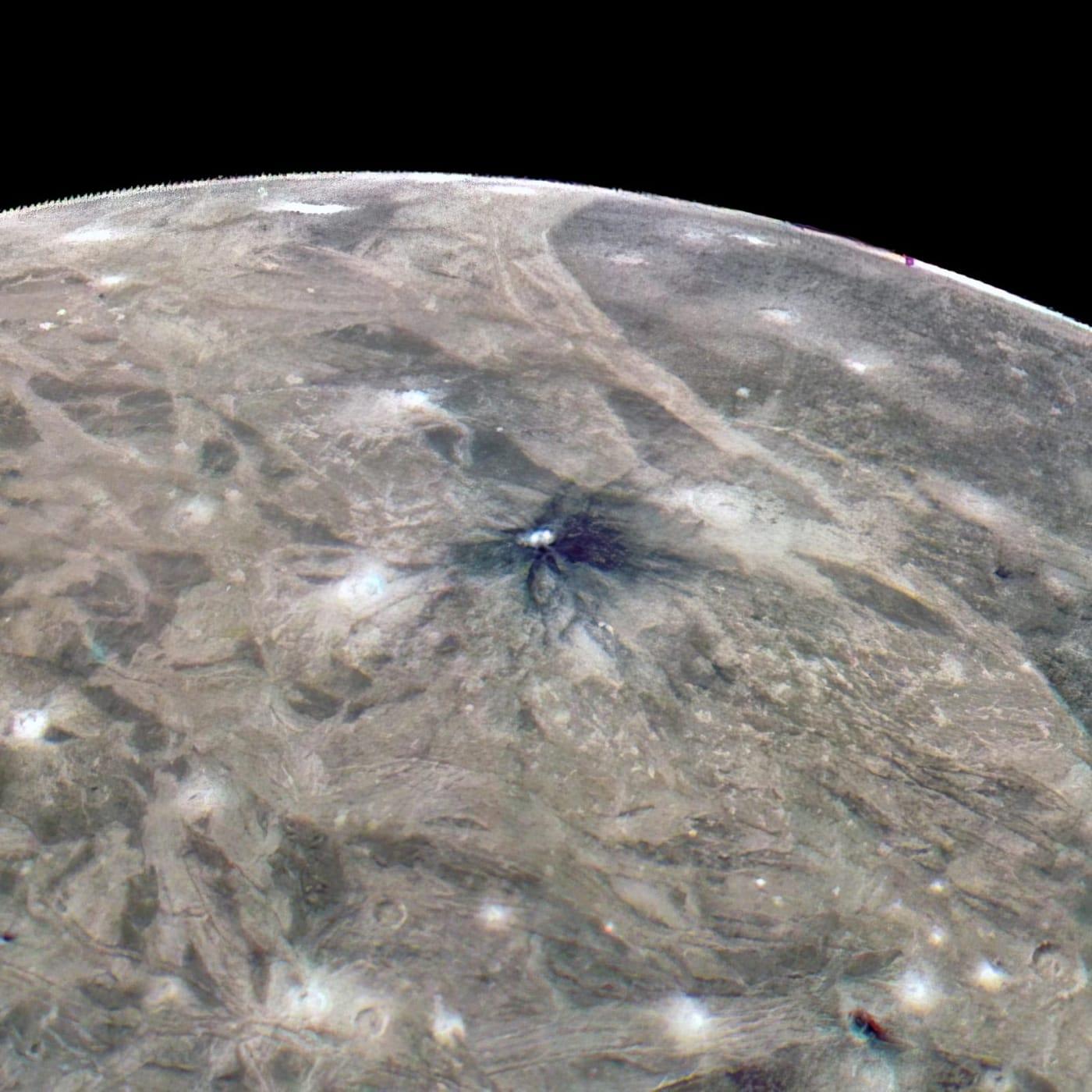
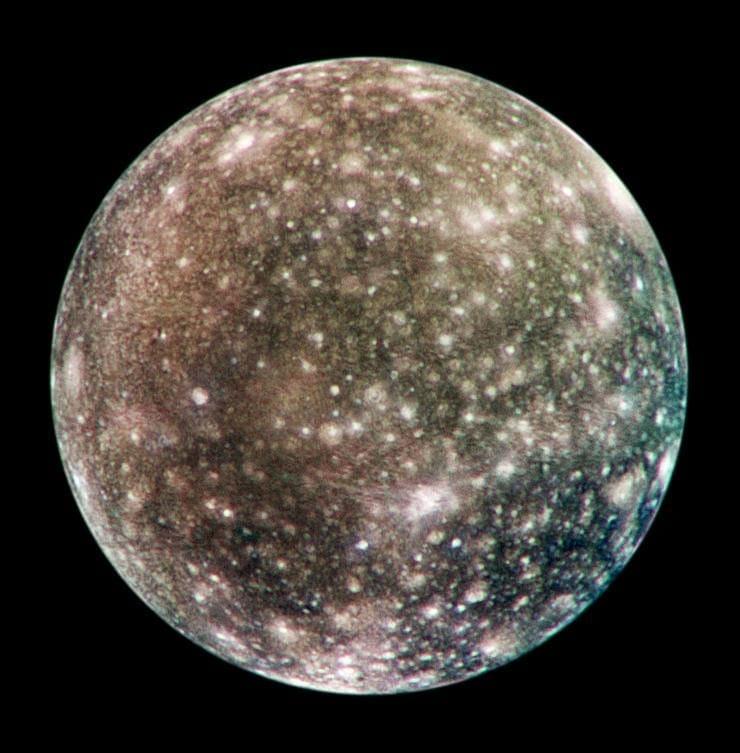
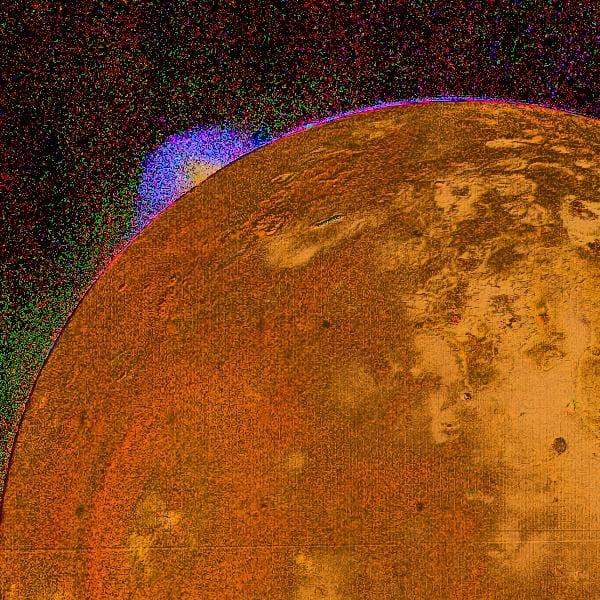
Notable surface features
Exploration
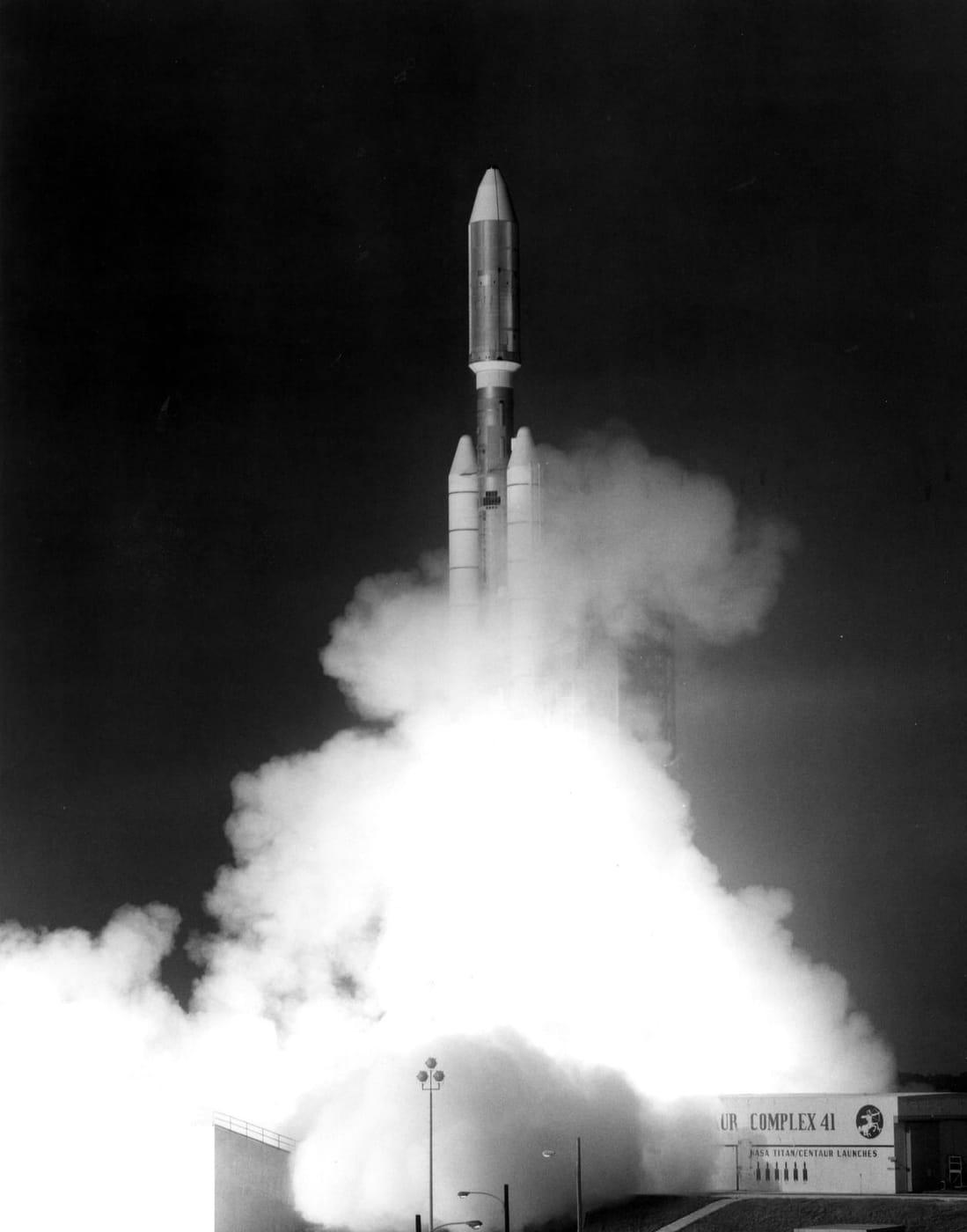
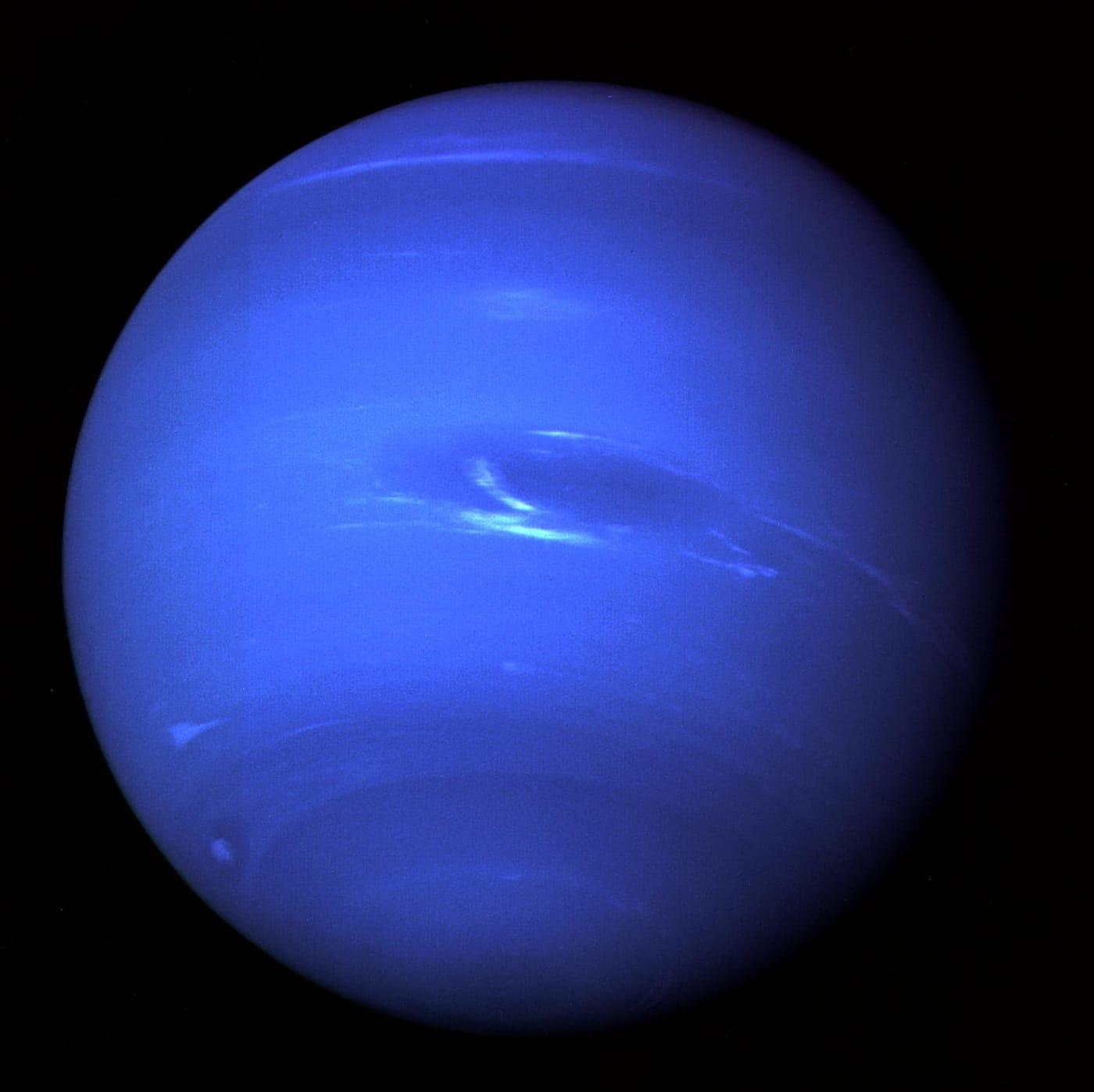

Sources
The primary and reference sources this topic draws on.
- NASANational Aeronautics and Space Administration
Mission data, planetary science, space telescopes, and public-domain imagery.
Most NASA-produced imagery is in the public domain; individual items are checked for usage terms before publication.
- NASA JPLJet Propulsion Laboratory / Solar System Dynamics
Orbital data, ephemerides, and small-body parameters for planets, asteroids, and comets.