Moon
Io
Io is the innermost of the four Galilean moons of Jupiter and is intensely volcanic.
- Type
- Moon
- Domain
- Scientific connections
- Connections
- 6
NASA/JPL · NASA media (public domain)
- Type: Moon
- Domain: Scientific connections
Experience system V6
Satellite world profile
A moon-first layout that links the body to its parent planet, orbital context, geology, and mission evidence when available.
- 01
Observe
NASA imagery anchors the visual reading with licensed source metadata.
- 02
Measure
Numerical fields come from the typed Solar System catalog and are omitted when not available.
- 03
Locate
Child of Jupiter.
- 04
Connect
6 graph relations shape the knowledge viewport.
- Object type
- Moon
- Graph relations
- 6
- Verified sources
- 2
- Image records
- 4
- Domain
- Scientific connections
- Status
- Graph entity
Scientific map
Orbit context
- Primary orbital anchor
- Jupiter
- Measured orbit field
- Orbital distance not recorded in this graph record
Original SVG diagram
Interior and field cues
- Atmosphere
- Not recorded
- Mean temperature
- Not recorded
- Gravity
- Not recorded
- Magnetic field
- Not recorded
Visual knowledge graph
Relationships, not isolated facts
This viewport is generated from the Asteria knowledge graph. Science, culture, and interpretive links remain separated by domain so visual context never changes the evidentiary meaning of a relation.
- Target ofGalileo
- Discovered byGalileo Galilei
- Observed byGalileo Galilei
- Child ofJupiter
One of the four Galilean moons.
- Related toThe Galilean Moons of Jupiter
- Associated withVolcanism
Image provenance
Photography as evidence
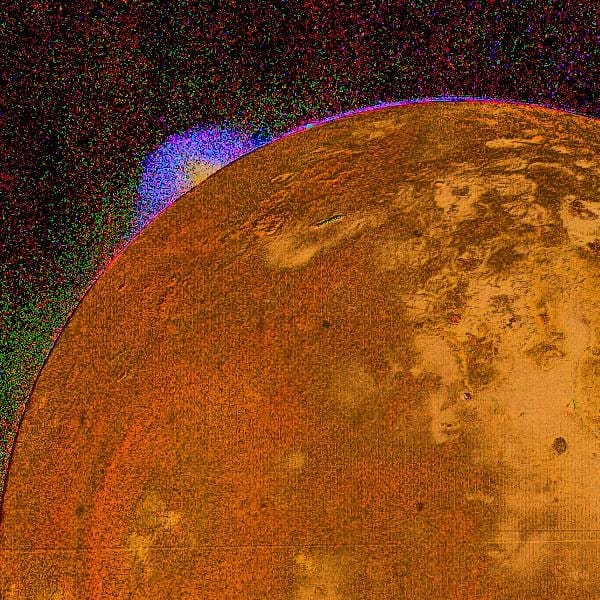
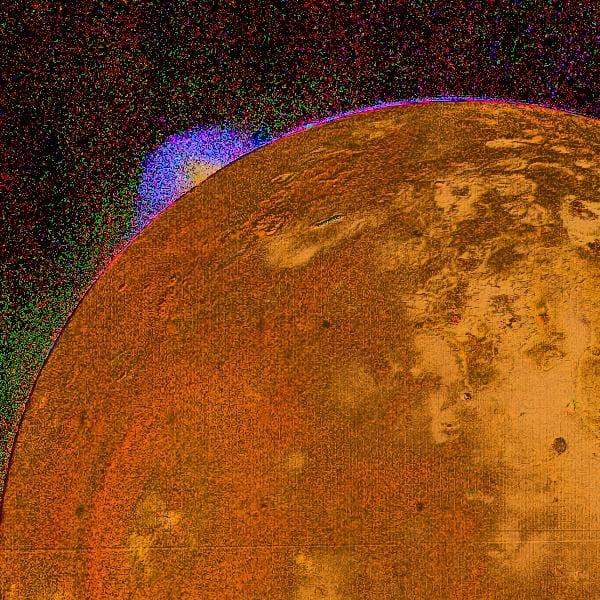
Jupiter Moon Io
NASA/JPL · NASA media (public domain)
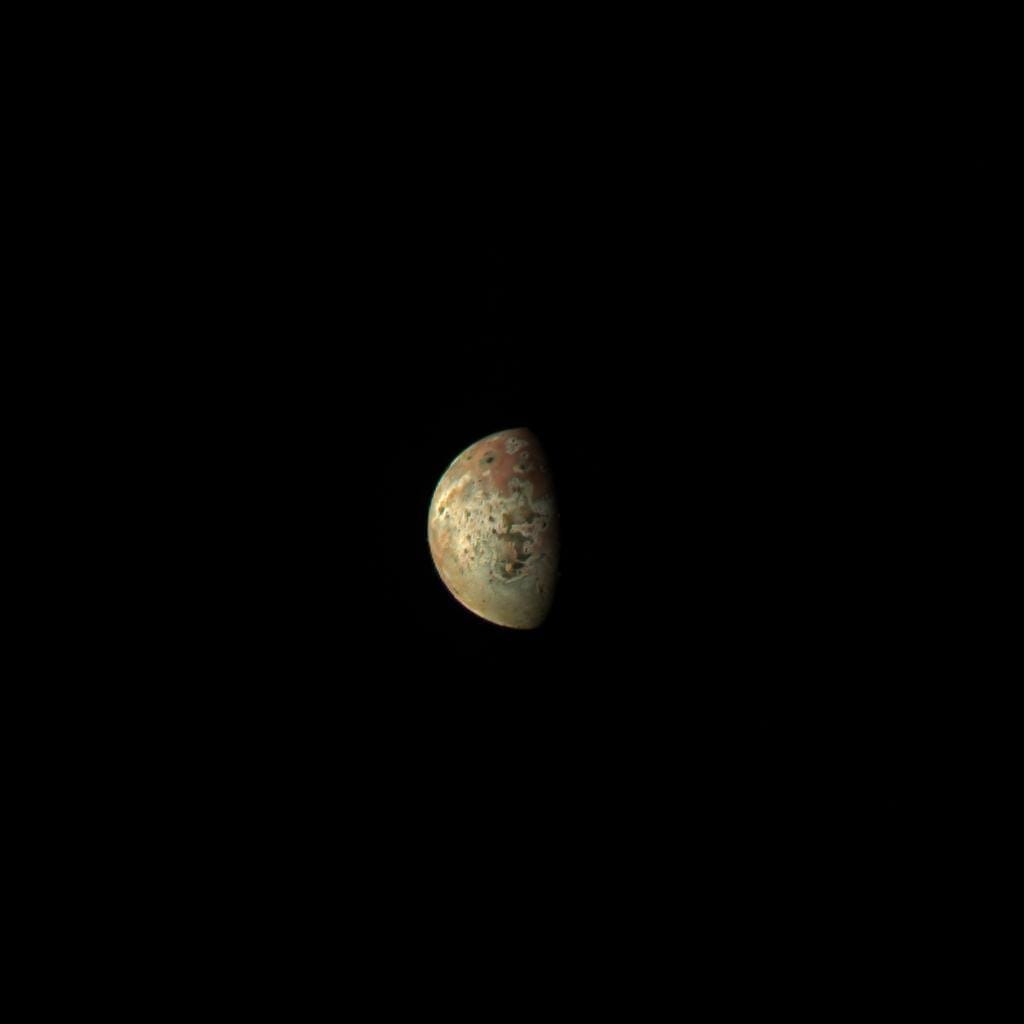
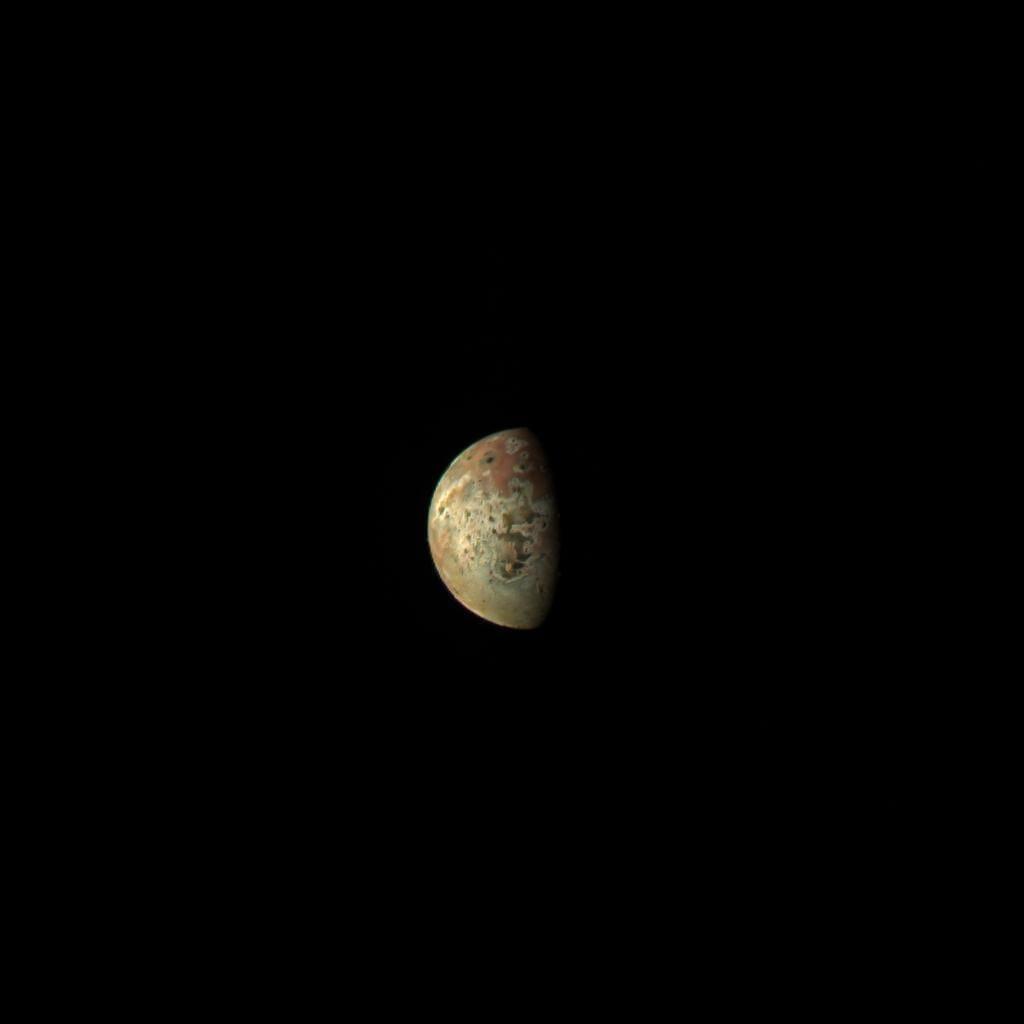
Juno Getting Closer to Jovian Moon Io
Image data: NASA/JPL-Caltech/SwRI/MSSS Image processing: Kevin M. Gill (CC BY) · NASA media (public domain)
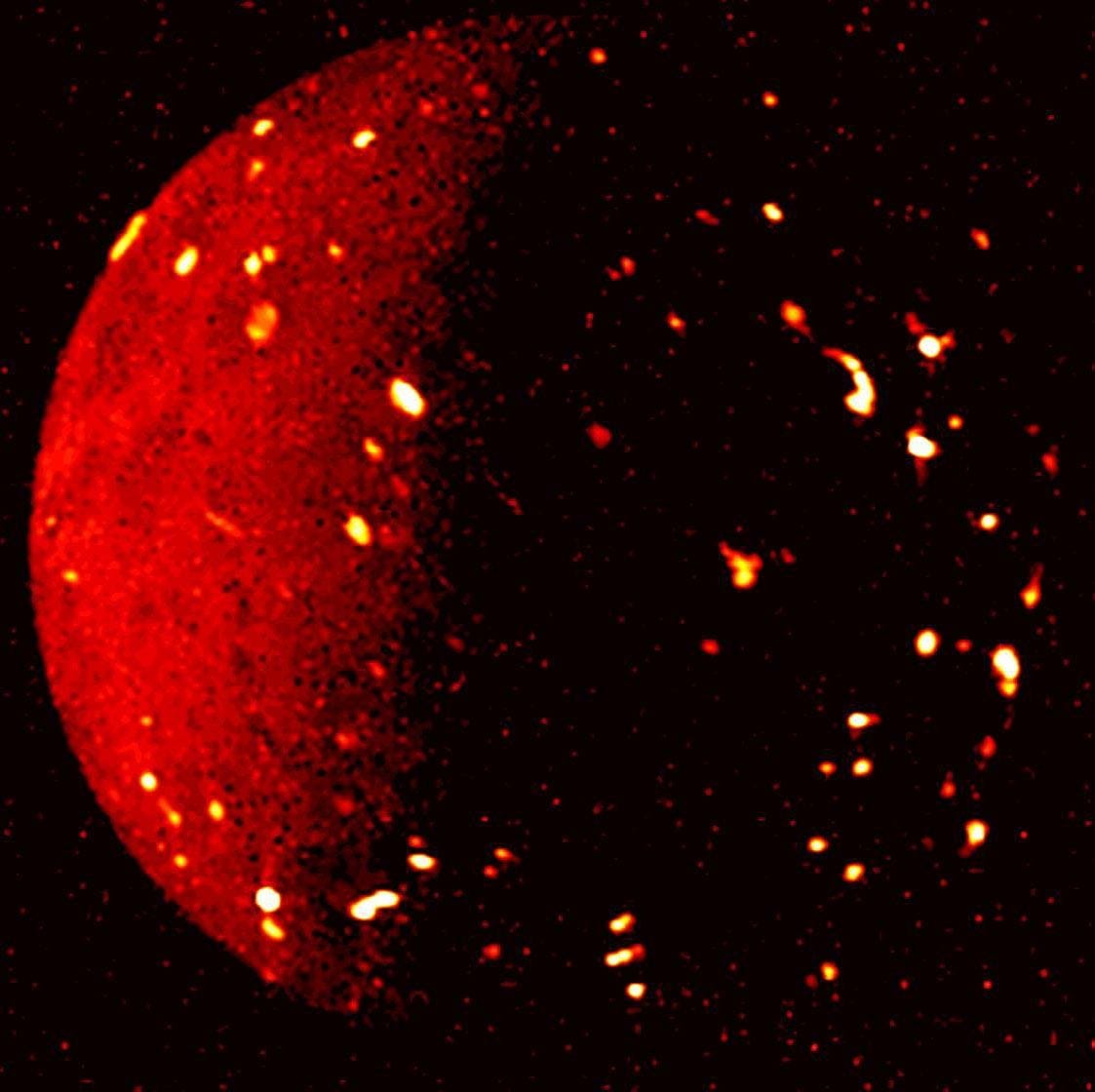
Jupiter's Moon Io Seen in Infrared Light
Image data: NASA/JPL-Caltech/SwRI/ASI/INAF/JIRAM · NASA media (public domain)
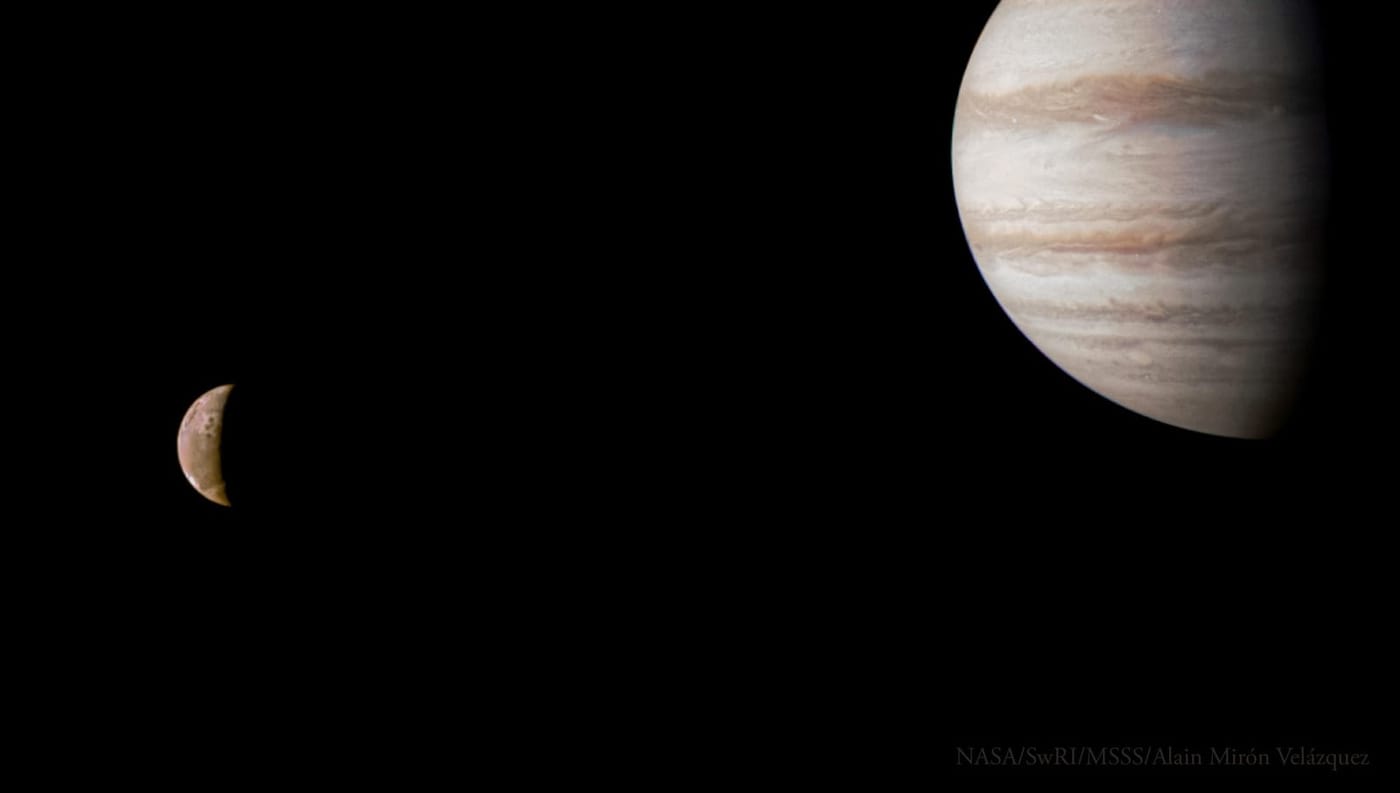
A Portrait of Planet and Moon: NASA's Juno Mission Captures Jupiter and Io Together
Image data: NASA/JPL-Caltech/SwRI/MSSS Image processing by Alain Mirón Velázquez © CC BY · NASA media (public domain)
Continue the atlas
Curated next objects
Jupiter
astronomerGalileo Galilei
Galileo Galilei was an Italian astronomer and physicist who pioneered telescopic astronomy, discovering the four largest moons of Jupiter.
space missionGalileo
Jupiter orbiter · NASA · launched 1989.
historical discoveryThe Galilean Moons of Jupiter
In January 1610 Galileo saw four points of light beside Jupiter that changed position night after night — moons orbiting another world.
planetary processVolcanism
The eruption of molten rock from a planet's interior onto its surface — from Earth's volcanoes to the relentless silicate volcanism of Jupiter's moon Io, the most volcanically active body in the Solar System, whose surface and plumes are painted with sulphur and sulphur-dioxide frosts.
moonEuropa
Europa is one of the four Galilean moons of Jupiter, covered by a shell of water ice.
Observation
How this was captured
- Source
- NASA
- Observation date
- 1998-12-05
Gallery
Jupiter's Moon Io Seen in Infrared Light
NASA's Juno mission captured this infrared view of Jupiter's volcanic moon Io on July 5, 2022, when the spacecraft was about 50,000 miles (80,000 kilometers) away.
2022
Image data: NASA/JPL-Caltech/SwRI/ASI/INAF/JIRAM · NASA media (public domain)
Data
Scientific data & provenance
Data & provenance
- Stable ID
moon:io- Type
- Moon
- Domain
- Scientific connections
- Relationships
- 6
- Graph version
- 1.0.0
Dataset membership
Scientific quality
Substantial4 of 6 applicable dimensions complete
- Description
- Complete
- Source coverage
- Complete
- Relationship coverage
- Complete
- Review coverage
- None
- Citation coverage
- None
- Image coverage
- Complete
- Timeline coverage
- Not applicable
Scientific entity. Dimensions that cannot apply to this object are excluded rather than counted as gaps. See the evidence framework and authority dashboard.
You might also explore
Sources & references
The primary and reference sources this topic draws on.
- NASANational Aeronautics and Space Administration
Mission data, planetary science, space telescopes, and public-domain imagery.
Most NASA-produced imagery is in the public domain; individual items are checked for usage terms before publication.
- NASA JPLJet Propulsion Laboratory / Solar System Dynamics
Orbital data, ephemerides, and small-body parameters for planets, asteroids, and comets.