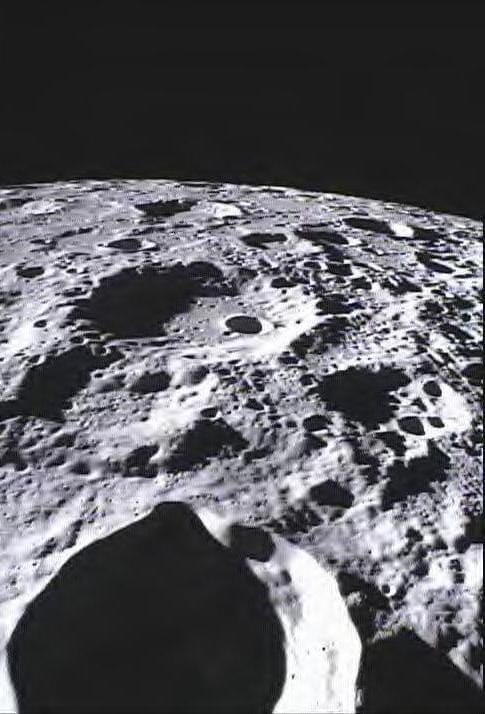
Moon
The Moon
The Moon is Earth's only natural satellite.
- Type
- Moon
- Domain
- Scientific connections
- Connections
- 51
NASA/Caltech-JPL/MIT/SRS · NASA media (public domain)
- Type: Moon
- Domain: Scientific connections
Experience system V6
Satellite world profile
A moon-first layout that links the body to its parent planet, orbital context, geology, and mission evidence when available.
- 01
Observe
NASA imagery anchors the visual reading with licensed source metadata.
- 02
Measure
Numerical fields come from the typed Solar System catalog and are omitted when not available.
- 03
Locate
Child of Earth.
- 04
Connect
51 graph relations shape the knowledge viewport.
- Object type
- Moon
- Graph relations
- 51
- Verified sources
- 1
- Image records
- 4
- Domain
- Scientific connections
- Status
- Graph entity
Scientific map
Orbit context
- Primary orbital anchor
- Earth
- Measured orbit field
- Orbital distance not recorded in this graph record
Original SVG diagram
Interior and field cues
- Atmosphere
- Not recorded
- Mean temperature
- Not recorded
- Gravity
- Not recorded
- Magnetic field
- Not recorded
Visual knowledge graph
Relationships, not isolated facts
This viewport is generated from the Asteria knowledge graph. Science, culture, and interpretive links remain separated by domain so visual context never changes the evidentiary meaning of a relation.
- Parent body ofALHA 81005
- Target ofApollo 11
- Associated withApollo 11 Lands the First Humans on the Moon
- Target ofApollo 13
- Target ofApollo 17
- Associated withApollo 17, the Last Crewed Moon Landing
- Target ofApollo 8
- Associated withApollo 8 Orbits the Moon
39 more graph links
- Autonomous Construction
- Chandrayaan-1
- Chandrayaan-3
- Chandrayaan-3 Lands Near the Lunar South Pole
- Chang'e 4
- Chang'e 5
- Copernicus
- Cosmic Rays
- Danuri (KPLO)
- Darkness Planner
- Earth
- Earthrise
- Farthest Humans from Earth
- First Humans on the Moon
- Galactic Cosmic Rays (GCR)
- Galileo Galilei
- Luna 17 / Lunokhod 1
- Luna 2
- Luna 2
- Luna 2 Reaches the Moon
- Luna 9
- Luna 9 Makes the First Soft Landing on the Moon
- Lunar Meteorites
- Lunar Surface Base
- Mare Imbrium
- Mare Tranquillitatis
- Mass Driver
- Micrometeoroids
- Moon Explorer
- Moon Planner
- Oxygen Production
- Ptolemy
- Regolith Processing
- Solar Energetic Particles (SEP)
- South Pole–Aitken Basin
- Surface Fission Power
- Tonight Planner
- Tycho
- Water Extraction
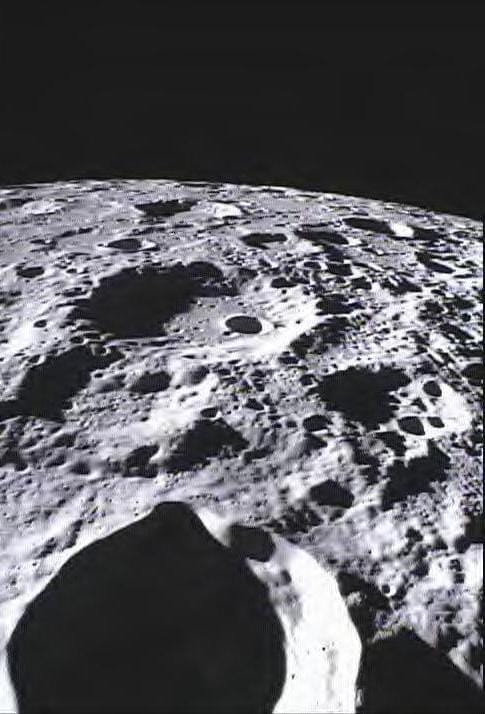
Image provenance
Photography as evidence
Continue the atlas
Curated next objects
Earth
Earth is the third planet from the Sun and the only world known to support life.
space missionApollo 11
Apollo 11 was the NASA mission that in July 1969 first landed humans on the Moon, with Neil Armstrong and Buzz Aldrin walking on the lunar surface.
space missionLuna 2
First lunar impact · USSR · launched 1959.
surface featureTycho
Lunar impact crater on The Moon.
surface featureMare Tranquillitatis
Lunar mare (Apollo 11 landing site) on The Moon.
surface featureSouth Pole–Aitken Basin
Giant lunar impact basin on The Moon.
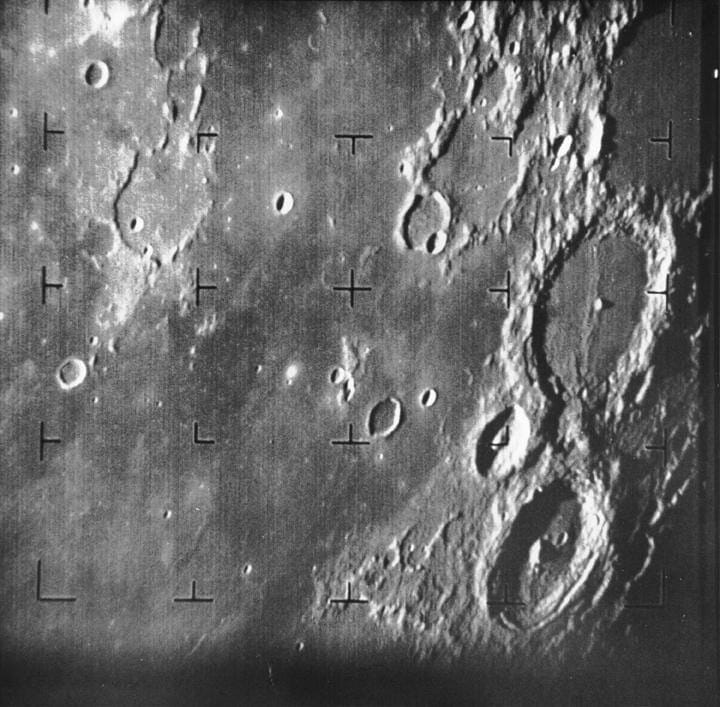
Observation
How this was captured
- Source
- NASA
- Observation date
- 2012-03-22
Gallery
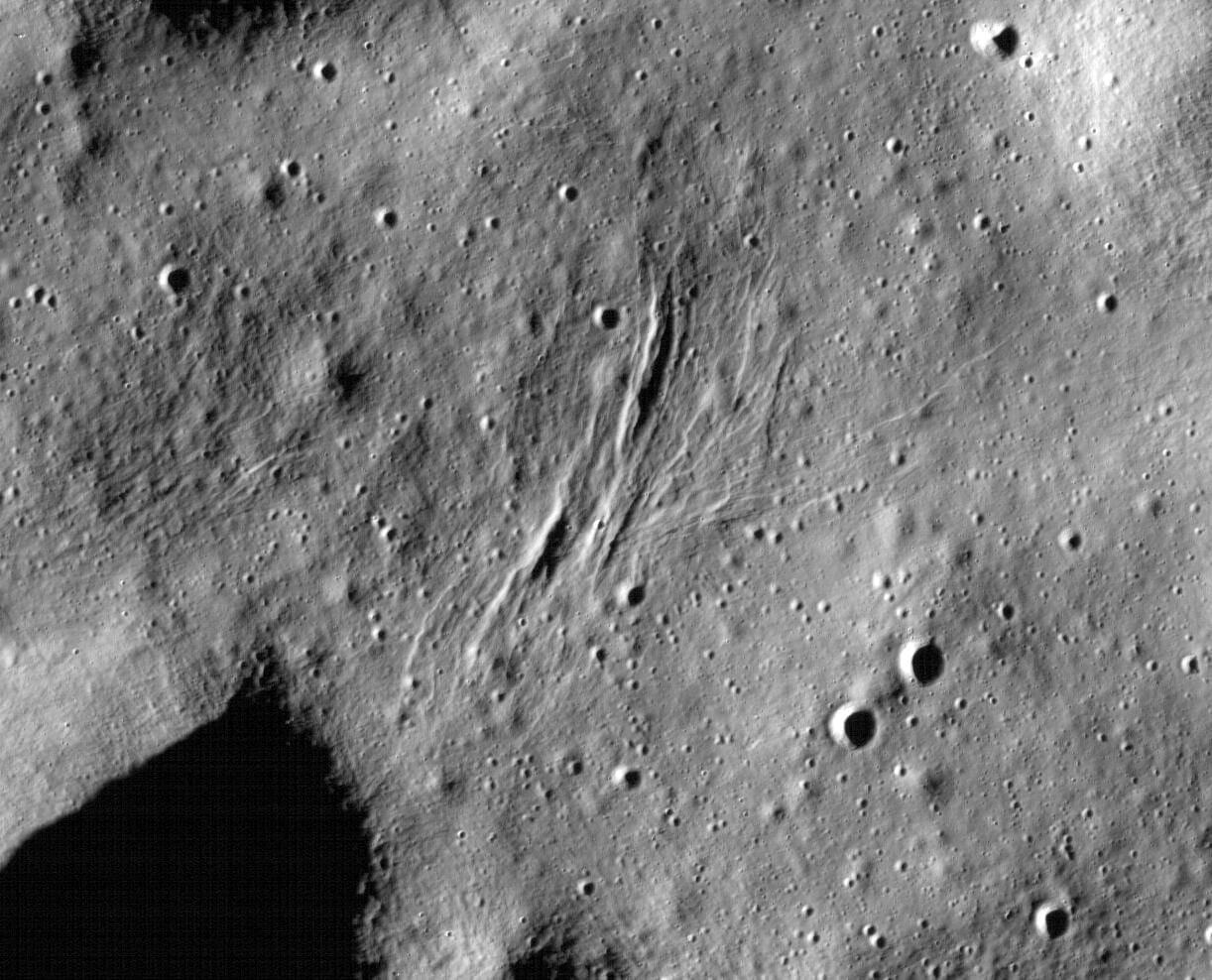
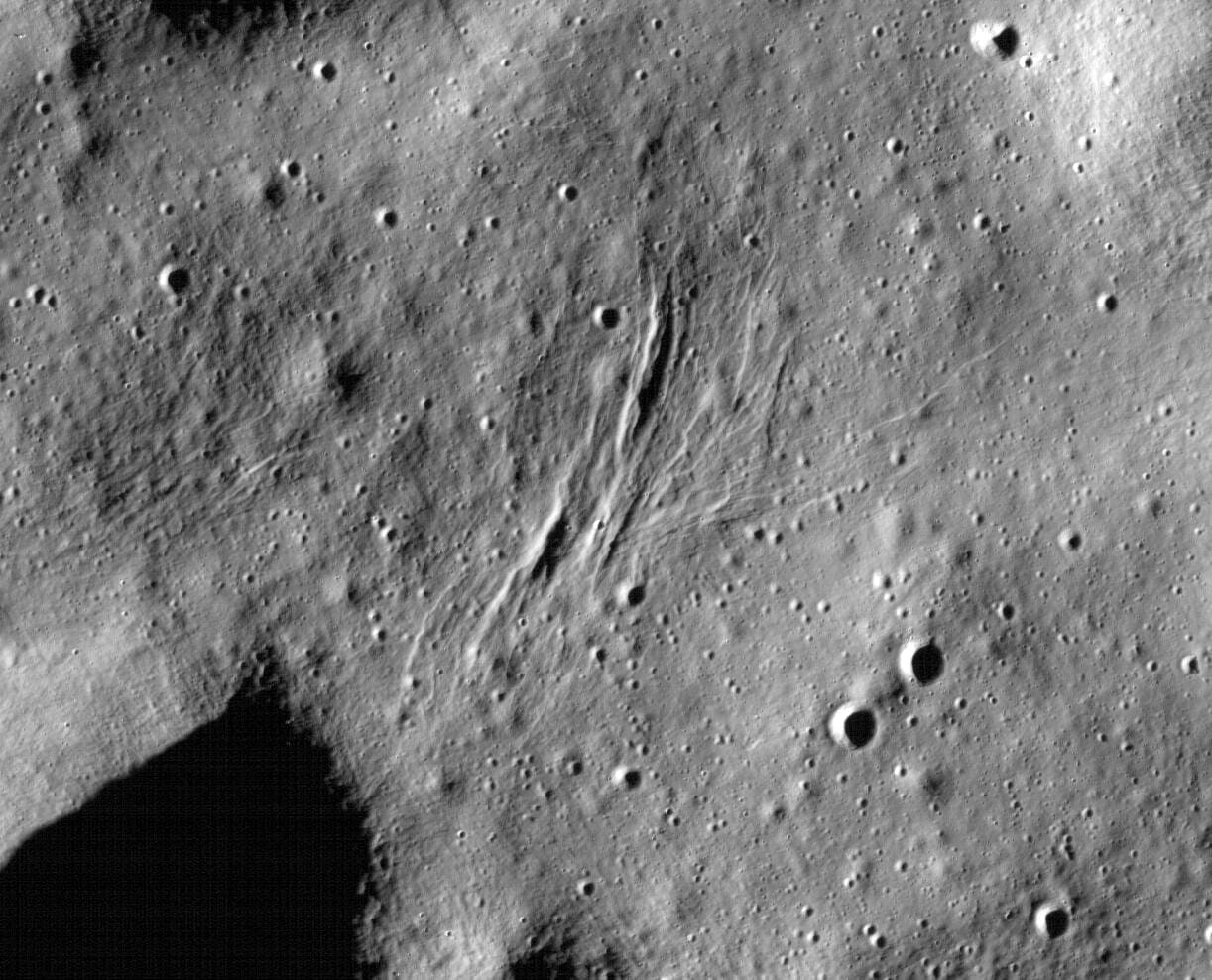
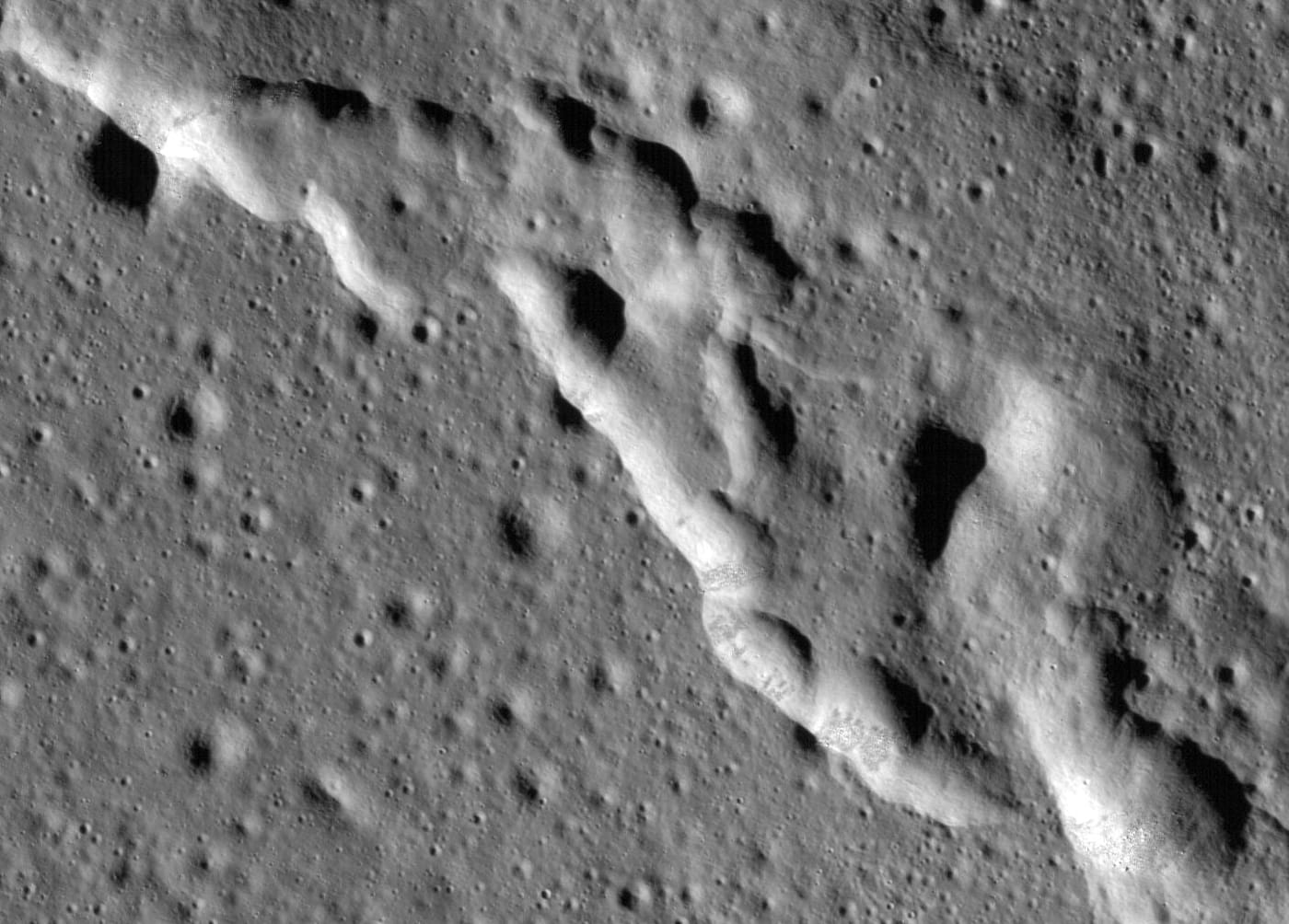
Wrinkle Ridges on the Moon
Scientists have discovered these wrinkle ridges in a region of the Moon called Mare Frigoris.
2019
NASA · NASA media (public domain)
Data
Scientific data & provenance
Data & provenance
- Stable ID
moon:the-moon- Type
- Moon
- Domain
- Scientific connections
- Relationships
- 51
- Graph version
- 1.0.0
Dataset membership
Open data
In the graph export: graph.json · graph.jsonld
Planned API: GET /api/v0/entities/moon:the-moon
Scientific quality
Substantial5 of 6 applicable dimensions complete, 1 partial
- Description
- Complete
- Source coverage
- Partial
- Relationship coverage
- Complete
- Review coverage
- Complete
- Citation coverage
- Complete
- Image coverage
- Complete
- Timeline coverage
- Not applicable
Scientific entity. Dimensions that cannot apply to this object are excluded rather than counted as gaps. See the evidence framework and authority dashboard.
Provenance & sources
review 2026.1Asteria Scientific Review Process · verification: sourced · accurate
- High evidenceconfirmed
The Moon is Earth's only natural satellite and the fifth-largest moon in the Solar System; it is tidally locked, always presenting the same face to Earth.
Source: NASA (NSSDCA) — NASA Planetary Fact Sheet · Public domain (US Government work)
- NASA Planetary Fact Sheet, Planetary Fact Sheet
Reviewed by the internal Asteria Scientific Review Process — not an external institutional review. See the evidence framework and authority dashboard.
Scientific citations
5Real, source-backed references — primary papers first, then datasets and institutional sources. Formatted through the citation engine; nothing is fabricated.
- DatasetMoon Fact Sheet
NASA Goddard — NSSDCA
Cite (APA / BibTeX)
NASA Goddard — NSSDCA (n.d.). Moon Fact Sheet. NASA Goddard — NSSDCA. https://nssdc.gsfc.nasa.gov/planetary/factsheet/moonfact.html @misc{cite:factsheet-moon-the-moon, title = {Moon Fact Sheet}, organization = {NASA Goddard — NSSDCA}, year = {n.d.}, url = {https://nssdc.gsfc.nasa.gov/planetary/factsheet/moonfact.html}, note = {Physical and orbital parameters for Moon.} } - Archive pageJPL Horizons System
NASA Jet Propulsion Laboratory (Caltech)
Cite (APA / BibTeX)
NASA Jet Propulsion Laboratory (Caltech) (n.d.). JPL Horizons System. NASA Jet Propulsion Laboratory (Caltech). https://ssd.jpl.nasa.gov/horizons/ @misc{cite:jpl-horizons, title = {JPL Horizons System}, organization = {NASA Jet Propulsion Laboratory (Caltech)}, year = {n.d.}, url = {https://ssd.jpl.nasa.gov/horizons/}, note = {Authoritative Solar System ephemerides — the reference standard for high-precision Moon position (not fetched in v1).} } - Institutional pageEarth's Moon — NASA Science
NASA
Cite (APA / BibTeX)
NASA (n.d.). Earth's Moon — NASA Science. NASA. https://science.nasa.gov/moon/ @misc{cite:nasa-moon, title = {Earth's Moon — NASA Science}, organization = {NASA}, year = {n.d.}, url = {https://science.nasa.gov/moon/}, note = {NASA overview of the Moon: phases, the synodic month, and lunar facts.} } - Institutional pageMoon — NASA Solar System Exploration
NASA
Cite (APA / BibTeX)
NASA (n.d.). Moon — NASA Solar System Exploration. NASA. https://science.nasa.gov/ @misc{cite:nasa-moon-the-moon, title = {Moon — NASA Solar System Exploration}, organization = {NASA}, year = {n.d.}, url = {https://science.nasa.gov/}, note = {NASA overview of Moon.} } - Institutional pageUSNO Astronomical Applications Department
United States Naval Observatory
Cite (APA / BibTeX)
United States Naval Observatory (n.d.). USNO Astronomical Applications Department. United States Naval Observatory. https://aa.usno.navy.mil/

@misc{cite:usno-astronomical-applications,
  title        = {USNO Astronomical Applications Department},
  organization = {United States Naval Observatory},
  year         = {n.d.},
  url          = {https://aa.usno.navy.mil/},
  note         = {Solar and lunar coordinates, phase, and rise/set/twilight/transit methodology (the Astronomical Almanac); the public-domain formulae behind the computed Moon phase, the computed Sun & twilight times, and the computed moonrise/moonset and lunar position.}
}
You might also explore
- OrganizationNASALinked through Apollo 11
- Launch siteKennedy Space CenterLinked through Apollo 11
- PlanetMarsLinked through Cosmic Rays
- Launch vehicleSaturn VLinked through Apollo 11
- Spaceflight eraThe Space RaceLinked through Luna 9 Makes the First Soft Landing on the Moon
- Mission programApollo programLinked through Apollo 11
Sources & references
The primary and reference sources this topic draws on.
- NASANational Aeronautics and Space Administration
Mission data, planetary science, space telescopes, and public-domain imagery.
Most NASA-produced imagery is in the public domain; individual items are checked for usage terms before publication.