Astronomy · Stars
Polaris
The North Star, near the north celestial pole.
- Constellation
- Ursa Minor
- Role
- Current northern pole star
- Type
- Cepheid variable (multiple-star system)
- Use
- Northern navigation reference
NASA/AFRC · NASA media (public domain)
Gallery
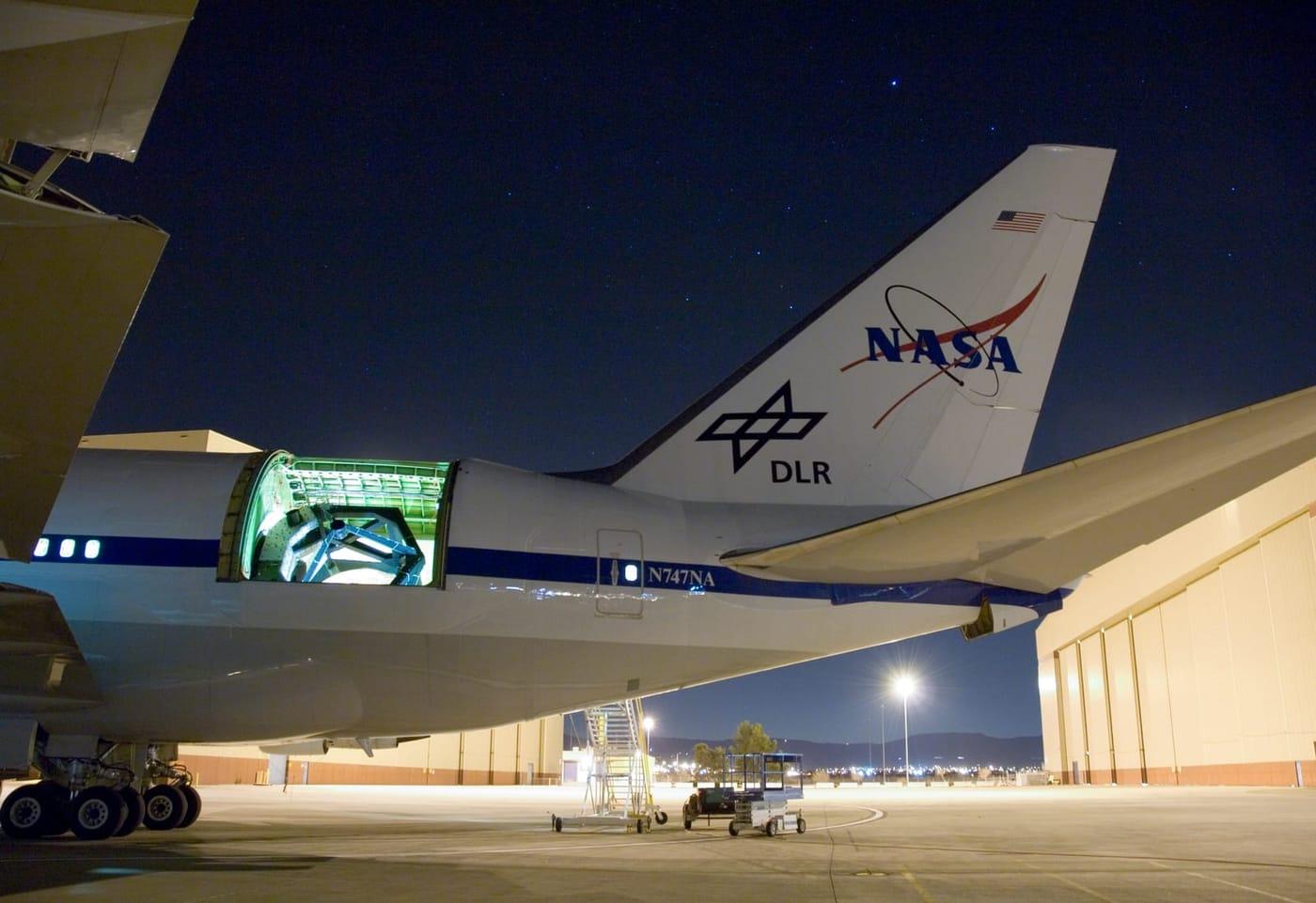
Wispy clouds are illuminated by a bright quarter moon behind the tail of NASA's SOFIA flying observatory during telesco…
The SOFIA telescope team collected baseline operational measurements during several nights of characterization testing in March 2008 while the SOFIA 747SP aircraft that houses the German-built infrared telescope was par…
2008
NASA/AFRC · NASA media (public domain)
The star that barely moves
Polaris lies very close to the north celestial pole — the point in the sky directly above Earth's North Pole. As Earth rotates, the other stars appear to circle Polaris, while it stays almost stationary, which is why it has guided navigators for centuries.
Finding north with it
The two stars at the end of the Big Dipper's bowl are the 'pointer stars': a line drawn through them leads to Polaris. Its altitude above the horizon also approximates an observer's latitude in the Northern Hemisphere.
Not truly permanent
Polaris is the pole star only for now. Earth's slow axial precession gradually shifts the pole among different stars over thousands of years, so Polaris's role as the North Star is temporary on astronomical timescales.
Knowledge connections
How this connects across Asteria Star — scientific, cultural, and astrological links are kept separate.
Scientific connections
- Belongs toUrsa Minor
- Associated withThe Little Dipper
- Associated withAll-Sky Star Atlas
- Associated withBright Star Map