Understanding Comets and Small-Body Reservoirs
The icy small bodies of the Solar System — what comets are, where they come from, how they were explored, and how they connect to the meteor showers. Built on real MPC/JPL data that reuses the platform's comets, meteor showers, missions, and the asteroid encyclopedia's trans-Neptunian reservoirs; nothing is fabricated.
In pictures
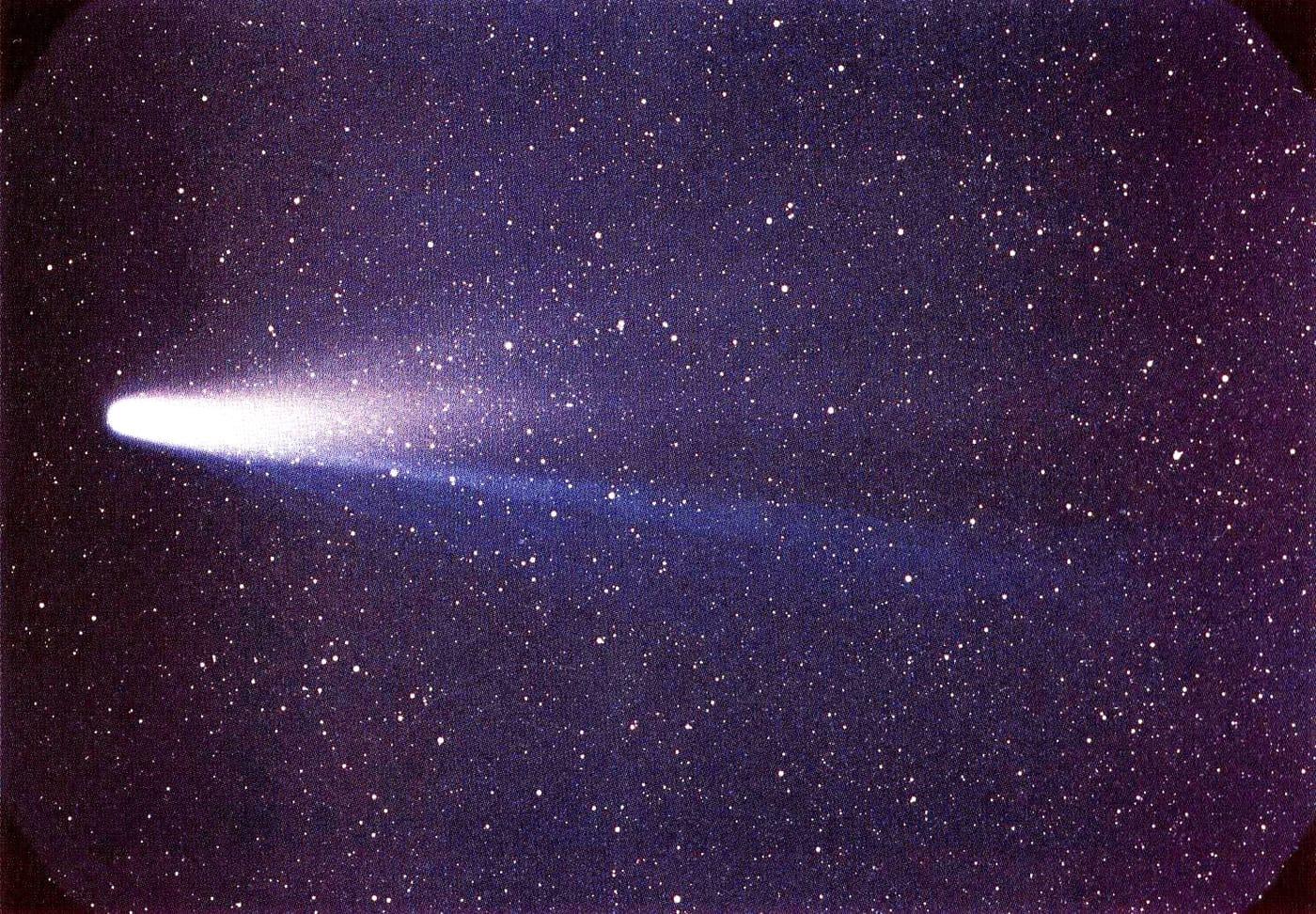
- 1.1What is a comet?The icy 'dirty snowballs' that grow tails as they near the Sun.
- 1.2Anatomy of a cometNucleus, coma, and the dust and ion tails of the great comets.
- 1.3Comet orbitsFrom Encke's 3-year loop to comets that fall in over millennia.
- 1.4Periodic and long-period cometsThe two great families of comets, defined by how long they take to return.
- 2.1The Kuiper Belt and scattered discThe trans-Neptunian source of the short-period, Jupiter-family comets.
- 2.2The Oort cloudThe vast, distant shell that supplies the long-period comets.
- 2.3Meteor showers and parent bodiesHow comet debris streams become the annual meteor showers.
- 2.4Sungrazing cometsThe Kreutz family and other comets that skim the Sun.
- 3.1Main-belt comets and active asteroidsObjects that blur the line between asteroid and comet.
- 3.2Comet missionsGiotto, Stardust, Deep Impact, and Rosetta up close at a comet.
- 3.3Impact risk and planetary defenseShoemaker–Levy 9 at Jupiter and Siding Spring at Mars.
- 3.4What comets tell usPristine long-period comets as frozen samples of the early Solar System.
Related entities
- Comet
Halley's Comet
A short-period comet (1P/Halley) that returns to the inner Solar System roughly every 76 years.
- Comet class
Jupiter-Family Comets
The most numerous class of periodic comets, whose orbits are shepherded by Jupiter and which originate in the scattered disc beyond Neptune.
- Small-body reservoir
Oort Cloud
A hypothesised spherical cloud of trillions of icy bodies at the outermost edge of the Sun's gravitational influence — the reservoir from which long-period and Halley-type comets are nudged inward.
- Comet family
Kreutz Sungrazers
A family of sungrazing comets on very similar orbits, thought to be the fragments of a single giant comet that broke apart many centuries ago. They include some of the brightest comets in history and are discovered in large numbers by solar spacecraft.