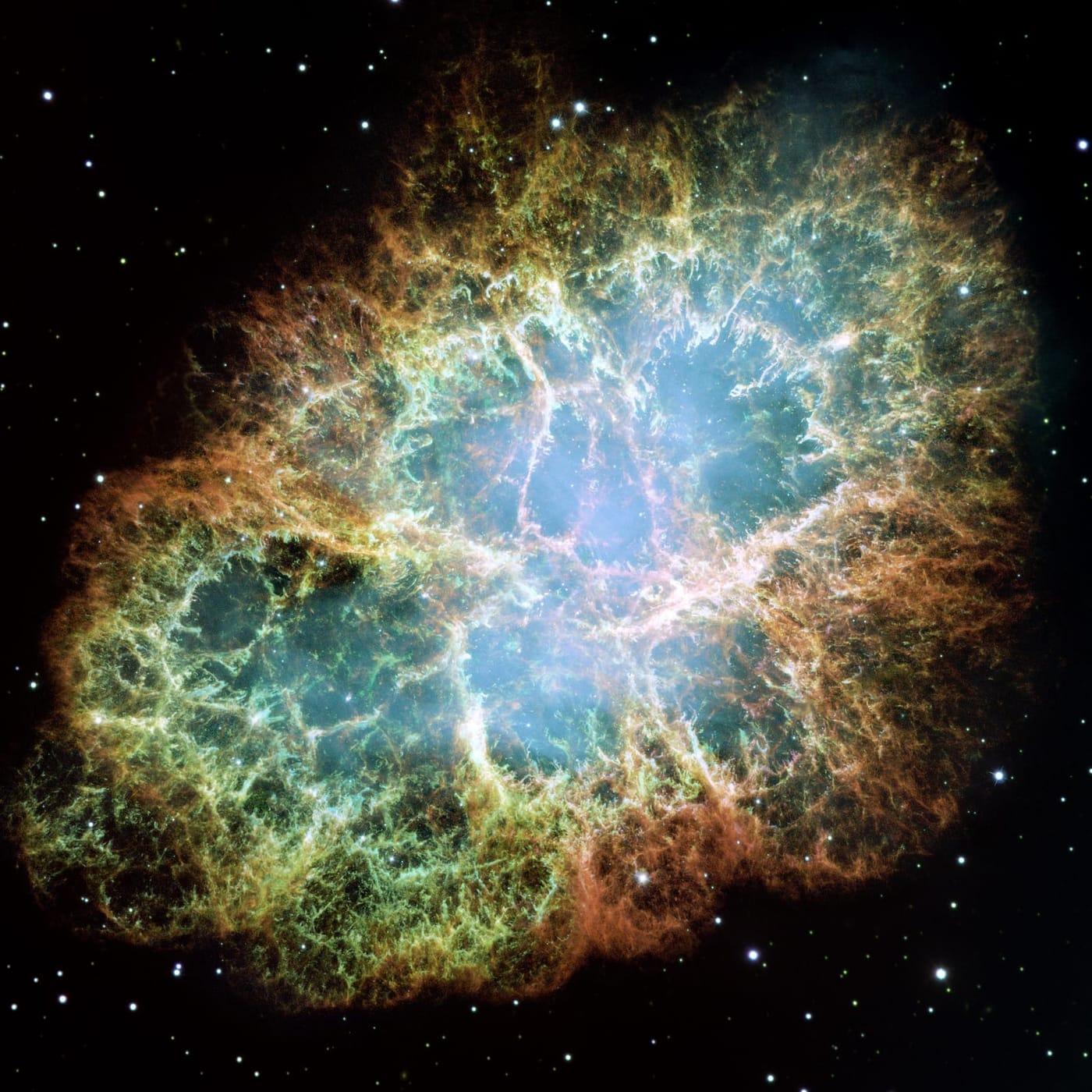
Nebula
Crab Nebula
A supernova remnant produced by a stellar explosion recorded by astronomers in 1054 CE.
- Type
- Nebula
- Domain
- Scientific connections
- Connections
- 5
NASA/ESA/JPL/Arizona State Univ. · NASA media (public domain)
- Type: Nebula
- Domain: Scientific connections
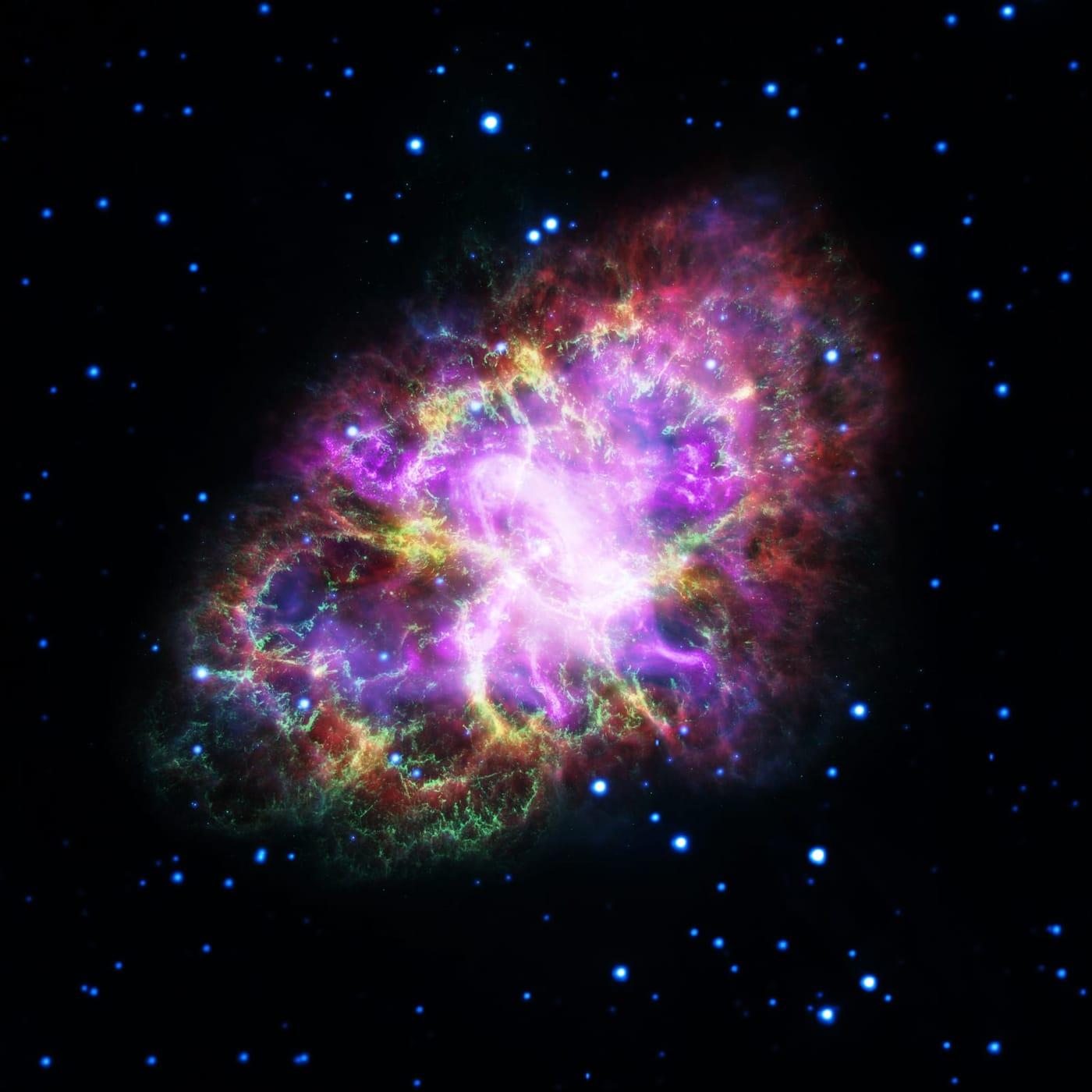
Experience system V6
Nebular structure profile
A visual story for gas, dust, ionization, star-forming context, and observational imagery.
- 01
Observe
HUBBLE imagery anchors the visual reading with licensed source metadata.
- 02
Measure
Measurement panels use graph coverage, catalog identifiers, and source availability without inventing values.
- 03
Locate
Studied by Hubble Space Telescope.
- 04
Connect
5 graph relations shape the knowledge viewport.
- Object type
- Nebula
- Graph relations
- 5
- Verified sources
- 2
- Image records
- 4
- Domain
- Scientific connections
- Status
- Graph entity
Scientific map
Atlas context
- Studied by
Hubble Space Telescope
- Observed by
Chandra X-ray Observatory
- Depicted in
The Crab Nebula (M1)
- Associated with
The Crab Pulsar
Original SVG diagram
Deep-sky morphology
- Object class
- Nebula
- Catalog numbers
- Not recorded
- Image records
- 4
- Graph relations
- 5
Visual knowledge graph
Relationships, not isolated facts
This viewport is generated from the Asteria knowledge graph. Science, culture, and interpretive links remain separated by domain so visual context never changes the evidentiary meaning of a relation.
- Observed byChandra X-ray Observatory
- Studied byHubble Space Telescope
- Associated withSupernova Remnant
- Depicted inThe Crab Nebula (M1)
- Associated withThe Crab Pulsar
Image provenance
Photography as evidence
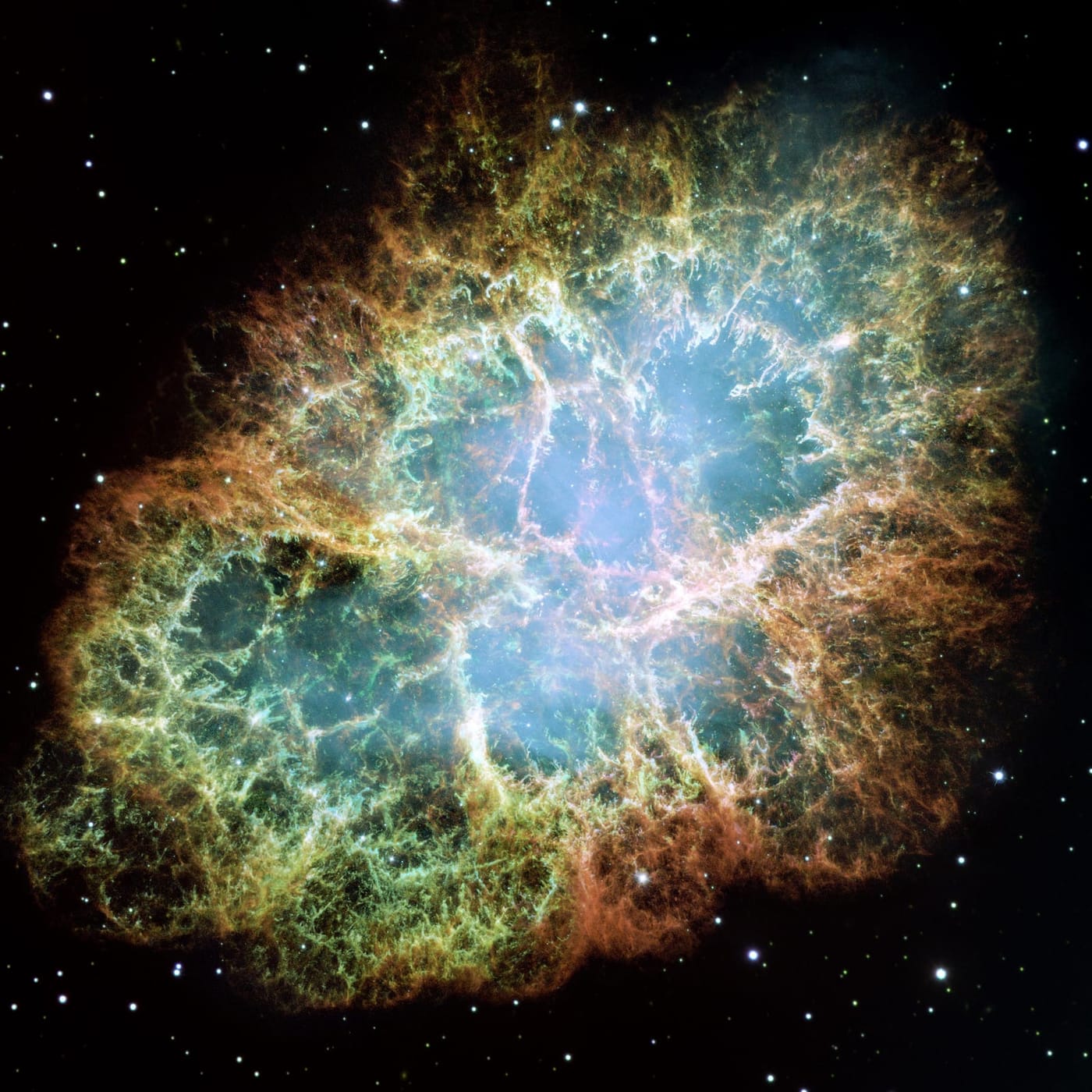
Most Detailed Image of the Crab Nebula
NASA/ESA/JPL/Arizona State Univ. · NASA media (public domain)
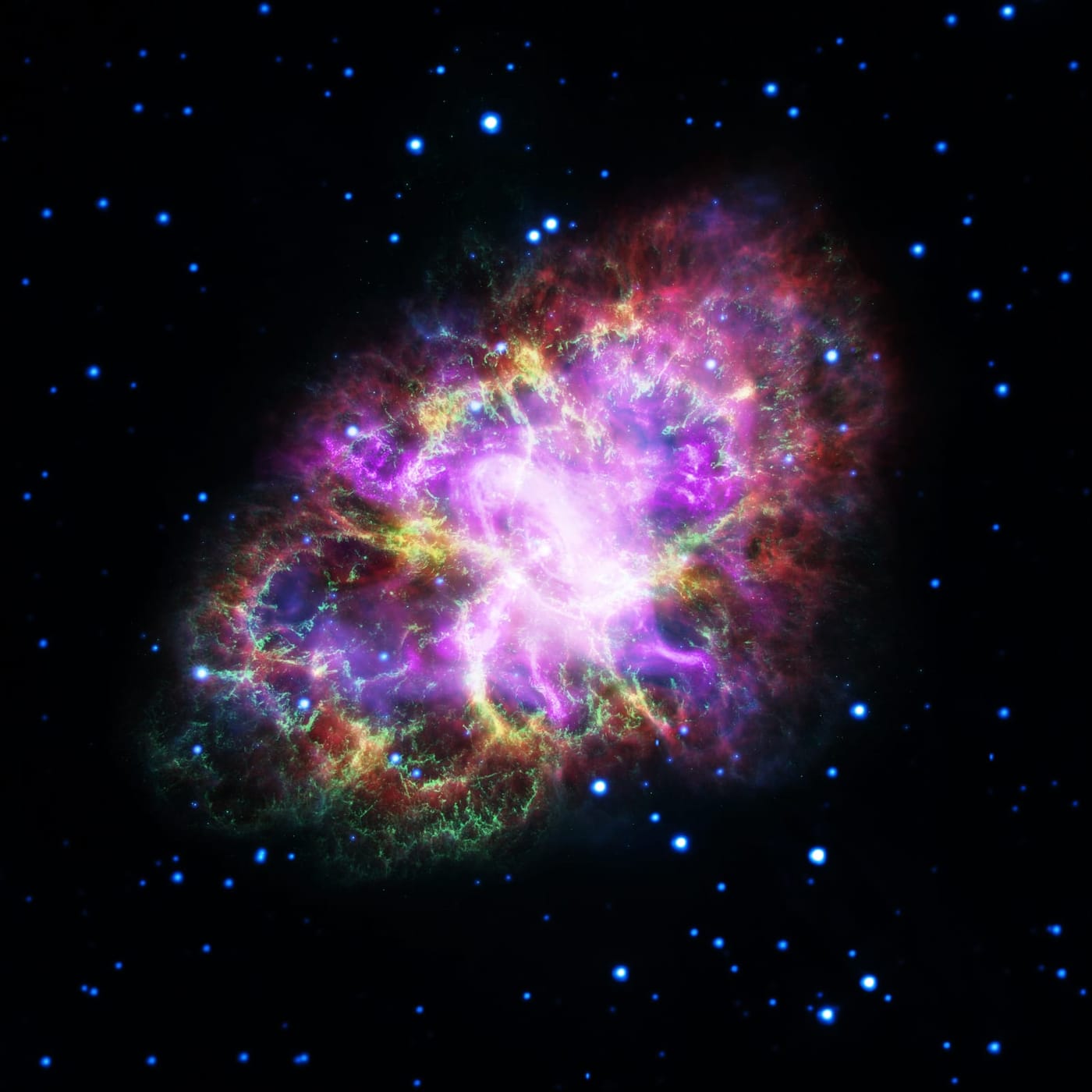
Observatories Combine to Crack Open the Crab Nebula
NASA/Goddard Space Flight Center · NASA media (public domain)
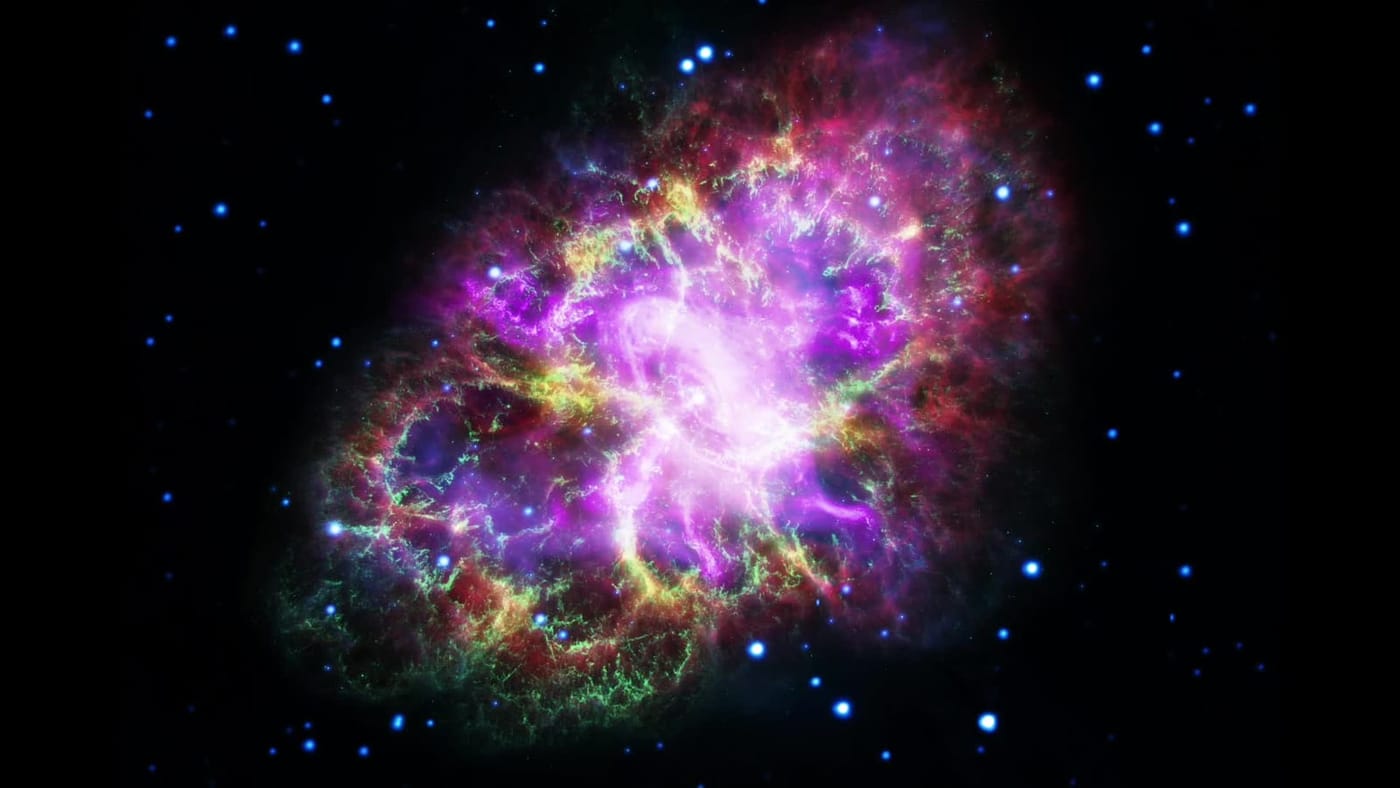
Observatories Combine to Crack Open the Crab Nebula
NASA/Goddard Space Flight Center · NASA media (public domain)
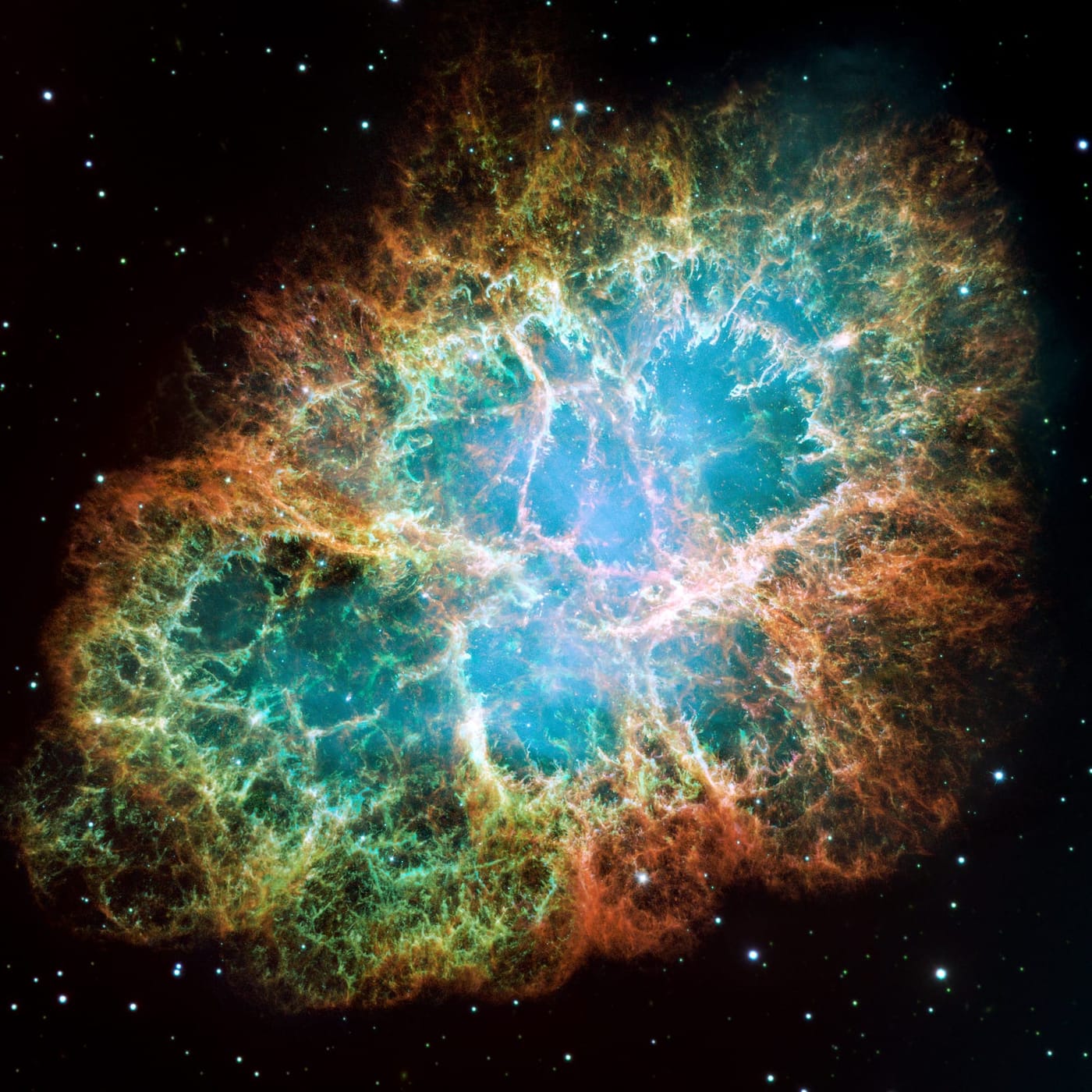
Crab Nebula
NASA/Goddard Space Flight Center · NASA media (public domain)
Continue the atlas
Curated next objects
Hubble Space Telescope
space telescopeChandra X-ray Observatory
The Chandra X-ray Observatory is a NASA space telescope launched in 1999 that observes the universe in X-ray wavelengths.
scientific imageThe Crab Nebula (M1)
The Crab Nebula — the expanding remnant of a supernova recorded by astronomers in 1054.
neutron starThe Crab Pulsar
The young neutron star at the heart of the Crab Nebula, formed in the supernova recorded by observers in 1054. It spins about thirty times a second and is the archetypal rotation-powered pulsar, its wind lighting up the surrounding nebula across the spectrum, from radio to gamma rays.
astrophysical object classSupernova Remnant
The expanding cloud of debris left behind when a star explodes as a supernova, sweeping up and shock-heating the surrounding interstellar medium. Supernova remnants seed the galaxy with heavy elements, accelerate cosmic rays, and — like the Crab — can harbour the neutron star born in the collapse.
nebulaEagle Nebula
A young open cluster embedded in a star-forming nebula, famous for the 'Pillars of Creation' imaged by Hubble.
Observation
How this was captured
- Source
- HUBBLE
- Observation date
- 2005-12-01
Gallery
Observatories Combine to Crack Open the Crab Nebula
Astronomers have produced a highly detailed image of the Crab Nebula, by combining data from telescopes spanning nearly the entire breadth of the electromagnetic spectrum, from radio waves seen by the Karl G.
2017
NASA/Goddard Space Flight Center · NASA media (public domain)
Data
Scientific data & provenance
Data & provenance
- Stable ID
nebula:crab-nebula- Type
- Nebula
- Domain
- Scientific connections
- Relationships
- 5
- Graph version
- 1.0.0
Dataset membership
Open data
In the graph export: graph.json · graph.jsonld
Planned API: GET /api/v0/entities/nebula:crab-nebula
Scientific quality
Complete6 of 6 applicable dimensions complete
- Description
- Complete
- Source coverage
- Complete
- Relationship coverage
- Complete
- Review coverage
- Complete
- Citation coverage
- Complete
- Image coverage
- Complete
- Timeline coverage
- Not applicable
Scientific entity. Dimensions that cannot apply to this object are excluded rather than counted as gaps. See the evidence framework and authority dashboard.
Provenance & sources
review 2026.1Asteria Scientific Review Process · verification: sourced · accurate
- High evidenceconfirmed
The Crab Nebula (M1) is the remnant of a supernova recorded by astronomers in 1054 CE and contains a rapidly rotating neutron star, the Crab Pulsar, at its centre.
Source: NASA Science · Public domain (US Government work)
Reviewed by the internal Asteria Scientific Review Process — not an external institutional review. See the evidence framework and authority dashboard.
Scientific citations
1Real, source-backed references — primary papers first, then datasets and institutional sources. Formatted through the citation engine; nothing is fabricated.
- Image archiveCrab Nebula (M1) — HubbleSite / STScI
Space Telescope Science Institute
Cite (APA / BibTeX)
Space Telescope Science Institute (n.d.). Crab Nebula (M1) — HubbleSite / STScI. Space Telescope Science Institute. https://www.stsci.edu/

@misc{cite:stsci-nebula-crab-nebula,
  title        = {Crab Nebula (M1) — HubbleSite / STScI},
  organization = {Space Telescope Science Institute},
  year         = {n.d.},
  url          = {https://www.stsci.edu/},
  note         = {STScI imagery and science for Crab Nebula (M1).}
}
You might also explore
- NebulaEagle NebulaLinked through Hubble Space Telescope
- OrganizationNASALinked through Hubble Space Telescope
- Astrophysical objectPulsarLinked through The Crab Pulsar
- Astrophysical objectRotation-Powered PulsarLinked through The Crab Pulsar
- Stellar physics conceptThe Pulsar MechanismLinked through The Crab Pulsar
- NebulaLagoon NebulaLinked through Hubble Space Telescope
Sources & references
The primary and reference sources this topic draws on.
- NASANational Aeronautics and Space Administration
Mission data, planetary science, space telescopes, and public-domain imagery.
Most NASA-produced imagery is in the public domain; individual items are checked for usage terms before publication.
- ESAEuropean Space Agency
European missions, observatories, and space science imagery.