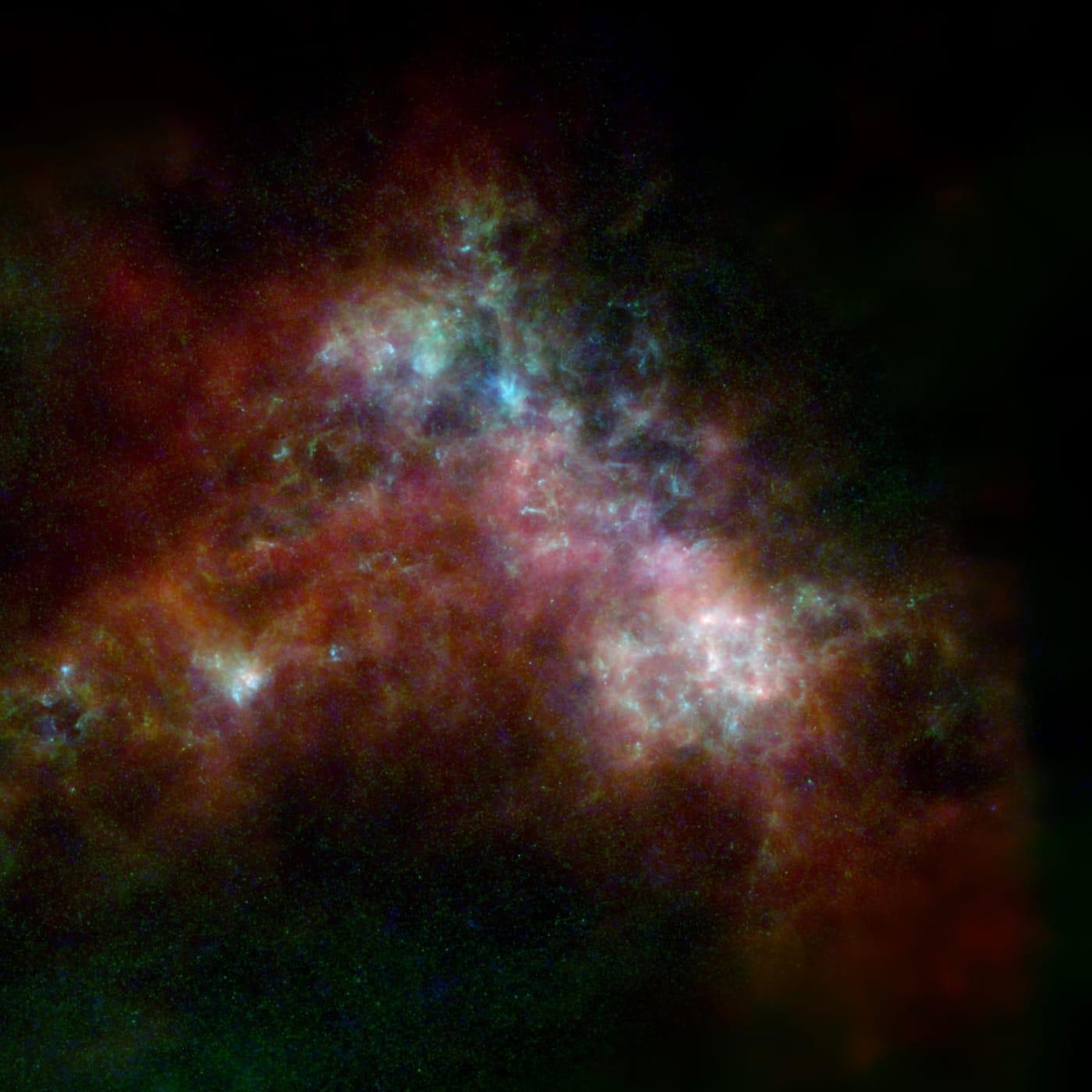
Galaxy
Small Magellanic Cloud
A dwarf galaxy near the Milky Way, visible to the naked eye from the Southern Hemisphere.
- Type
- Galaxy
- Domain
- Scientific connections
- Connections
- 3
ESA/NASA/JPL-Caltech/CSIRO/NANTEN2/C. Clark (STScI) · NASA media (public domain)
- Type: Galaxy
- Domain: Scientific connections
Experience system V6
Galaxy morphology profile
A deep-sky composition that treats the object as a physical structure, not a decorative background image.
- 01
Observe
JWST imagery anchors the visual reading with licensed source metadata.
- 02
Measure
Measurement panels use graph coverage, catalog identifiers, and source availability without inventing values.
- 03
Locate
Scientifically related to The Milky Way.
- 04
Connect
3 graph relations shape the knowledge viewport.
- Object type
- Galaxy
- Graph relations
- 3
- Verified sources
- 2
- Image records
- 3
- Domain
- Scientific connections
- Status
- Graph entity
Scientific map
Atlas context
- Scientifically related to
The Milky Way
- Associated with
Dwarf Galaxy
- Associated with
Satellite Galaxies & Accretion
Original SVG diagram
Deep-sky morphology
- Object class
- Galaxy
- Catalog numbers
- Not recorded
- Image records
- 3
- Graph relations
- 3
Visual knowledge graph
Relationships, not isolated facts
This viewport is generated from the Asteria knowledge graph. Science, culture, and interpretive links remain separated by domain so visual context never changes the evidentiary meaning of a relation.
- Associated withDwarf Galaxy
- Associated withSatellite Galaxies & Accretion
- Scientifically related toThe Milky Way
A satellite galaxy of the Milky Way.
Image provenance
Photography as evidence
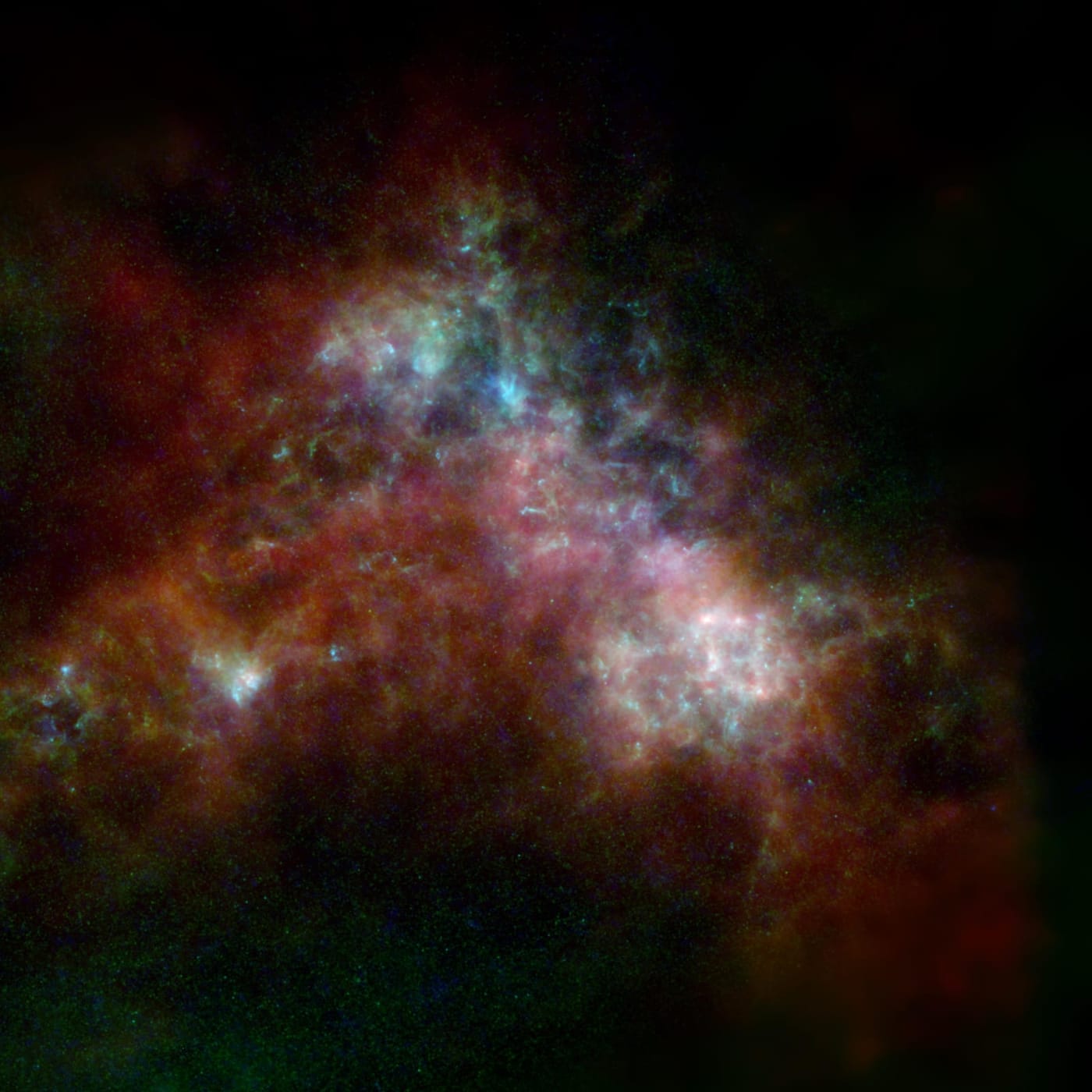
Small Magellanic Cloud Imaged by Herschel, Planck, IRAS, COBE
ESA/NASA/JPL-Caltech/CSIRO/NANTEN2/C. Clark (STScI) · NASA media (public domain)
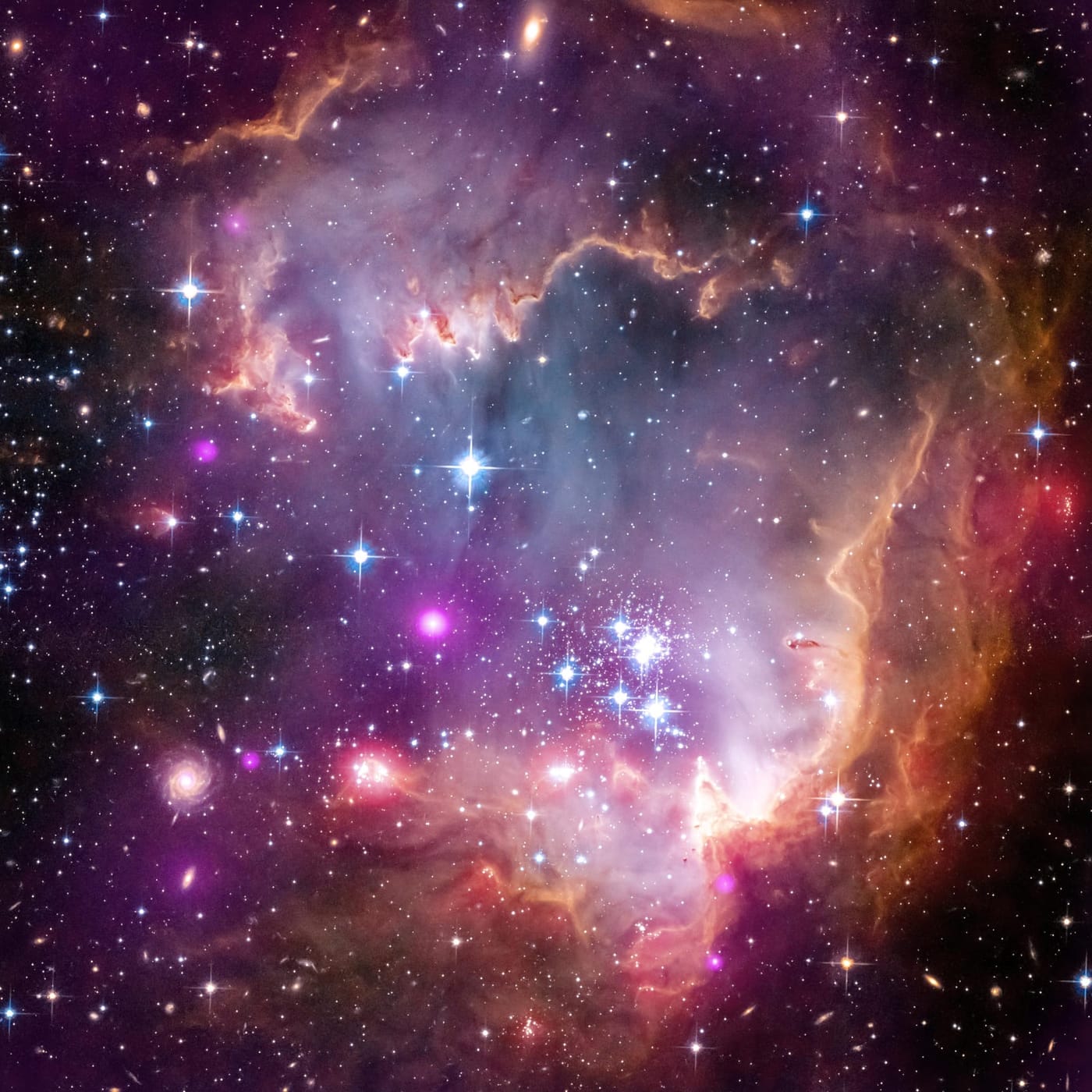
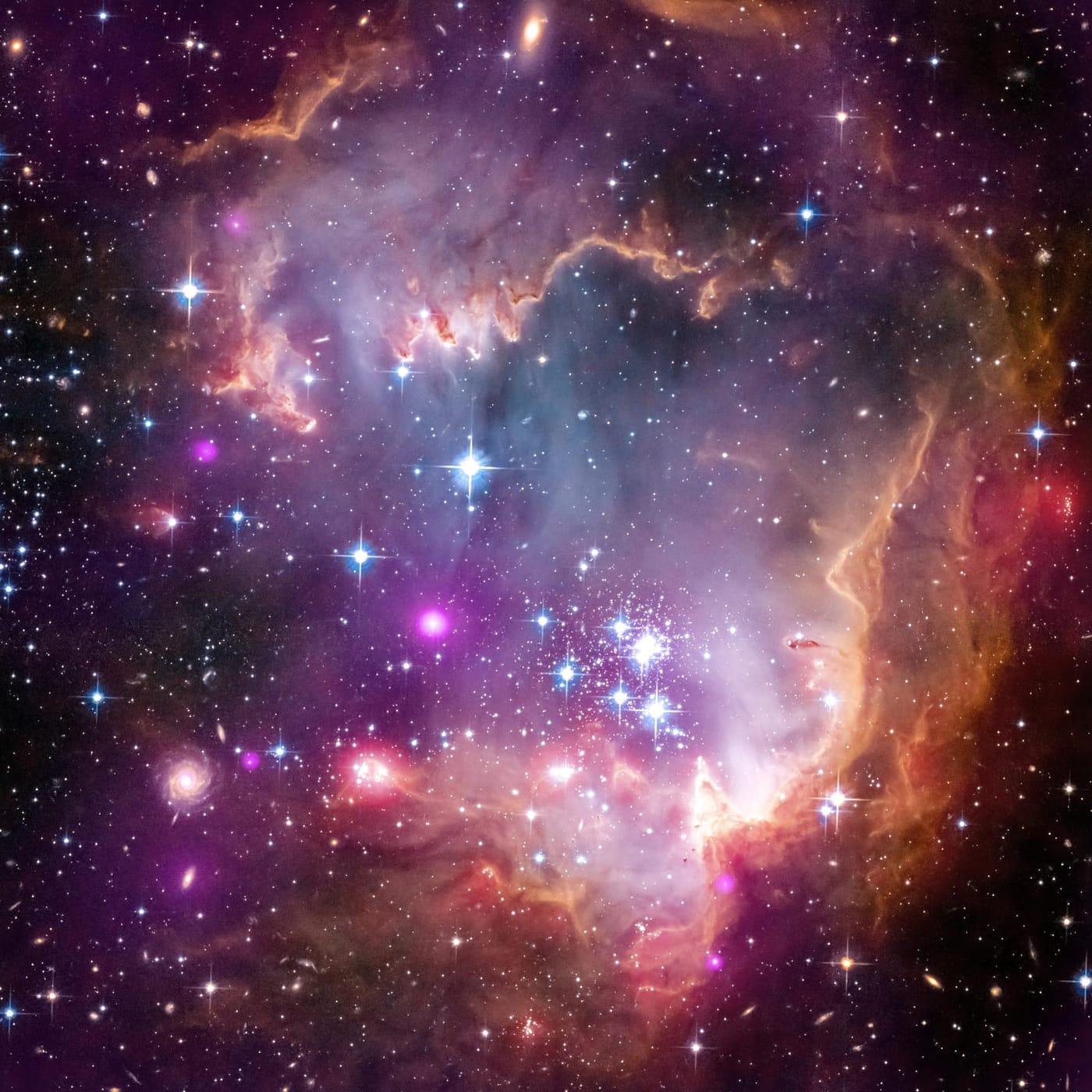
Taken Under the Wing of the Small Magellanic Cloud
NASA/CXC/JPL-Caltech/STScI · NASA media (public domain)
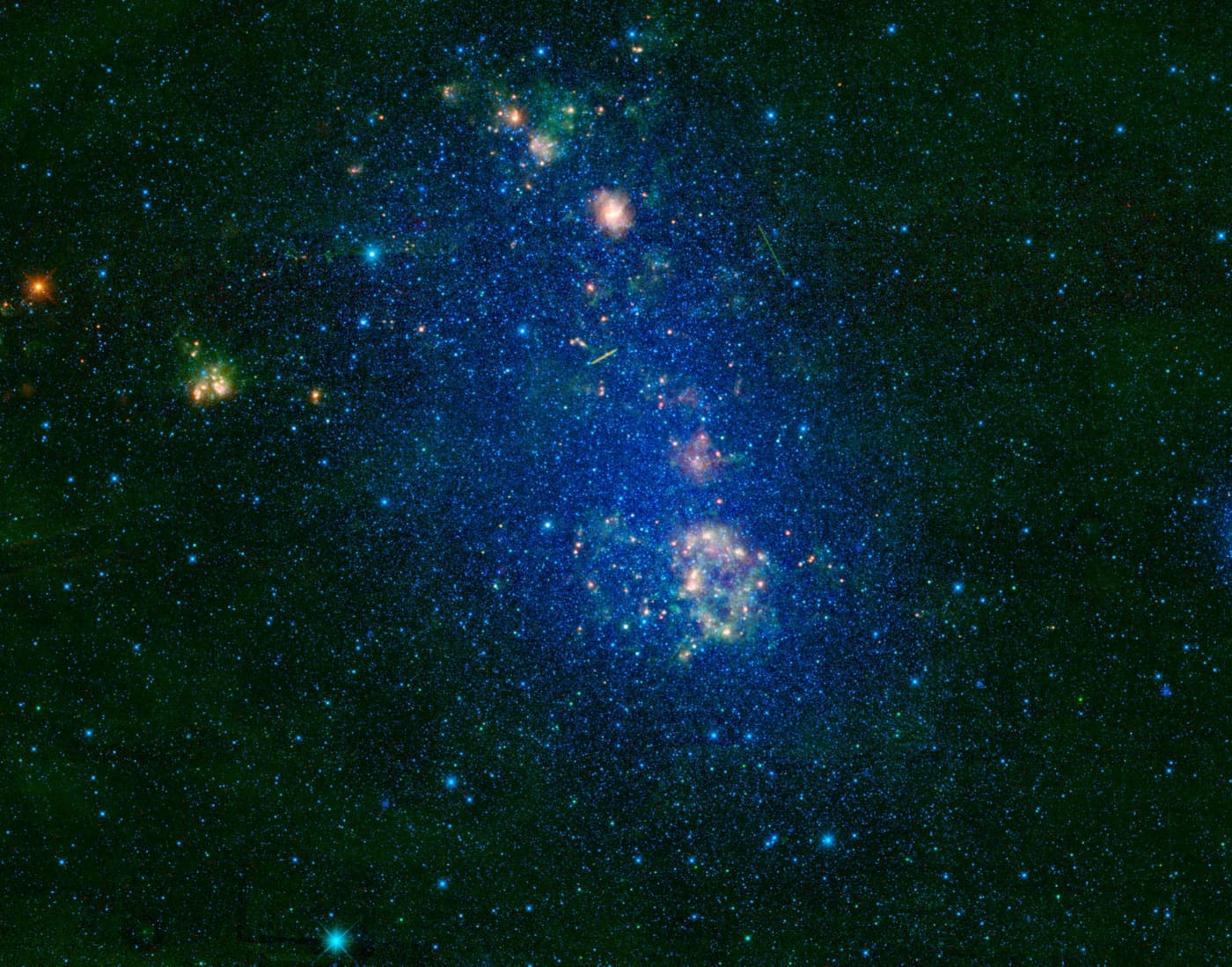
WISE View of a Wispy Cloud
NASA/JPL-Caltech/UCLA · NASA media (public domain)
Continue the atlas
Curated next objects
The Milky Way
The barred spiral galaxy that contains the Solar System, the Sun, and all stars visible to the naked eye.
galaxy morphologyDwarf Galaxy
A small galaxy with far fewer stars than a giant like the Milky Way. Dwarfs are by far the most numerous galaxies, and many orbit larger ones as satellites; they are dominated by dark matter.
galactic dynamicsSatellite Galaxies & Accretion
The Milky Way is orbited by dozens of smaller galaxies, the brightest being the Large and Small Magellanic Clouds. In the hierarchical picture of galaxy formation, big galaxies grow by swallowing small ones, and the Milky Way is still feeding — its halo and streams are the debris of satellites consumed long ago.
galaxyLarge Magellanic Cloud
A satellite dwarf galaxy of the Milky Way and one of the closest galaxies to our own.
galactic structureThe Galactic Warp
The outer disc of the Milky Way is not flat but bent, curving up on one side and down on the other like a vinyl record left in the sun. This warp, traced by gas and by young stars, is likely stirred by the gravitational tug of the Magellanic Clouds and the dark-matter halo.
cosmic structureThe Local Group
The gravitationally-bound group of galaxies the Milky Way belongs to — dominated by the Milky Way and Andromeda, with the Triangulum galaxy and dozens of dwarfs. Andromeda and the Milky Way are approaching, and will merge in a few billion years.
Observation
How this was captured
- Source
- JWST
- Observation date
- 2022-06-16
Gallery
WISE View of a Wispy Cloud
NASA Wide-field Infrared Survey Explorer highlights the Small Magellanic Cloud, a small galaxy about 200,000 light-years away.
2010
NASA/JPL-Caltech/UCLA · NASA media (public domain)
Data
Scientific data & provenance
Data & provenance
- Stable ID
galaxy:small-magellanic-cloud- Type
- Galaxy
- Domain
- Scientific connections
- Relationships
- 3
- Graph version
- 1.0.0
Dataset membership
Open data
In the graph export: graph.json · graph.jsonld
Planned API: GET /api/v0/entities/galaxy:small-magellanic-cloud
Scientific quality
Substantial4 of 6 applicable dimensions complete
- Description
- Complete
- Source coverage
- Complete
- Relationship coverage
- Complete
- Review coverage
- None
- Citation coverage
- None
- Image coverage
- Complete
- Timeline coverage
- Not applicable
Scientific entity. Dimensions that cannot apply to this object are excluded rather than counted as gaps. See the evidence framework and authority dashboard.
You might also explore
- GalaxyLarge Magellanic CloudLinked through The Milky Way
- Galactic structureThe Galactic WarpLinked through The Milky Way
- Cosmic structureThe Local GroupLinked through The Milky Way
- GalaxyAndromeda GalaxyLinked through The Milky Way
- GalaxyTriangulum GalaxyLinked through The Milky Way
- AstronomerAnnie Jump CannonLinked through The Milky Way
Sources & references
The primary and reference sources this topic draws on.
- NASANational Aeronautics and Space Administration
Mission data, planetary science, space telescopes, and public-domain imagery.
Most NASA-produced imagery is in the public domain; individual items are checked for usage terms before publication.
- ESAEuropean Space Agency
European missions, observatories, and space science imagery.