Understanding Planetary Geology
How to read the surface of a world — the craters, volcanoes, canyons, dunes, and ice plains that record a planet's history. Built on real NASA/JPL planetary data across the Solar System; nothing is fabricated.
In pictures
Related entities
- Geological feature type
Impact Crater
A bowl-shaped depression blasted out when an asteroid or comet strikes a solid surface. Craters are the most common landform in the Solar System, and their density is used to date surfaces — the more craters, the older the terrain.
- Geological feature type
Shield Volcano
A broad, gently-sloping volcano built by fluid lava flows. On Mars, low gravity and a stationary crust let shield volcanoes grow to enormous size — Olympus Mons is the tallest in the Solar System.
- Surface feature
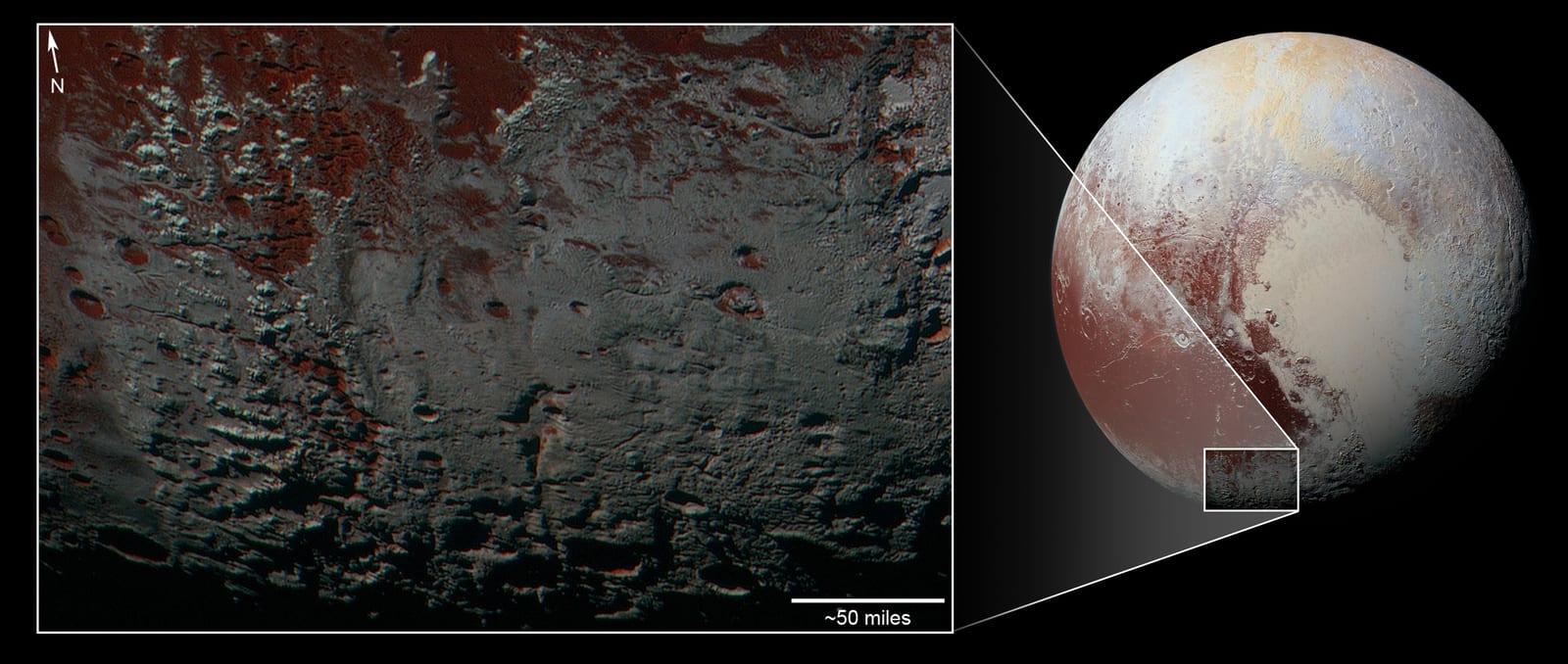
Sputnik Planitia
The vast nitrogen-ice plain that forms the western lobe of Pluto's bright 'heart'. Its ice slowly churns in convection cells and flows like a glacier, keeping the surface young.
- Surface feature
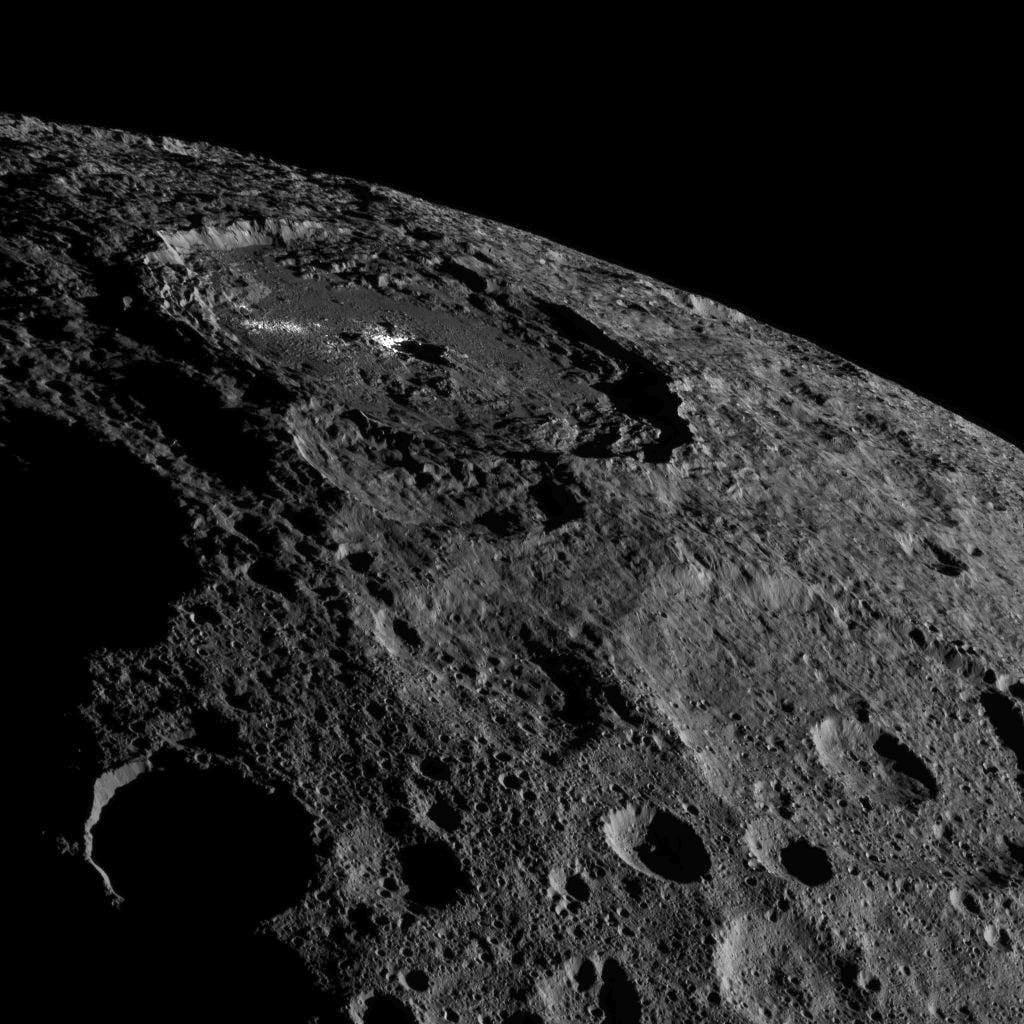
Occator Crater
A crater on the dwarf planet Ceres famous for its bright deposits — salts left behind by briny water that reached the surface, hinting at a subsurface reservoir.