Learning path
Understanding Constellations
Learn to read the night sky — the celestial sphere and coordinates, the zodiac, the seasonal and circumpolar sky, star designations, and how to find and star-hop between the 88 constellations. Built on real IAU constellation data.
Beginner
- 1.1The celestial sphereHow the 88 constellations partition the whole sky into a single map.
- 1.2Right ascensionThe sky's longitude, measured in hours eastward around the celestial equator.
- 1.3DeclinationThe sky's latitude — how far north or south of the celestial equator an object lies.
- 1.4Finding constellationsStart with the brightest, easiest patterns and work outward.
Intermediate
- 2.1Circumpolar constellationsThe constellations that never set from your latitude, circling the celestial pole around Polaris.
- 2.2The zodiacThe twelve constellations the Sun, Moon, and planets travel through along the ecliptic.
- 2.3The seasonal skyWhy different constellations dominate the evening sky each season.
- 2.4Bayer designationsGreek letters (α, β, γ…) that name the brightest stars within each constellation.
Advanced
- 3.1Flamsteed designationsThe numbered star designations that complement the Greek-letter Bayer names.
- 3.2Deep-sky navigationUse bright constellations as signposts to galaxies, nebulae, and clusters.
- 3.3Star hoppingFollowing chains of stars — like the Big Dipper's pointers to Polaris — to find fainter targets.
- 3.4Planning observationsCombine constellation knowledge with the computed Tonight dashboard for your location.
Related entities
- Constellation
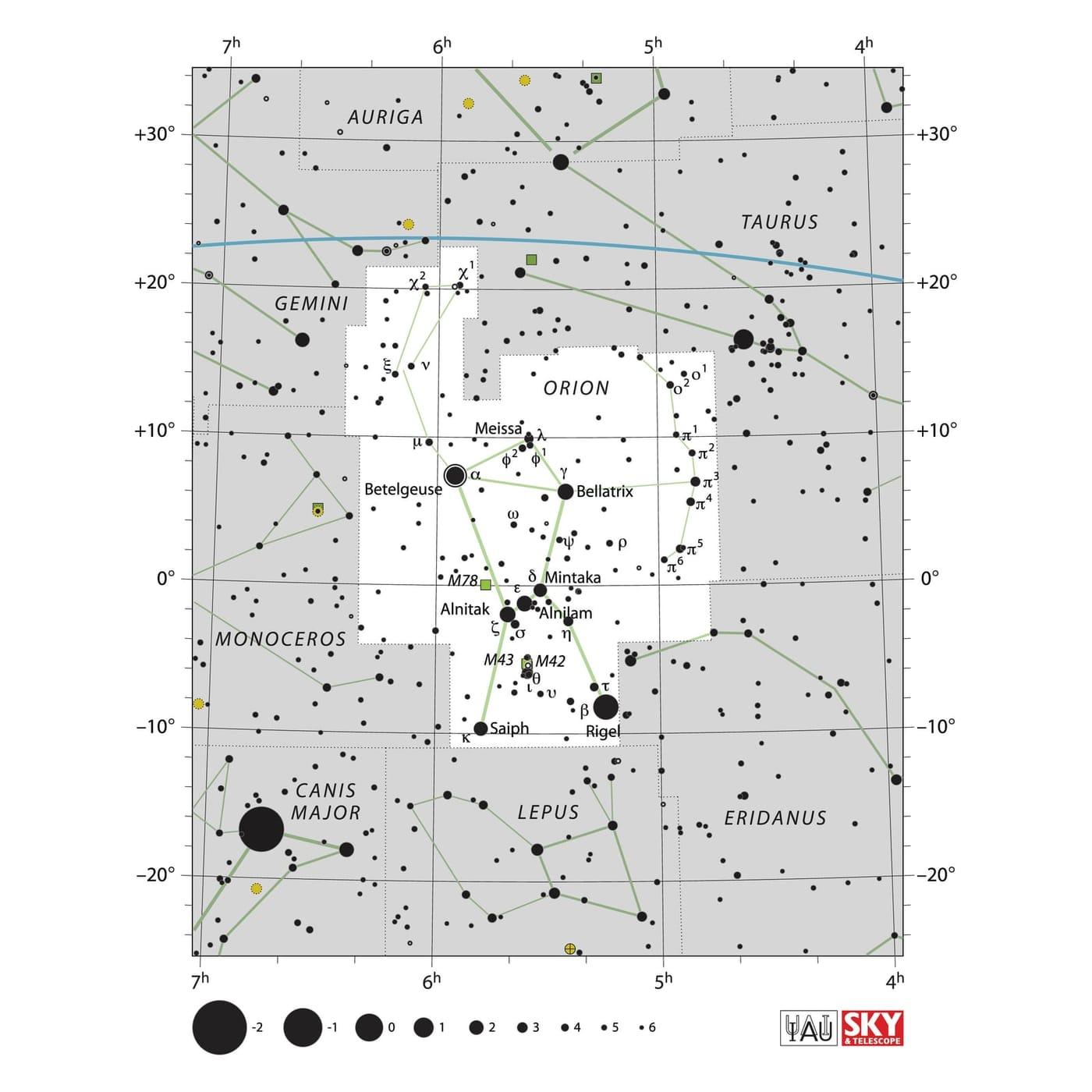
Orion
- Constellation
Ursa Major
Ursa Major, the Great Bear, is a large northern constellation containing the seven stars of the Big Dipper asterism.
- Constellation
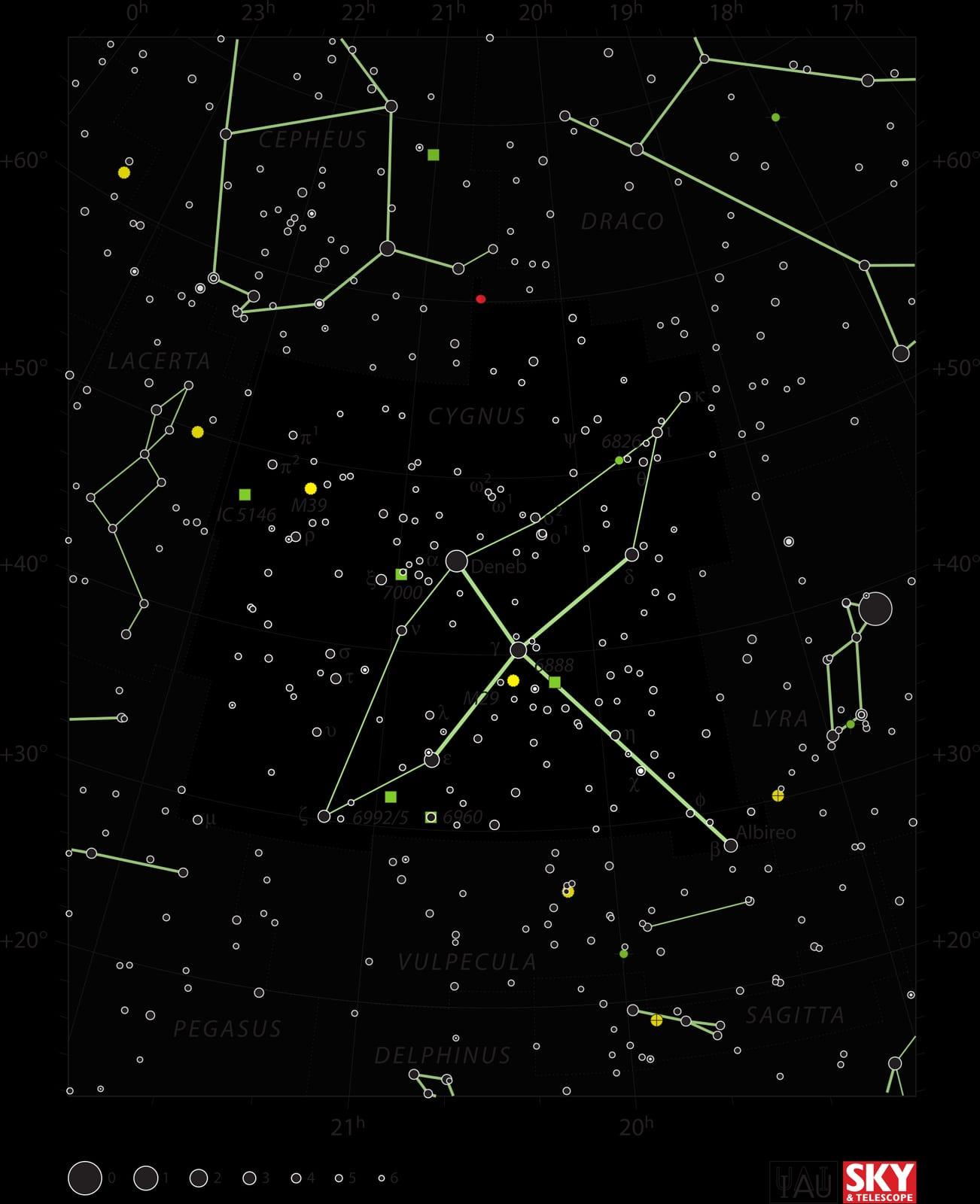
Cygnus
Cygnus is a northern constellation lying along the plane of the Milky Way, one of the 88 modern constellations.
- Constellation family
Zodiacal Family
The twelve constellations of the zodiac, through which the Sun, Moon, and planets appear to move along the ecliptic.