Star cluster
The Pleiades
A bright open star cluster of hot young stars, easily visible to the naked eye.
- Type
- Star cluster
- Domain
- Scientific connections
- Connections
- 4
NASA/JPL-Caltech/UCLA · NASA media (public domain)
- Type: Star cluster
- Domain: Scientific connections
Experience system V6
Star cluster scientific profile
A graph-grounded scientific layout that adapts to available evidence, imagery, relations, and source coverage.
- 01
Observe
NASA imagery anchors the visual reading with licensed source metadata.
- 02
Measure
Measurement panels use graph coverage, catalog identifiers, and source availability without inventing values.
- 03
Locate
Part of The Milky Way.
- 04
Connect
4 graph relations shape the knowledge viewport.
- Object type
- Star cluster
- Graph relations
- 4
- Verified sources
- 2
- Image records
- 4
- Domain
- Scientific connections
- Status
- Graph entity
Scientific map
Atlas context
- Part of
The Milky Way
- Associated with
Stellar Populations & Clusters
- Associated with
Open Cluster
- Associated with
Reflection Nebula
Original SVG diagram
Deep-sky morphology
- Object class
- Star cluster
- Catalog numbers
- Not recorded
- Image records
- 4
- Graph relations
- 4
Visual knowledge graph
Relationships, not isolated facts
This viewport is generated from the Asteria knowledge graph. Science, culture, and interpretive links remain separated by domain so visual context never changes the evidentiary meaning of a relation.
- Associated withOpen Cluster
- Associated withReflection Nebula
- Associated withStellar Populations & Clusters
- Part ofThe Milky Way
An open cluster within the Milky Way.
Image provenance
Photography as evidence
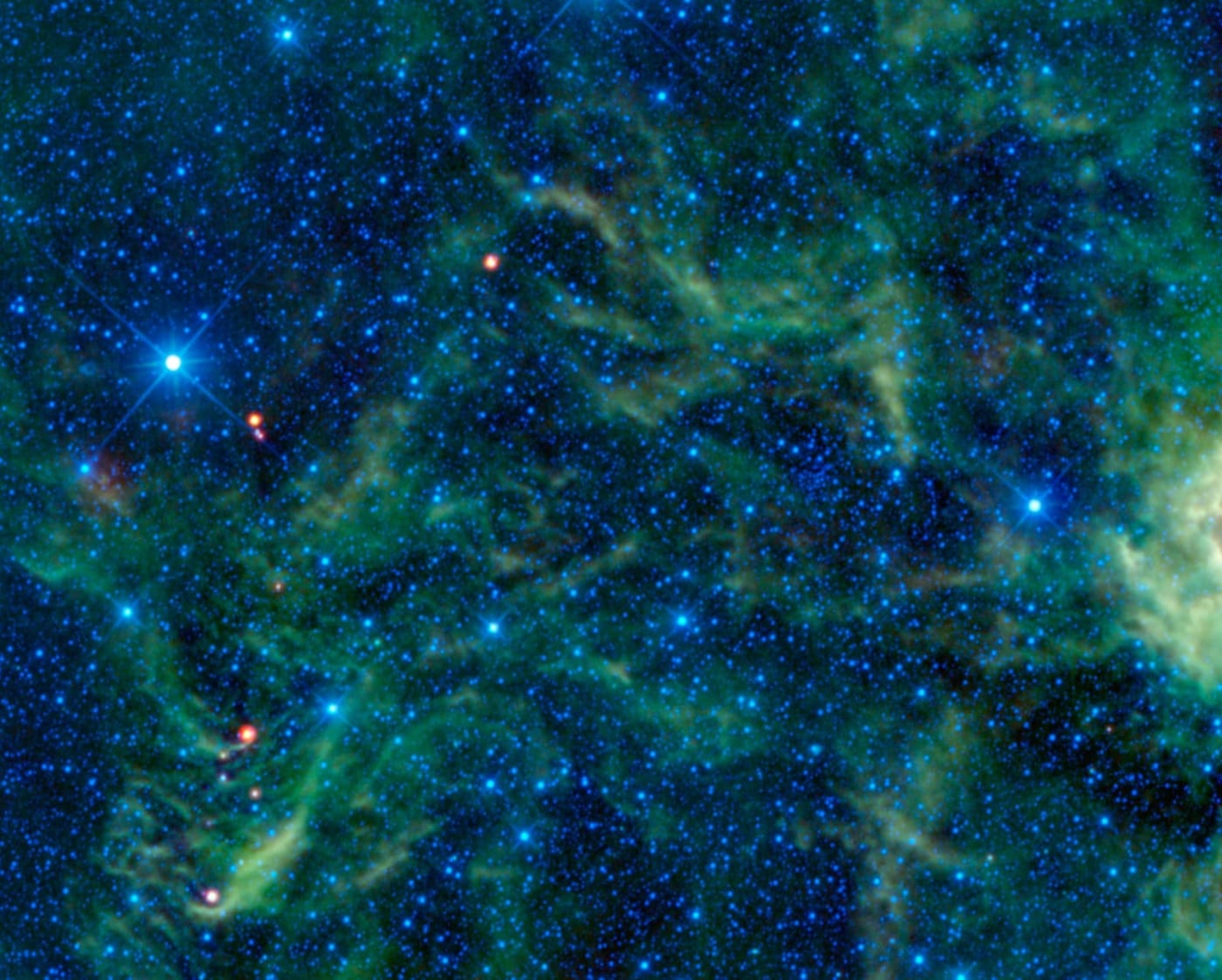
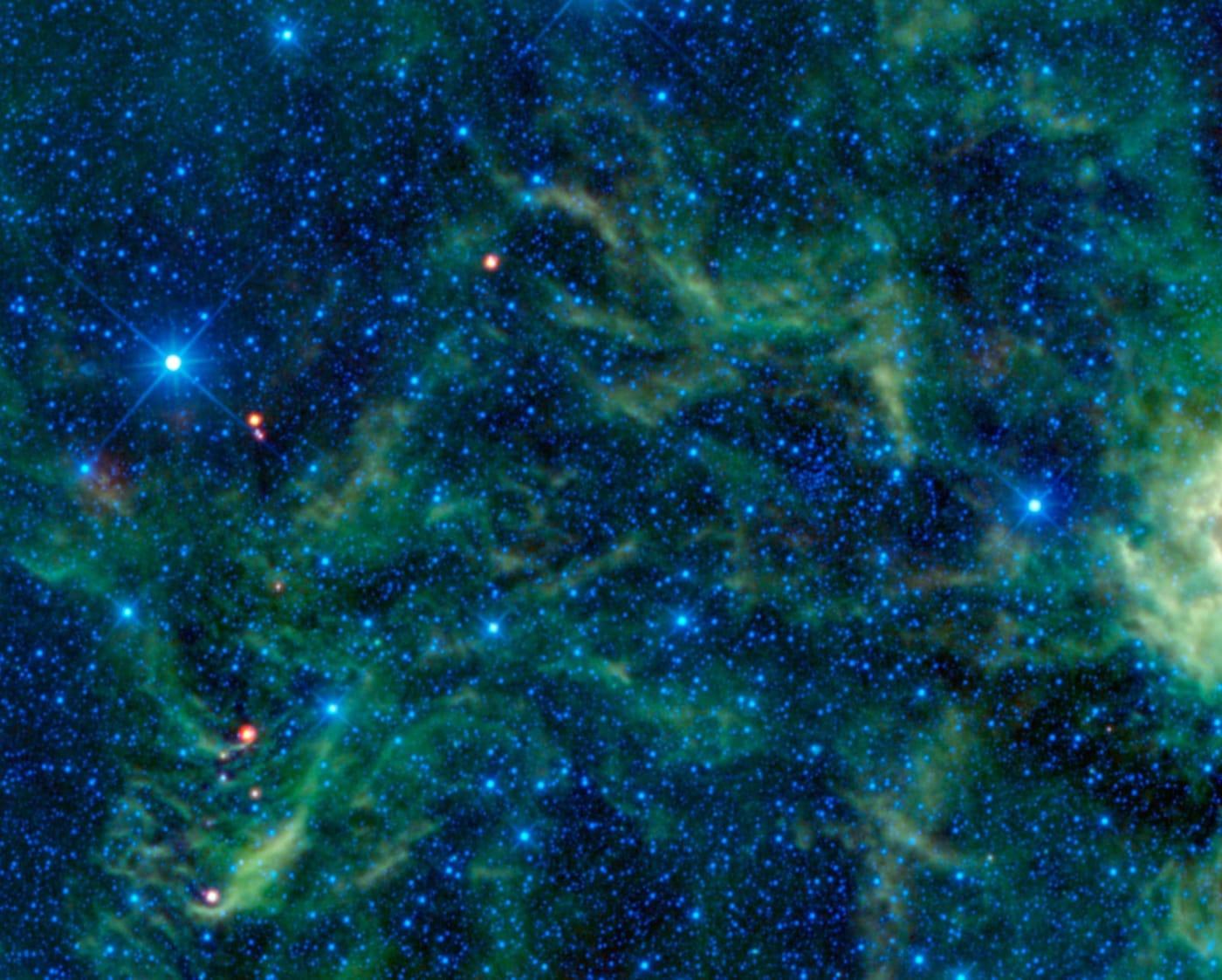
Star Cluster Overshadowed by Infrared Objects
NASA/JPL-Caltech/UCLA · NASA media (public domain)
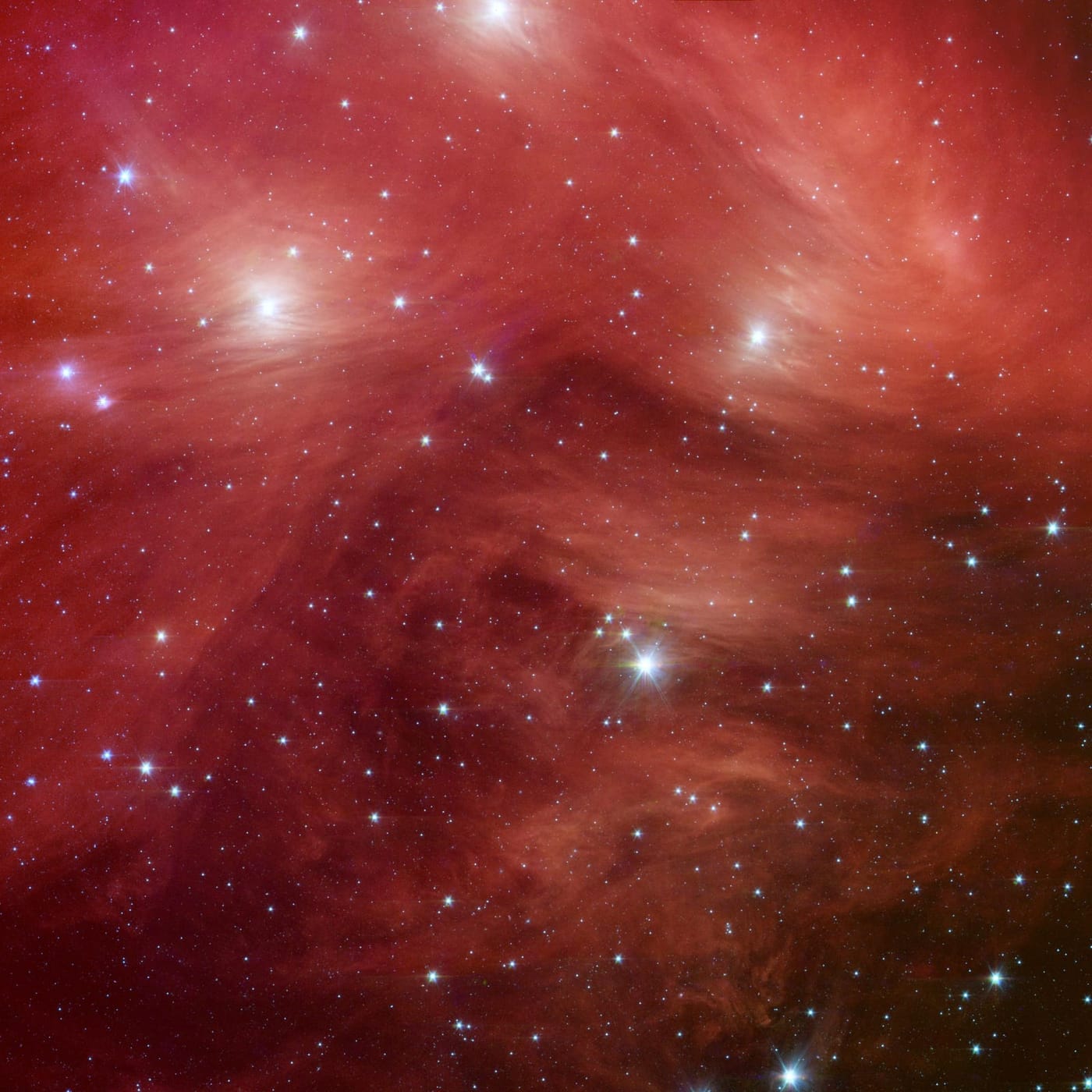
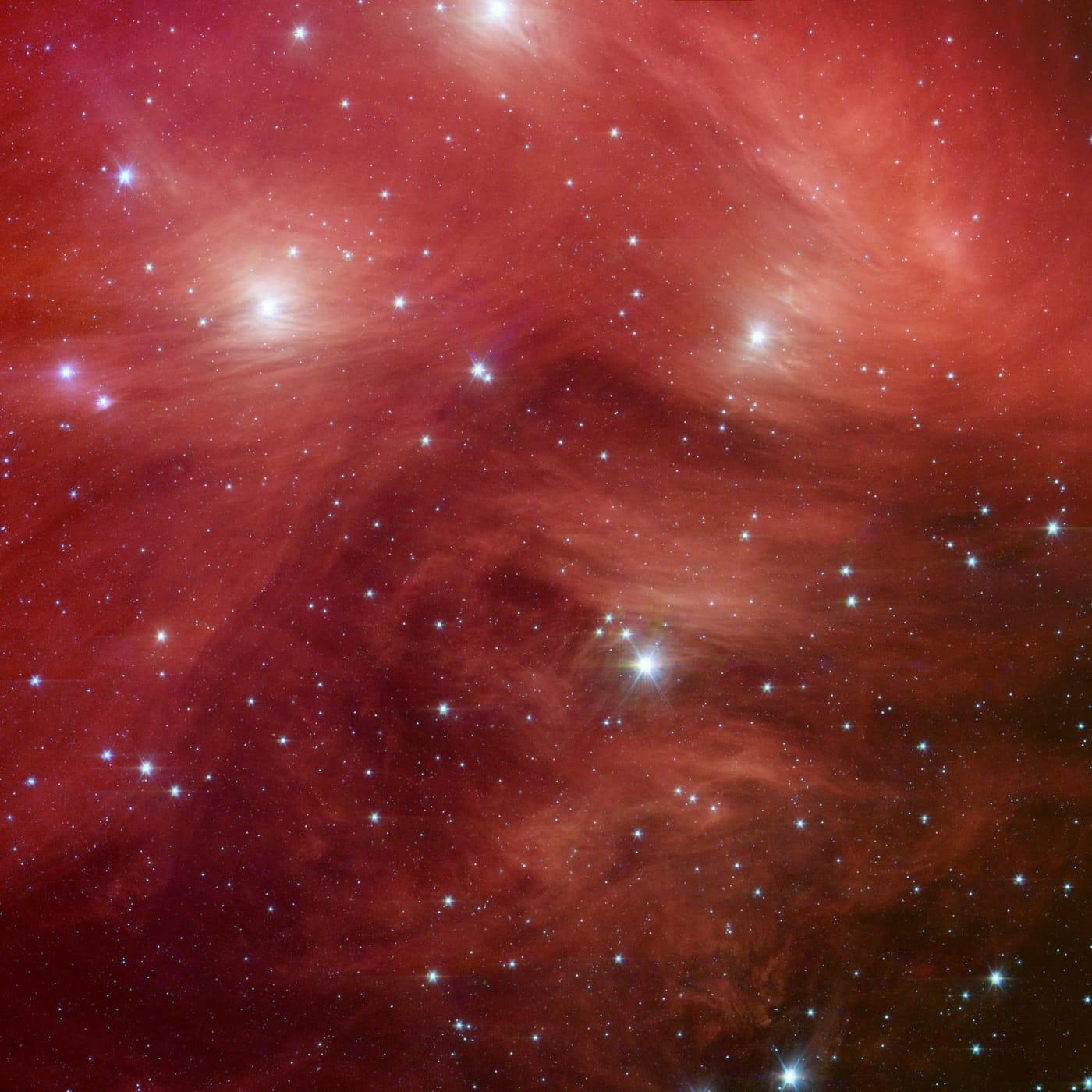
Pink Pleiades
NASA/JPL-Caltech · NASA media (public domain)
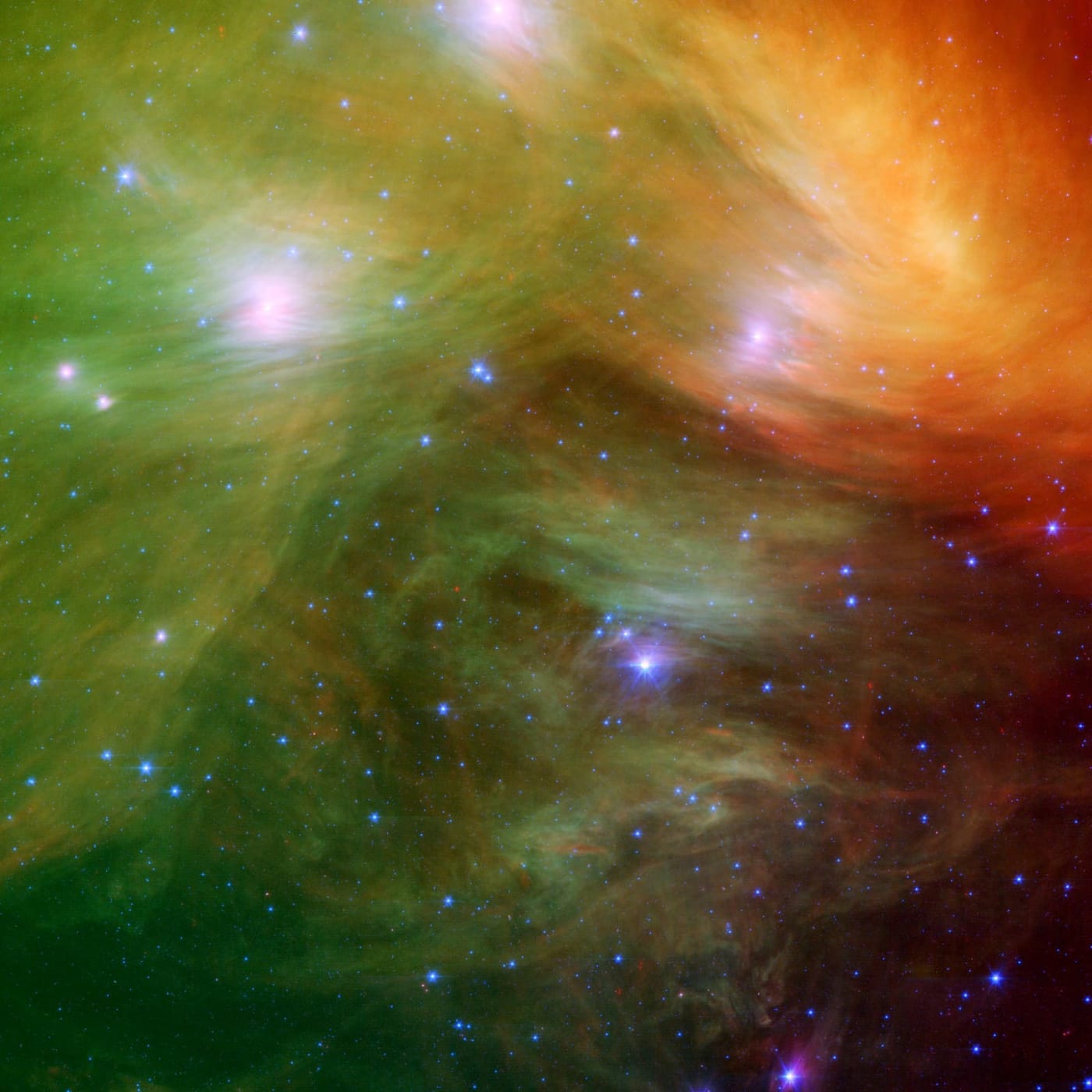
The Seven Sisters Pose for Spitzer
NASA/JPL-Caltech · NASA media (public domain)
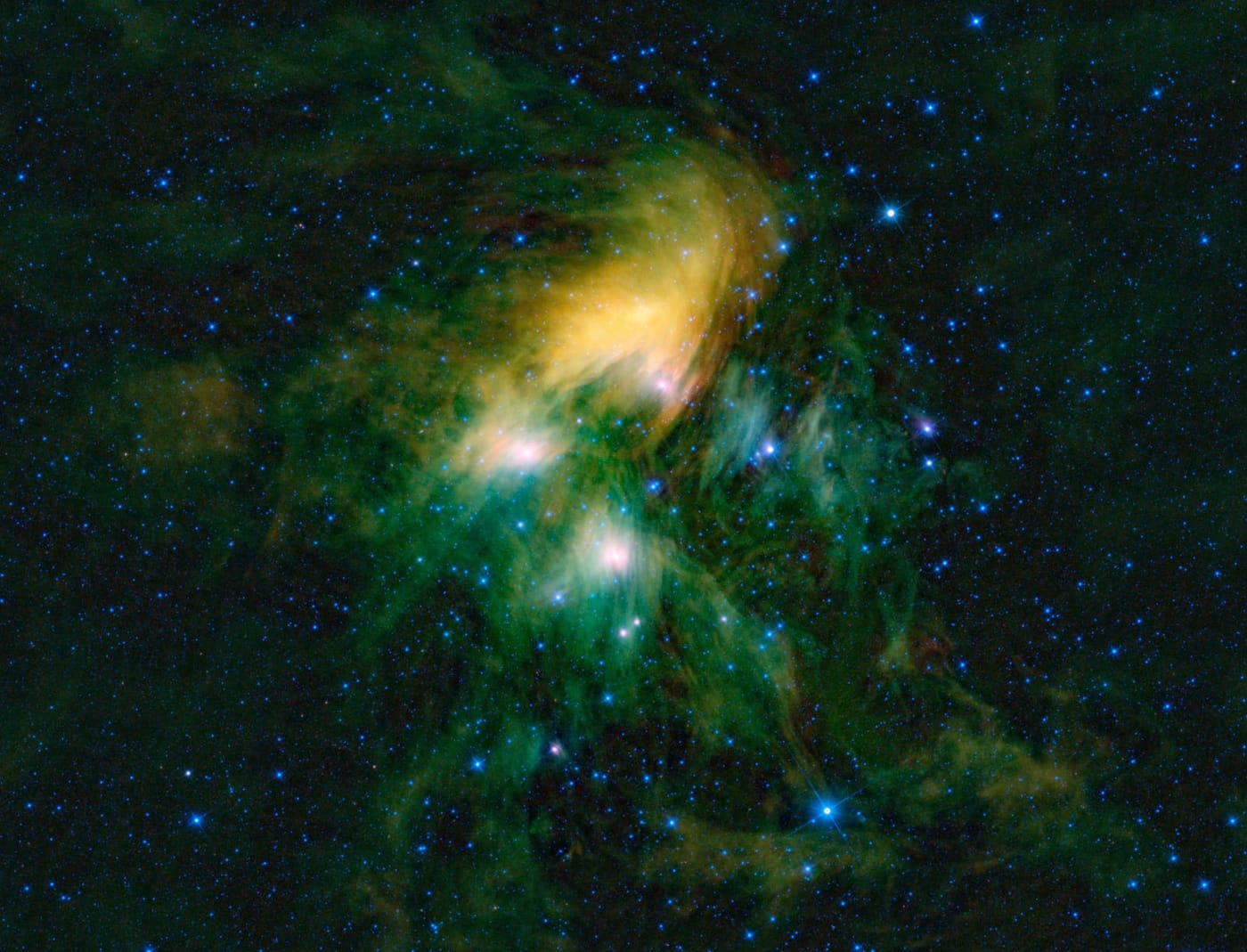
Seven Sisters Get WISE
NASA/JPL-Caltech/UCLA · NASA media (public domain)
Continue the atlas
Curated next objects
The Milky Way
The barred spiral galaxy that contains the Solar System, the Sun, and all stars visible to the naked eye.
stellar physics conceptStellar Populations & Clusters
Stars fall into broad populations: metal-rich Population I stars in the disc, like the Sun; old, metal-poor Population II stars in the halo and globular clusters; and a hypothesised first generation of metal-free Population III stars, not yet directly observed. Star clusters — young open clusters and ancient globulars — are coeval populations that serve as the great testing grounds of stellar-evolution theory.
astrophysical object classOpen Cluster
A loose, irregular group of a few dozen to a few thousand stars born together from the same molecular cloud, found in the disk of the Galaxy. Their stars share an age and composition, making open clusters key laboratories for stellar evolution; because they are only weakly bound, they gradually disperse over hundreds of millions of years.
astrophysical object classReflection Nebula
A cloud of interstellar dust that shines not by its own emission but by scattering the light of nearby stars. Because fine dust scatters blue light most efficiently, reflection nebulae typically appear blue — as in the wisps of nebulosity draped around the Pleiades.
star clusterOmega Centauri
The brightest and most massive globular cluster orbiting the Milky Way.
astrophysical object classGlobular Cluster
A dense, roughly spherical swarm of tens of thousands to millions of very old stars, tightly bound by gravity and orbiting in the halo of a galaxy. Globular clusters are among the oldest structures in the Universe, and their tightly packed, coeval stars make them benchmarks for stellar ages and the early history of the Galaxy.
Observation
How this was captured
- Source
- NASA
- Observation date
- 2011-05-23
Gallery
The Seven Sisters Pose for Spitzer
The Seven Sisters, also known as the Pleiades star cluster, seem to float on a bed of feathers in a new infrared image from NASA Spitzer Space Telescope.
2007
NASA/JPL-Caltech · NASA media (public domain)
Data
Scientific data & provenance
Data & provenance
- Stable ID
star_cluster:pleiades- Type
- Star cluster
- Domain
- Scientific connections
- Relationships
- 4
- Graph version
- 1.0.0
Dataset membership
Open data
In the graph export: graph.json · graph.jsonld
Planned API: GET /api/v0/entities/star_cluster:pleiades
Scientific quality
Substantial4 of 6 applicable dimensions complete
- Description
- Complete
- Source coverage
- Complete
- Relationship coverage
- Complete
- Review coverage
- None
- Citation coverage
- None
- Image coverage
- Complete
- Timeline coverage
- Not applicable
Scientific entity. Dimensions that cannot apply to this object are excluded rather than counted as gaps. See the evidence framework and authority dashboard.
Scientific citations
1Real, source-backed references — primary papers first, then datasets and institutional sources. Formatted through the citation engine; nothing is fabricated.
- Image archiveThe Pleiades (M45) — HubbleSite / STScI
Space Telescope Science Institute
Cite (APA / BibTeX)
Space Telescope Science Institute (n.d.). The Pleiades (M45) — HubbleSite / STScI. Space Telescope Science Institute. https://www.stsci.edu/

@misc{cite:stsci-star_cluster-pleiades,
  title        = {The Pleiades (M45) — HubbleSite / STScI},
  organization = {Space Telescope Science Institute},
  year         = {n.d.},
  url          = {https://www.stsci.edu/},
  note         = {STScI imagery and science for The Pleiades (M45).}
}
You might also explore
- Star clusterOmega CentauriLinked through The Milky Way
- Astrophysical objectGlobular ClusterLinked through Open Cluster
- Astrophysical objectStellar AssociationLinked through Open Cluster
- Stellar physics conceptStellar MetallicityLinked through Stellar Populations & Clusters
- Galactic structureThe Stellar HaloLinked through The Milky Way
- Galactic structureThe Thick DiskLinked through The Milky Way
Sources & references
The primary and reference sources this topic draws on.
- NASANational Aeronautics and Space Administration
Mission data, planetary science, space telescopes, and public-domain imagery.
Most NASA-produced imagery is in the public domain; individual items are checked for usage terms before publication.
- ESAEuropean Space Agency
European missions, observatories, and space science imagery.