Observatory
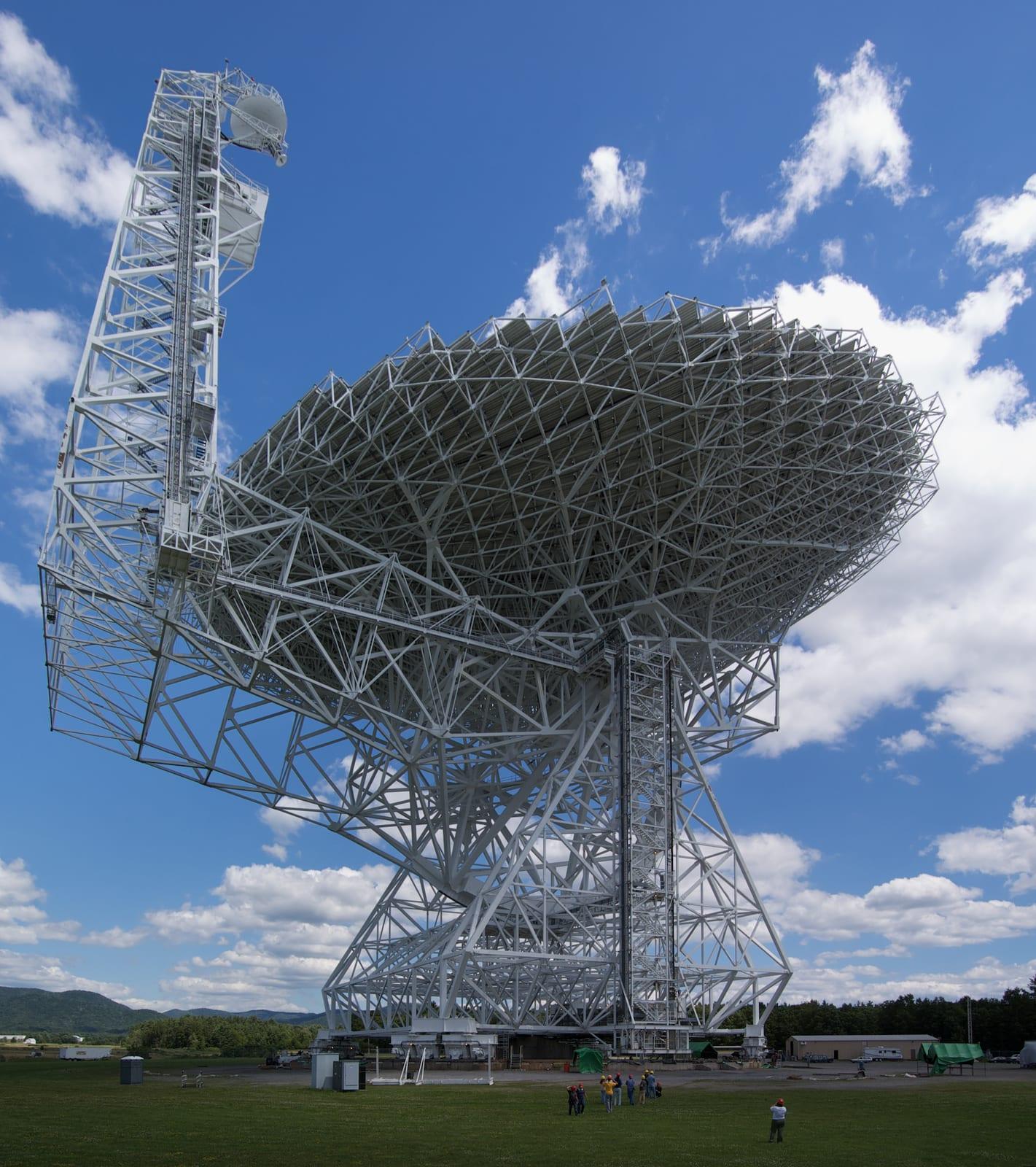
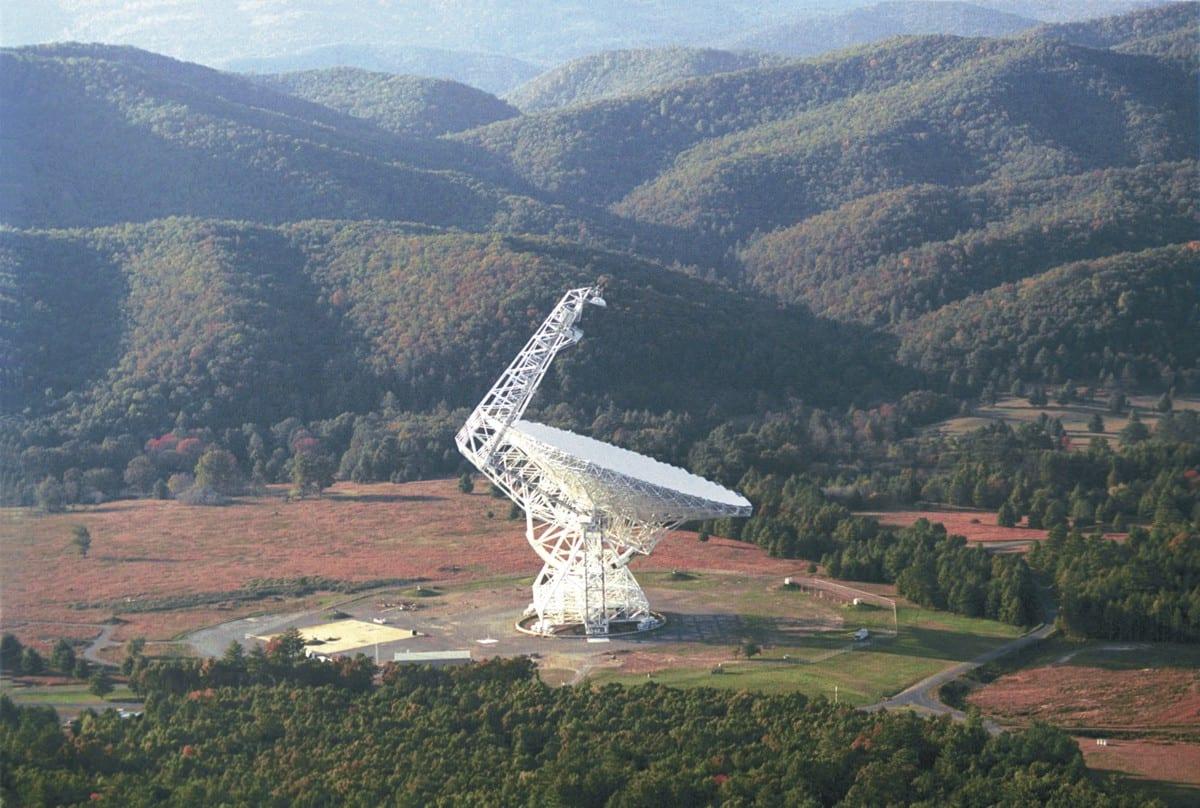
Green Bank Telescope
The world's largest fully steerable radio telescope, a 100-metre dish in Green Bank, West Virginia.
- Type
- Observatory
- Domain
- Scientific connections
- Connections
- 3
Geremia at English Wikipedia · Public domain
- Type: Observatory
- Domain: Scientific connections
Experience system V6
Observatory scientific profile
A graph-grounded scientific layout that adapts to available evidence, imagery, relations, and source coverage.
- 01
Observe
WIKIMEDIA imagery anchors the visual reading with licensed source metadata.
- 02
Measure
Measurement panels use graph coverage, catalog identifiers, and source availability without inventing values.
- 03
Locate
Studies The Milky Way.
- 04
Connect
3 graph relations shape the knowledge viewport.
- Object type
- Observatory
- Graph relations
- 3
- Verified sources
- 1
- Image records
- 2
- Domain
- Scientific connections
- Status
- Graph entity
Scientific map
Ground context
- Studies
The Milky Way
- Operated by
National Radio Astronomy Observatory
- Observes
Radio
Original SVG diagram
Observation system
- Object class
- Observatory
- Catalog numbers
- Not recorded
- Graph relations
- 3
- Sources
- 1
Visual knowledge graph
Relationships, not isolated facts
This viewport is generated from the Asteria knowledge graph. Science, culture, and interpretive links remain separated by domain so visual context never changes the evidentiary meaning of a relation.
- Operated byNational Radio Astronomy Observatory
- ObservesRadio
- StudiesThe Milky Way
Image provenance
Photography as evidence


Continue the atlas
Curated next objects
The Milky Way
The barred spiral galaxy that contains the Solar System, the Sun, and all stars visible to the naked eye.
organizationNational Radio Astronomy Observatory
The NRAO operates major radio astronomy facilities for the US scientific community, including the VLA and (as a partner) ALMA.
wavelength bandRadio
Radio waves are the longest-wavelength light; radio telescopes study pulsars, galaxies, and the cold gas of the universe.
observatoryVery Large Array
The Very Large Array is a radio astronomy observatory in New Mexico consisting of 27 movable parabolic antennas arranged in a Y-shaped configuration.
observatoryFAST (Five-hundred-meter Aperture Spherical Telescope)
The world's largest single-dish radio telescope, a 500-metre aperture instrument in Guizhou, China.
telescopeNext Generation Very Large Array
A proposed radio interferometer, designed as the successor to the Very Large Array and a complement to ALMA, that would observe the centimetre-to-millimetre sky with far greater sensitivity and resolution — imaging planet-forming discs, molecular gas, and the distant universe. Led by the U.S. National Radio Astronomy Observatory.
Observation
How this was captured
- Source
- WIKIMEDIA
Data
Scientific data & provenance
Data & provenance
- Stable ID
observatory:green-bank-telescope- Type
- Observatory
- Domain
- Scientific connections
- Relationships
- 3
- Graph version
- 1.0.0
Dataset membership
Open data
In the graph export: graph.json · graph.jsonld
Planned API: GET /api/v0/entities/observatory:green-bank-telescope
Scientific quality
Partial3 of 6 applicable dimensions complete, 1 partial
- Description
- Complete
- Source coverage
- Partial
- Relationship coverage
- Complete
- Review coverage
- None
- Citation coverage
- None
- Image coverage
- Complete
- Timeline coverage
- Not applicable
Scientific entity. Dimensions that cannot apply to this object are excluded rather than counted as gaps. See the evidence framework and authority dashboard.
You might also explore
- ObservatoryVery Large ArrayLinked through The Milky Way
- ObservatoryFAST (Five-hundred-meter Aperture Spherical Telescope)Linked through The Milky Way
- TelescopeNext Generation Very Large ArrayLinked through National Radio Astronomy Observatory
- ObservatoryALMA (Atacama Large Millimeter Array)Linked through National Radio Astronomy Observatory
- ObservatoryArecibo ObservatoryLinked through Radio
- ObservatoryVera C. Rubin ObservatoryLinked through The Milky Way
Sources & references
The primary and reference sources this topic draws on.
- NASANational Aeronautics and Space Administration
Mission data, planetary science, space telescopes, and public-domain imagery.
Most NASA-produced imagery is in the public domain; individual items are checked for usage terms before publication.