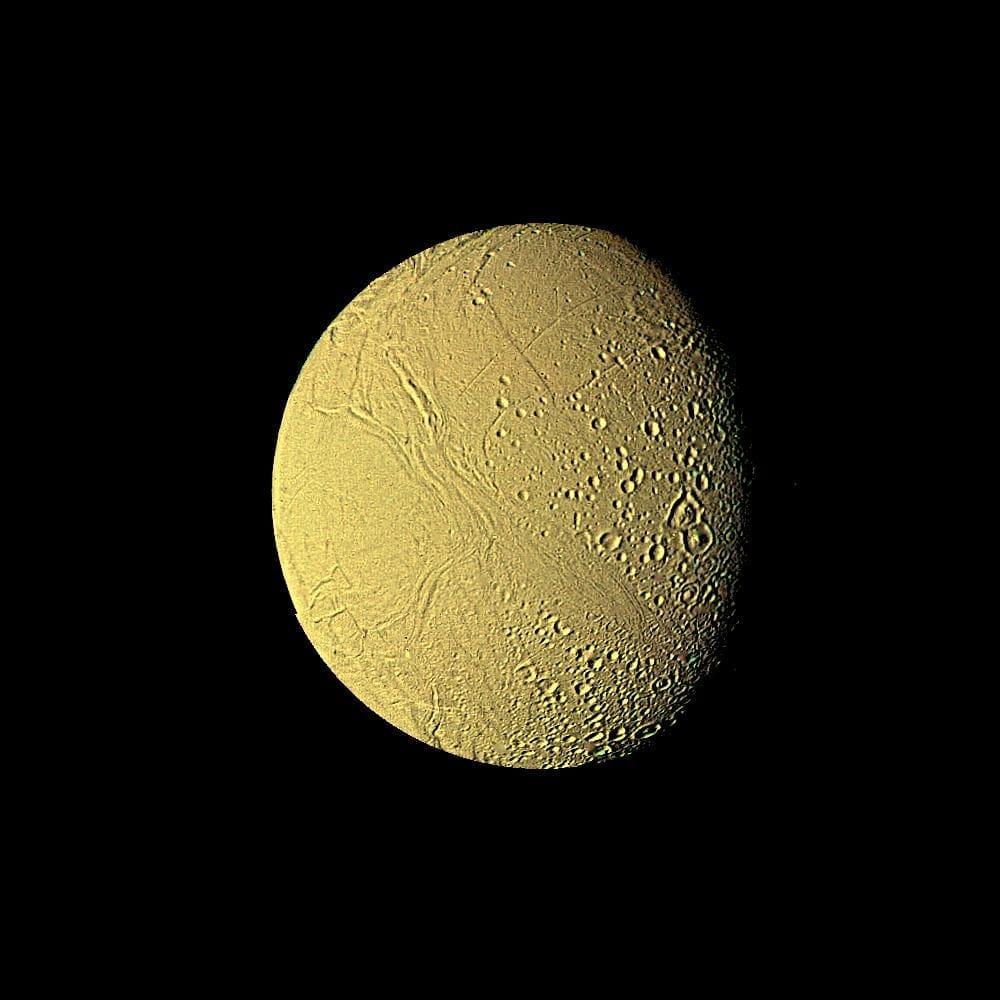
Moon
Enceladus
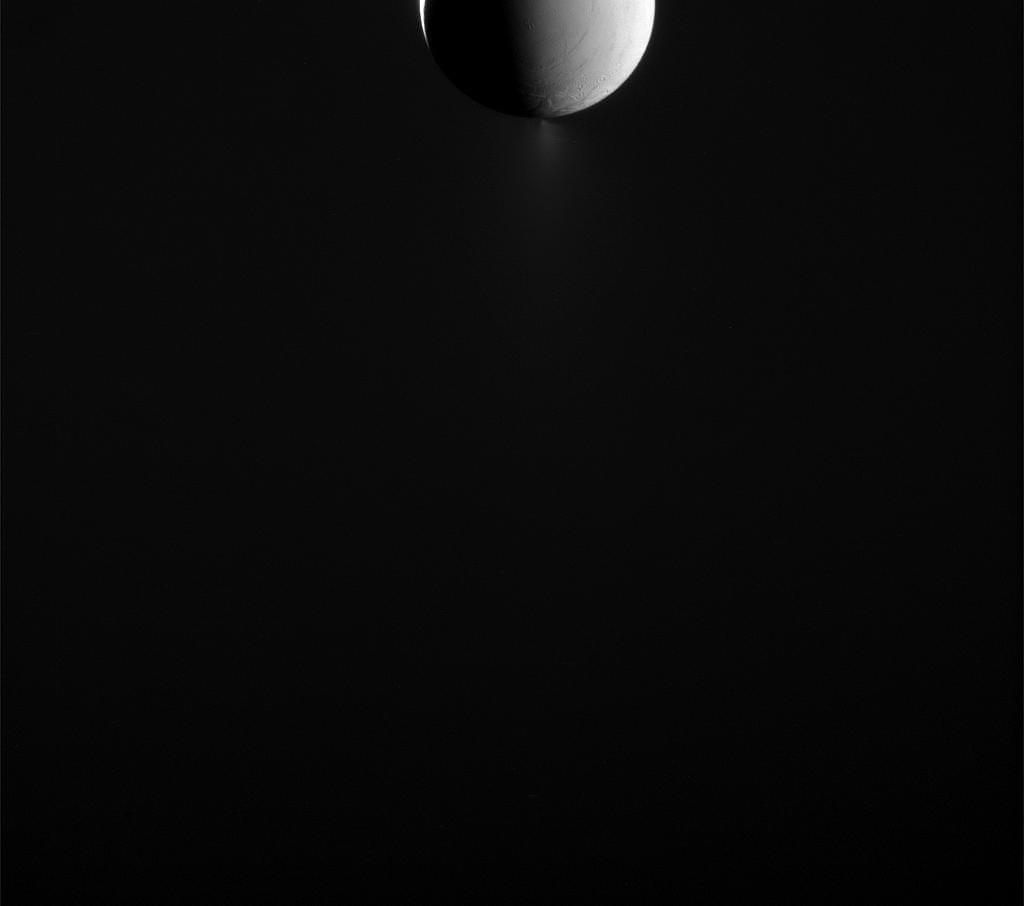
Enceladus is an icy moon of Saturn that vents plumes of water ice from its south pole.
- Type
- Moon
- Domain
- Scientific connections
- Connections
- 9
NASA/JPL · NASA media (public domain)
- Type: Moon
- Domain: Scientific connections
Experience system V6
Satellite world profile
A moon-first layout that links the body to its parent planet, orbital context, geology, and mission evidence when available.
- 01
Observe
NASA imagery anchors the visual reading with licensed source metadata.
- 02
Measure
Numerical fields come from the typed Solar System catalog and are omitted when not available.
- 03
Locate
Child of Saturn.
- 04
Connect
9 graph relations shape the knowledge viewport.
- Object type
- Moon
- Graph relations
- 9
- Verified sources
- 2
- Image records
- 4
- Domain
- Scientific connections
- Status
- Graph entity
Scientific map
Orbit context
- Primary orbital anchor
- Saturn
- Measured orbit field
- Orbital distance not recorded in this graph record
Original SVG diagram
Interior and field cues
- Atmosphere
- Not recorded
- Mean temperature
- Not recorded
- Gravity
- Not recorded
- Magnetic field
- Not recorded
Visual knowledge graph
Relationships, not isolated facts
This viewport is generated from the Asteria knowledge graph. Science, culture, and interpretive links remain separated by domain so visual context never changes the evidentiary meaning of a relation.
- Target ofCassini–Huygens
- Associated withChemical Building Blocks
- Associated withCryovolcanism
- Associated withLiquid Water
- Associated withOcean World
- Associated withOcean Worlds
- Child ofSaturn
- Associated withSubsurface Ocean
Image provenance
Photography as evidence
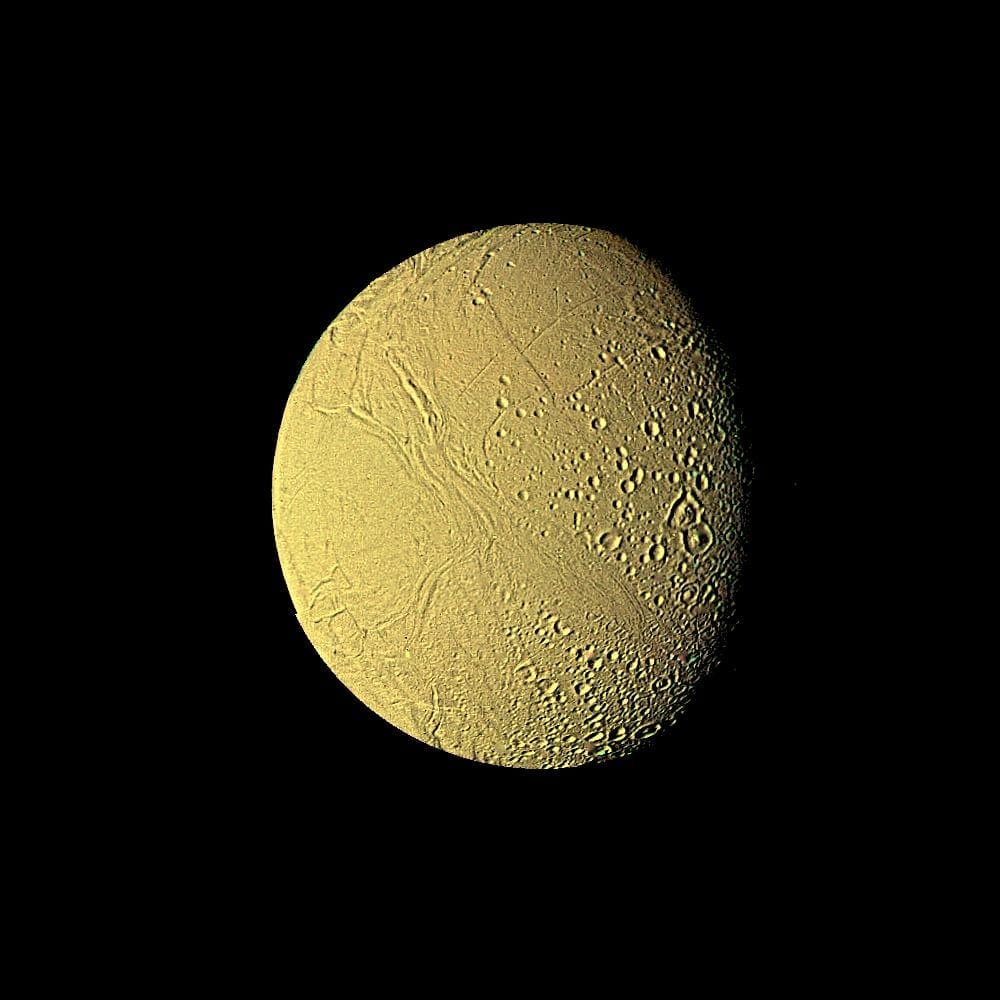
The Saturnian Moon Enceladus
NASA/JPL · NASA media (public domain)
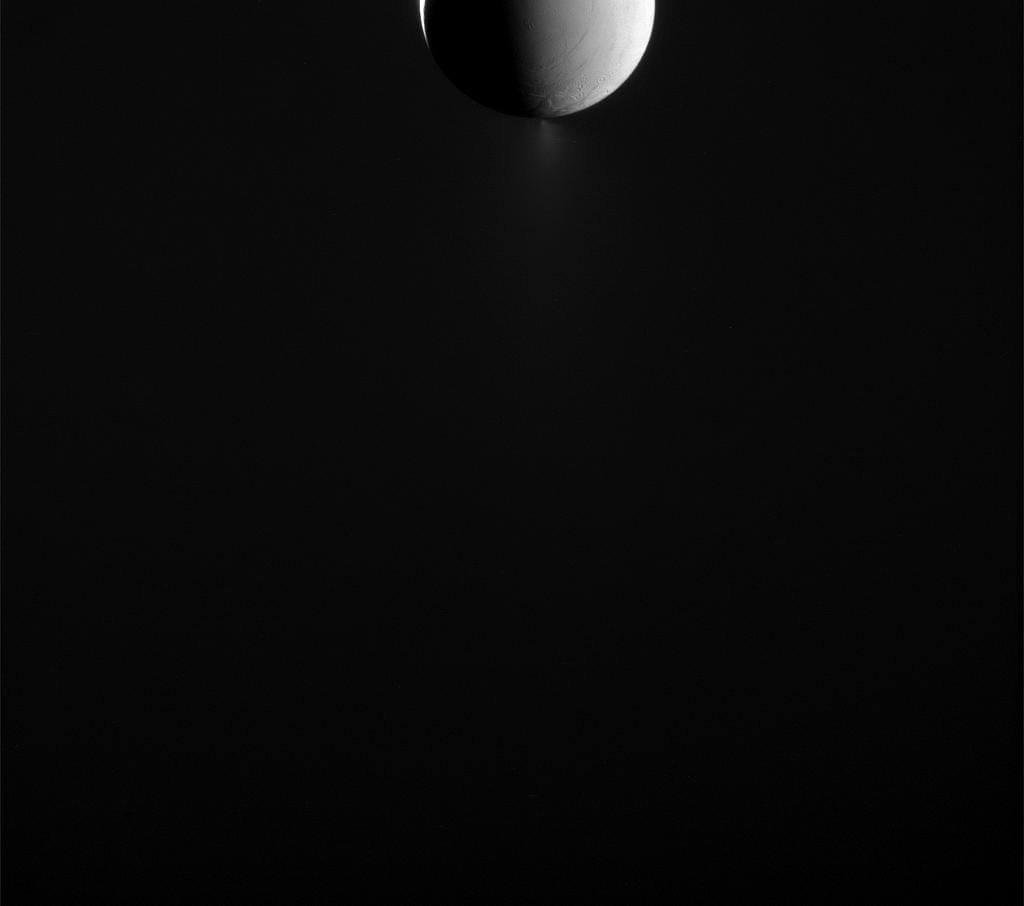
Dark Side of the Moon: Enceladus
NASA/JPL-Caltech/Space Science Institute · NASA media (public domain)
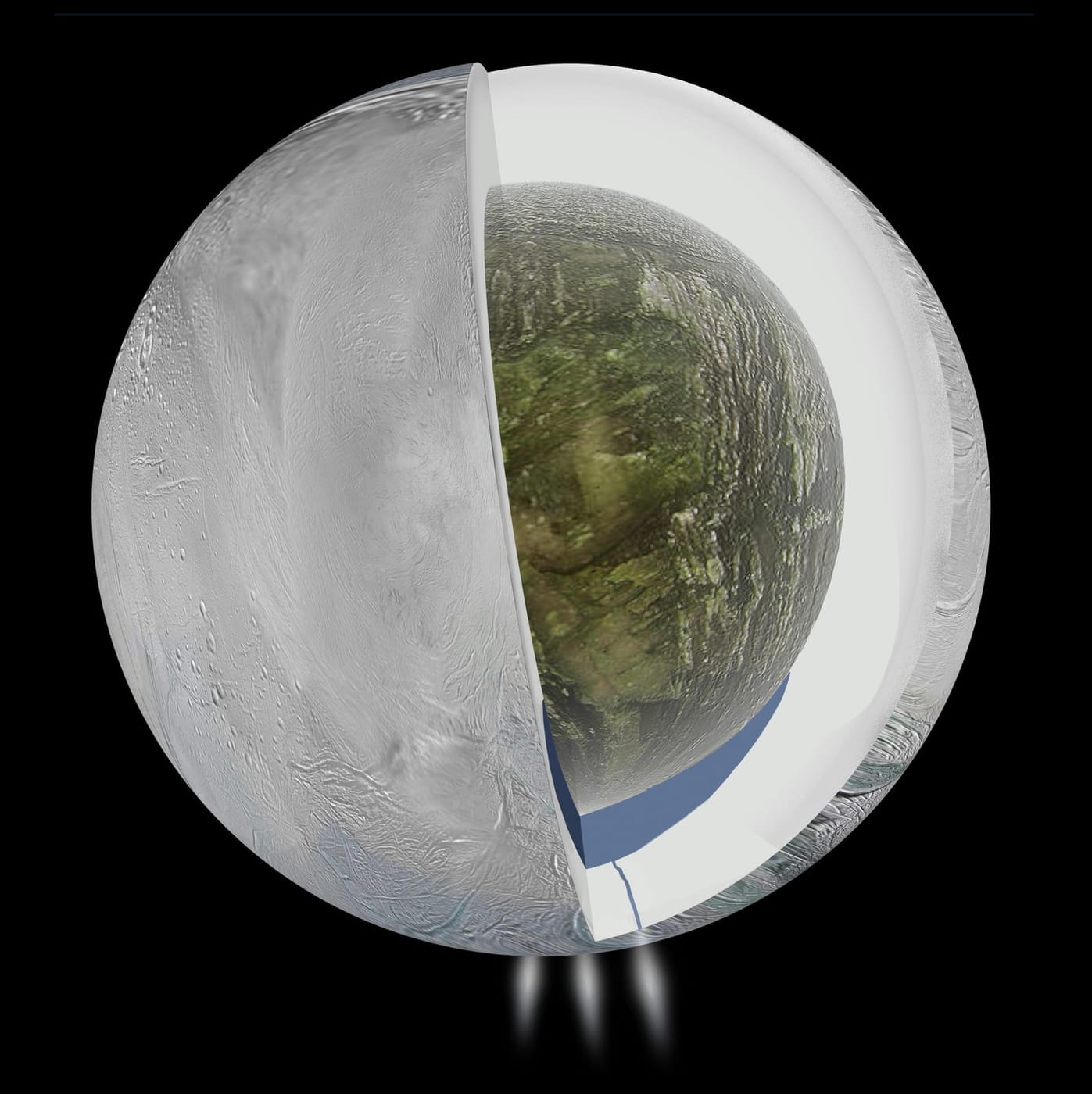
Ocean Inside Saturn Moon Enceladus
NASA/JPL-Caltech · NASA media (public domain)
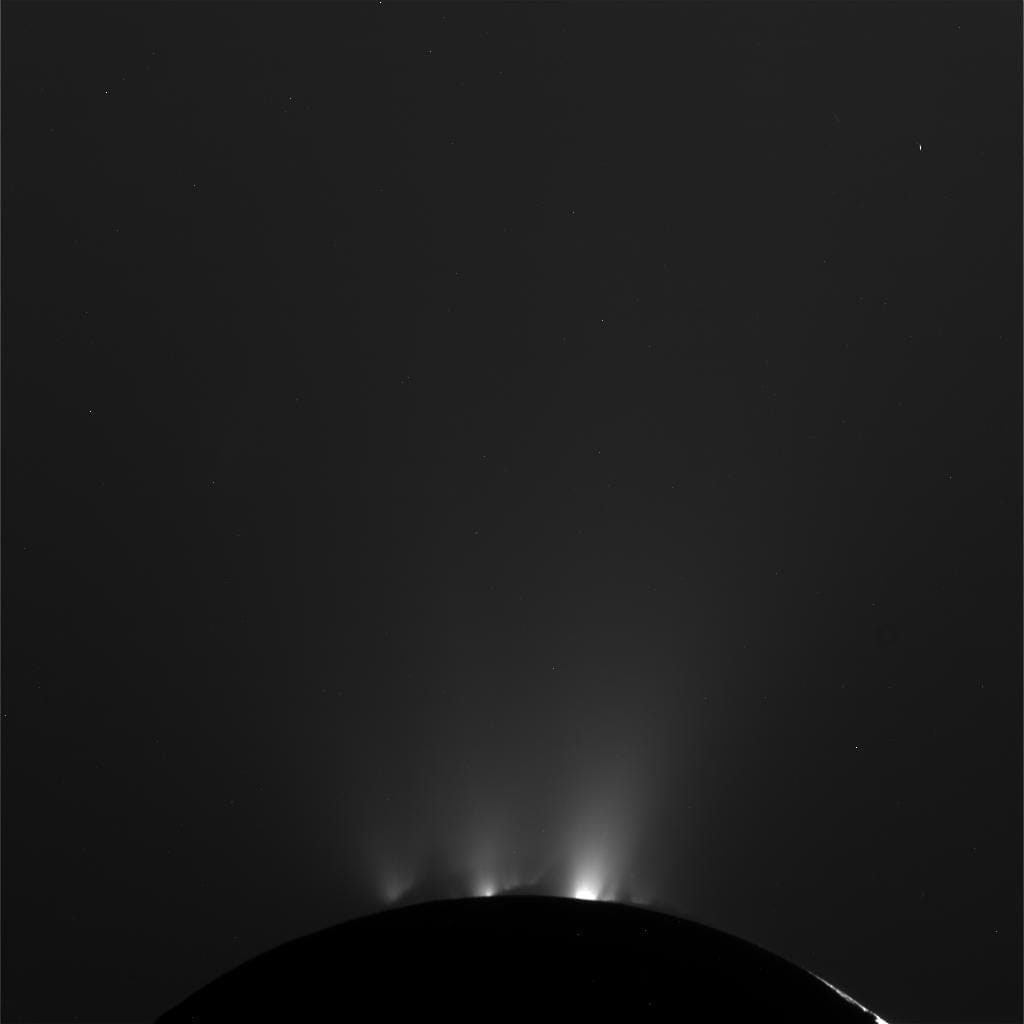
Saturn Geyser Moon Enceladus Shows off for NASA Cassini
NASA/JPL-Caltech/Space Science Institute · NASA media (public domain)
Continue the atlas
Curated next objects
Saturn
Saturn is the sixth planet from the Sun and is known for its prominent ring system.
space missionCassini–Huygens
Cassini–Huygens was a NASA–ESA–ASI mission launched in 1997 that orbited Saturn from 2004 to 2017 and delivered the Huygens probe to the surface of its moon Titan.
surface featureTiger Stripes
Four parallel fractures across the south pole of Enceladus from which giant plumes of water vapour and ice erupt into space — fed by the moon's subsurface ocean.
astrobiology topicOcean Worlds
The icy moons with liquid-water oceans beneath their shells — Europa, Enceladus, and Titan — now the most promising places to search for life in the Solar System, targets of the Europa Clipper and Dragonfly missions.
habitability factorLiquid Water
The one requirement every known form of life shares — a liquid solvent for its chemistry. The habitable zone is defined by where a planet could hold liquid water on its surface, but subsurface oceans extend the possibilities far beyond it.
habitability factorChemical Building Blocks
The elements and molecules life is built from — carbon, hydrogen, nitrogen, oxygen, phosphorus, sulfur, and complex organic chemistry. Titan has a rich organic chemistry, and Enceladus's plumes carry organic molecules from its ocean.
Observation
How this was captured
- Source
- NASA
- Observation date
- 1998-12-05
Gallery
Ocean Inside Saturn Moon Enceladus
Gravity measurements by NASA Cassini spacecraft and Deep Space Network suggest that Saturn moon Enceladus, which has jets of water vapor and ice gushing from its south pole, also harbors a large interior ocean beneath a…
2014
NASA/JPL-Caltech · NASA media (public domain)
Data
Scientific data & provenance
Data & provenance
- Stable ID
moon:enceladus- Type
- Moon
- Domain
- Scientific connections
- Relationships
- 9
- Graph version
- 1.0.0
Dataset membership
Open data
In the graph export: graph.json · graph.jsonld
Planned API: GET /api/v0/entities/moon:enceladus
Scientific quality
Complete6 of 6 applicable dimensions complete
- Description
- Complete
- Source coverage
- Complete
- Relationship coverage
- Complete
- Review coverage
- Complete
- Citation coverage
- Complete
- Image coverage
- Complete
- Timeline coverage
- Not applicable
Scientific entity. Dimensions that cannot apply to this object are excluded rather than counted as gaps. See the evidence framework and authority dashboard.
Provenance & sources
review 2026.1Asteria Scientific Review Process · verification: sourced · accurate
- High evidenceconfirmed
Enceladus, a moon of Saturn, vents water-ice plumes from its south-polar region that feed Saturn's E ring, indicating a subsurface liquid-water ocean.
Source: NASA Science · Public domain (US Government work)
Reviewed by the internal Asteria Scientific Review Process — not an external institutional review. See the evidence framework and authority dashboard.
Scientific citations
1Real, source-backed references — primary papers first, then datasets and institutional sources. Formatted through the citation engine; nothing is fabricated.
- Institutional pageEnceladus — NASA Solar System Exploration
NASA
Cite (APA / BibTeX)
NASA (n.d.). Enceladus — NASA Solar System Exploration. NASA. https://science.nasa.gov/

@misc{cite:nasa-moon-enceladus,
  title        = {Enceladus — NASA Solar System Exploration},
  organization = {NASA},
  year         = {n.d.},
  url          = {https://science.nasa.gov/},
  note         = {NASA overview of Enceladus.}
}
You might also explore
- MoonEuropaLinked through Ocean Worlds
- MoonTitanLinked through Saturn
- Astrobiology disciplinePlanetary HabitabilityLinked through Liquid Water
- Timeline eventCassini Arrives at SaturnLinked through Saturn
- Geological feature typeCryovolcanoLinked through Tiger Stripes
- Space missionEuropa ClipperLinked through Ocean Worlds
Sources & references
The primary and reference sources this topic draws on.
- NASANational Aeronautics and Space Administration
Mission data, planetary science, space telescopes, and public-domain imagery.
Most NASA-produced imagery is in the public domain; individual items are checked for usage terms before publication.
- NASA JPLJet Propulsion Laboratory / Solar System Dynamics
Orbital data, ephemerides, and small-body parameters for planets, asteroids, and comets.